The Architecture of Real-Time Personalization Engines

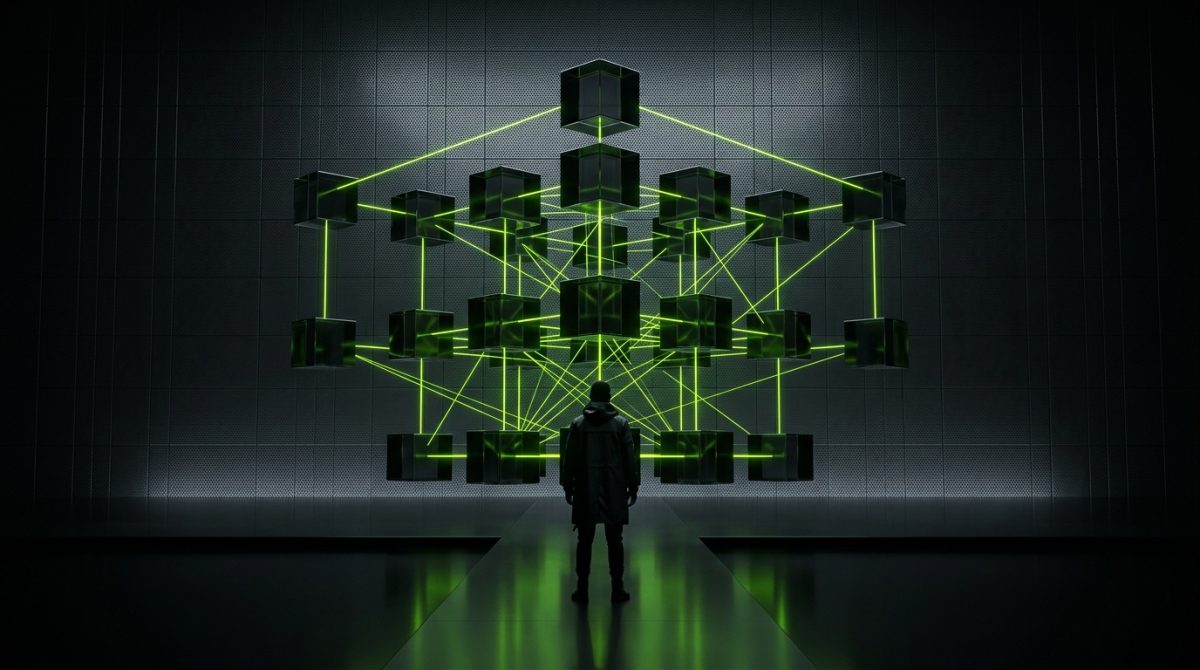
The evolution of digital consumerism has reached a point where static landing pages and generic marketing funnels are no longer sufficient to maintain competitive advantage. Real-time personalization represents the pinnacle of B2C engagement, requiring a sophisticated fusion of data engineering, machine learning, and high-performance web architecture. To achieve this at scale, organizations must move away from legacy batch processing—where customer profiles are updated every 24 hours—toward event-driven architectures that respond to user signals in milliseconds. This transition involves the implementation of stream-processing frameworks like Apache Kafka or AWS Kinesis, which serve as the central nervous system for ingesting clickstream data, session behavior, and transactional history.
At the core of this architecture is the concept of the Unified Customer Profile (UCP). Unlike traditional CRM records, a UCP in an AI-driven environment is dynamic and multi-dimensional. It incorporates structured data (past purchases) and unstructured data (browsing patterns, hover states, and even sentiment analysis from chat interactions). The challenge for modern scalable SaaS architecture is ensuring that this data is not only collected but also actionable. High-traffic B2C platforms must utilize edge computing to process these signals closer to the user, reducing the round-trip latency that often plagues server-side personalization. By deploying logic at the edge (using tools like Cloudflare Workers or Vercel Edge Functions), developers can intercept requests and inject personalized content before the page even reaches the browser.
Furthermore, the "Cold Start Problem"—where the system lacks sufficient data on a new visitor—is mitigated through predictive modeling. AI engines can analyze the initial three to five clicks of an anonymous user and compare them against millions of historical sessions to predict intent with high accuracy. This allows for real-time layout adjustments, such as reordering product categories or highlighting specific value propositions (e.g., sustainability vs. price) that resonate with the inferred persona. This level of technical sophistication ensures that every millisecond of a user's session is optimized for conversion, transforming a passive browsing experience into an active, guided journey.
Key Components of the Data Pipeline
- Ingestion Layer: Capturing high-frequency events without impacting frontend performance.
- Processing Layer: Utilizing Lambda architectures to combine historical context with real-time triggers.
- Serving Layer: Low-latency NoSQL databases like Redis or DynamoDB to store and retrieve user state instantly.
- Feedback Loop: Automatically feeding conversion data back into the model to refine weights and biases.
Implementing AI Engines within Modern Tech Stacks
Integrating advanced AI capabilities into existing ecosystems like Shopify, Webflow, or WordPress requires a strategic middleware approach. Rather than relying on heavy, third-party plugins that can degrade site performance and create security vulnerabilities, the modern approach involves building custom AI integrations that act as an intelligent orchestration layer. At werun.dev, our methodology focuses on creating decoupled systems where the AI engine exists as a standalone microservice. This ensures that the core eCommerce or CMS platform remains lightweight and stable, while the personalization logic can be scaled independently based on demand.
Our team approaches AI integration by prioritizing technical feasibility and measurable business impact. We begin by auditing the existing data infrastructure to ensure that the "garbage in, garbage out" trap is avoided. For B2C brands, this often means cleaning product catalogs and normalizing customer data before feeding it into Large Language Models (LLMs) or recommendation algorithms. We leverage Retrieval-Augmented Generation (RAG) patterns to allow AI models to access private company data—such as inventory levels, seasonal promotions, and brand guidelines—without the need for expensive and time-consuming fine-tuning of the base model. This allows for hyper-relevant content generation, such as personalized product descriptions or AI-driven shopping assistants that actually understand the specific nuances of a brand's catalog.
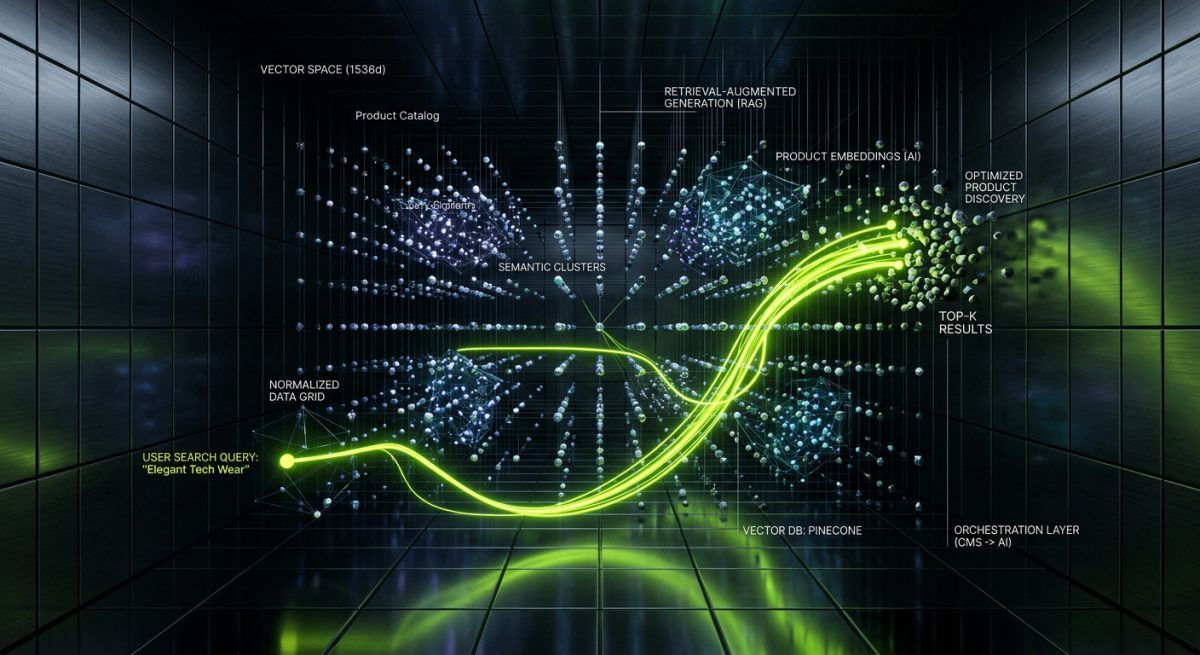
For eCommerce development services, the focus is often on the "Discovery Phase" of the user journey. By integrating vector databases like Pinecone or Weaviate, we enable semantic search capabilities. Unlike keyword-based search, semantic search understands the intent behind a query. If a user searches for "outfit for a rainy wedding in London," the AI interprets the weather requirements, the formal context, and the geographic style trends to return a curated selection of products. This is achieved by converting the entire product catalog into high-dimensional vectors (embeddings) that the AI can navigate in real-time. This technical depth allows werun.dev to move clients from simple experimentation to production-ready systems that handle thousands of requests per second with rock-solid reliability and secure data handling.
The Role of LLMs in Dynamic UI Generation
- Content Adaptation: Automatically adjusting the tone and length of copy based on user demographics.
- Dynamic Bundling: Generating unique product bundles on the fly based on the items currently in a user's cart.
- Visual Personalization: Swapping hero images or color schemes to align with the user's predicted aesthetic preferences.
Real-World Implementation: From Data Silos to Predictive UX
To illustrate the power of real-time AI, consider a global fashion retailer struggling with high cart abandonment rates and low cross-sell efficiency. Their existing tech stack was a collection of siloed platforms: a Shopify Plus store, a legacy CRM, and a separate email marketing tool. There was no communication between these systems in real-time. By implementing automation workflows, we created a unified data stream that connected their frontend events directly to a custom-built personalization middleware. This middleware utilized a Node.js environment to process incoming events and query an OpenAI-powered recommendation engine.
In this implementation, when a user added a pair of leather boots to their cart, the system didn't just show "similar items." Instead, it analyzed the user's browsing history (which included several clicks on waterproof sprays and wool socks) and the current weather data for the user’s IP location. The AI then dynamically injected a "Complete the Look" section that prioritized weather-appropriate accessories and maintenance products. Below is a simplified example of how such a recommendation request might be structured in a production environment:
{
  "user_id": "u_98765",
  "session_context": {
    "current_page": "/products/leather-boots",
    "cart_items": ["prod_boot_01"],
    "geo_location": "Seattle, WA",
    "weather": "Rainy",
    "last_3_clicks": ["waterproof-spray", "wool-socks", "size-guide"]
  },
  "engine_parameters": {
    "model": "gpt-4-turbo-preview",
    "temperature": 0.2,
    "max_recommendations": 3
  }
}
The result of this granular, data-driven approach was a 15% increase in Average Order Value (AOV) and a significant reduction in the time-to-purchase. By moving the logic into a dedicated middleware, the retailer maintained a lightning-fast frontend experience, which is critical for SEO and user retention. This scenario highlights the transition from reactive marketing to predictive user experience. Instead of waiting for the user to find what they need, the system anticipates the need and presents the solution at the exact moment of highest intent.
Our role at werun.dev is to architect these complex interactions so they feel seamless to the end-user. We bridge the gap between high-level AI concepts and the practical realities of API limits, data privacy regulations (GDPR/CCPA), and infrastructure costs. By focusing on scalable, secure, and performant integrations, we empower B2C brands to leverage AI not as a buzzword, but as a core driver of revenue and customer loyalty. Whether you are looking to enhance an existing Shopify store or build a custom headless commerce solution, the integration of real-time AI is the most direct path to scaling your digital presence in an increasingly crowded market.
If you are ready to transition from static experiences to AI-driven personalization, explore our AI integration services or book a technical consultation with our engineering team to discuss your specific tech stack and business goals.