Beyond the Chatbox: The Rise of Agentic Development Environments
The landscape of AI-assisted software engineering has shifted dramatically from simple chat interfaces to agentic command-line tools that operate directly within the developer's environment. While general-purpose LLMs have been useful for generating snippets or explaining concepts, the introduction of Claude Code marks a transition toward autonomous, contextual agents capable of understanding entire codebases. For a B2B agency like werun.dev, where we manage over 200 active sites across WordPress, Webflow, and Shopify, this shift is not just a convenience—it is a fundamental upgrade to our production pipeline. The core differentiator of agentic AI is its ability to access the file system, execute terminal commands, and maintain a stateful understanding of the project structure. This eliminates the friction of manual context-pasting, allowing developers to focus on high-level architecture while the AI handles the granular implementation details.
In a traditional workflow, a developer might spend 60% of their time navigating existing files to understand how a specific hook or API endpoint is implemented before writing a single line of new code. Claude Code reduces this cognitive load by "reading" the repository autonomously. It identifies existing patterns, respects the .gitignore rules, and understands the relationships between different modules. For instance, when tasked with adding a new custom REST API endpoint in a WordPress environment, the agent doesn't just provide a generic code block; it scans the existing plugin directory to ensure the new endpoint follows the established naming conventions, authentication methods (such as JWT or OAuth 2.0), and error-handling structures already in place. This level of contextual awareness ensures that the generated code is not just functional, but "production-ready" within the specific constraints of the client's ecosystem.
Furthermore, the integration of AI directly into the CLI allows for a seamless loop of "write-test-fix." A developer can instruct the agent to build a feature and immediately follow up with a command to run unit tests or linting scripts. If the tests fail, the agent analyzes the output, identifies the regression, and proposes a fix in real-time. This iterative cycle happens within seconds, significantly compressing the development timeline without sacrificing the rigorous standards required for enterprise-grade web systems. At werun.dev, where we maintain a 99.97% uptime, this speed-to-market is balanced by the agent's ability to cross-reference our internal best practices for security and performance, ensuring that every deploy remains stable and scalable.
The Anatomy of an Agentic Workflow
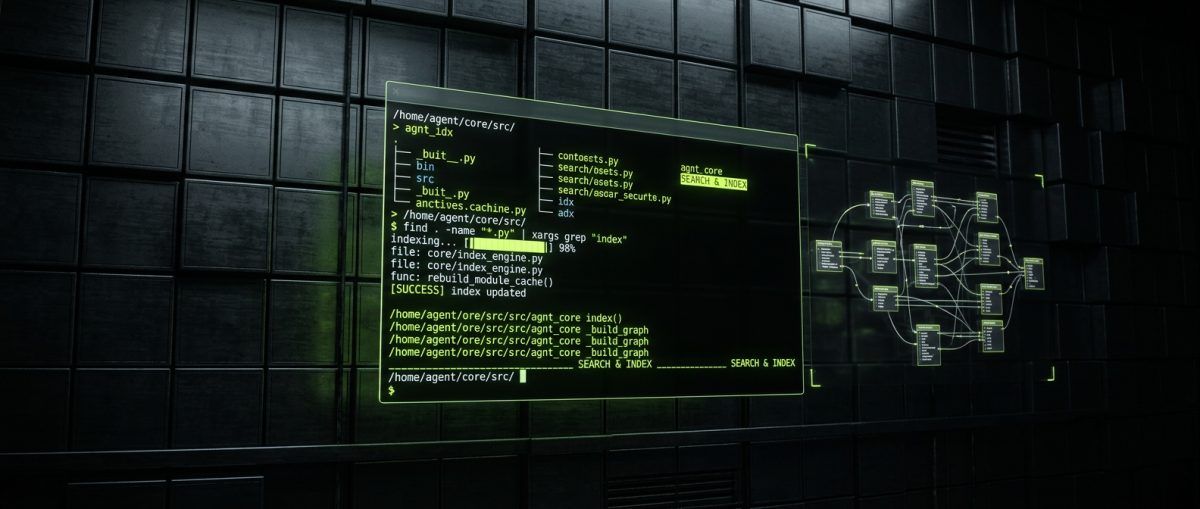
To understand the impact of Claude Code, one must look at the specific capabilities it brings to the terminal. Unlike a web-based chat, the CLI tool can:
- Search and Index: Rapidly locate relevant functions across thousands of files using grep-like capabilities combined with semantic understanding.
- Execute Code: Run build scripts, compilers, and test suites to verify its own suggestions before the developer even reviews the PR.
- Manage State: Keep track of complex, multi-file refactors that would typically require a developer to hold a massive mental model of the system.
By leveraging these capabilities, our team can handle complex maintenance tasks—such as updating a legacy WooCommerce extension to support the latest High-Performance Order Storage (HPOS) architecture—with a degree of precision that was previously impossible to achieve at scale. The agent identifies all direct database queries that need to be replaced with CRUD wrapper functions, executes the changes, and verifies the compatibility, all while the lead developer supervises the high-level logic and business requirements.
Engineering Context: How Claude Code Transforms Complex Integrations
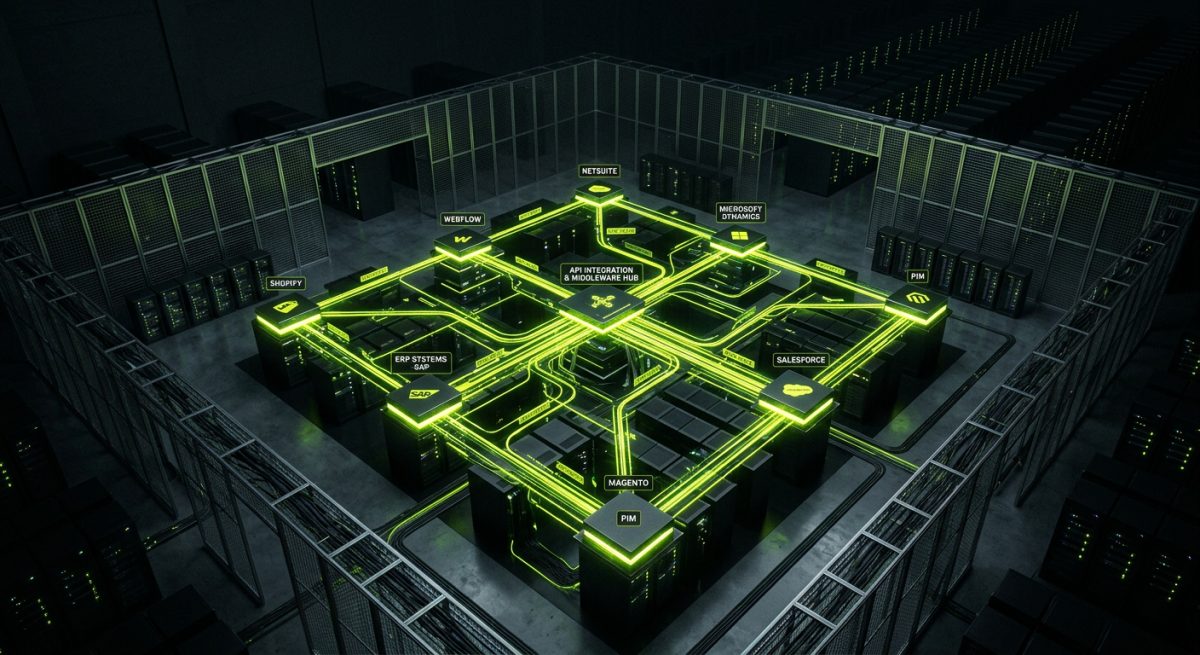
One of the most challenging aspects of B2B web development is the integration of disparate systems. Whether it is syncing a Shopify Plus store with an ERP like SAP or Odoo, or building a custom bridge between a Webflow CMS and a proprietary CRM, the complexity lies in the "glue code." This code must be resilient, handle rate limits, and provide detailed logging for troubleshooting. Claude Code excels in these scenarios because it can ingest the documentation of an external API and compare it against the current implementation in the codebase. This allows for the rapid generation of middleware logic that is perfectly tailored to the project's specific needs. At werun.dev, we specialize in building these bridges, and the use of contextual AI has reduced our boilerplate generation time by approximately 60%, allowing us to spend more time on custom logic and data mapping.
Consider a scenario where a client requires a custom n8n workflow to trigger a WordPress action whenever a specific event occurs in their Salesforce instance. The developer can use Claude Code to scaffold the custom webhook listener in WordPress, ensuring it uses the correct namespaces and security nonces. The agent can then be tasked with writing the corresponding JavaScript nodes for n8n to format the outgoing data correctly. Because the agent understands the data structures on both sides of the integration, it can preemptively suggest transformation logic for edge cases, such as null values or mismatched date formats. This proactive problem-solving is a hallmark of agentic AI; it doesn't just follow instructions—it anticipates the requirements of a robust integration.
In the realm of Webflow development, where we often push the boundaries of the Designer with custom JS and API integrations, Claude Code becomes an invaluable partner for writing performant, modular code. Instead of writing monolithic scripts that are hard to maintain, the agent can help architect a component-based system where logic is split into manageable modules. For example, if we are building a complex filtering system for a Webflow CMS library using the Finsweet API or custom GSAP animations, the agent can generate the necessary logic while ensuring it doesn't conflict with other third-party scripts. It can even assist in optimizing the code for Core Web Vitals by suggesting more efficient ways to handle DOM manipulations or event listeners.
Real-World Use Case: WooCommerce Subscription Logic
Building custom subscription flows in WooCommerce often involves hooking into complex lifecycle events like woocommerce_subscription_status_updated. A typical request might involve sending a custom payload to a third-party fulfillment provider only when a subscription moves from 'on-hold' to 'active'.
Using Claude Code, a developer can simply prompt: "Find where we handle subscription status changes and add a hook that sends the order metadata to our fulfillment API endpoint, ensuring we include a retry logic if the API returns a 5xx error." The agent will:
- Search the
/incor/srcdirectory for relevant hooks. - Identify the existing API client class.
- Generate a new method in the appropriate class to handle the payload.
- Add the
add_actioncall with the correct priority. - Implement a background processing task using Action Scheduler to handle the retries.
This level of automation ensures that even the most complex business logic is implemented following the highest standards of the WordPress ecosystem, including proper sanitization, escaping, and internationalization (i18n) support. It transforms the developer from a manual coder into an architect who directs a highly skilled digital artisan.
Security and Standards: Maintaining Production-Grade Code in the AI Era
The primary concern with AI-generated code in a B2B context is security and long-term maintainability. At werun.dev, we have established a "Human-in-the-Loop" (HITL) protocol that governs how AI-assisted code moves from the local environment to production. While Claude Code is exceptionally capable, it is not a replacement for senior architectural oversight. Every line of code generated by an agent must pass through our internal CI/CD pipeline, which includes automated security scanning, peer review, and manual QA on a staging environment. This is especially critical for our WordPress services, where we adhere strictly to WordPress Coding Standards (WPCS) and ensure that every plugin or theme we develop uses nonces, capability checks, and the Settings API to prevent common vulnerabilities like SQL injection or Cross-Site Scripting (XSS).
Contextual AI actually enhances our ability to maintain these standards. We can provide the agent with a set of "Golden Rules" or a .claudecode configuration file that defines our specific coding style and security requirements. When the agent generates code, it automatically checks it against these rules. If we have a policy of always using wp_safe_remote_post() instead of raw cURL, the agent learns this and applies it across the entire project. This creates a level of consistency that is often difficult to maintain in large teams or across multiple projects. By enforcing these standards at the point of creation, we significantly reduce the amount of technical debt that accumulates over time, ensuring that the sites we manage remain easy to update and secure for years to come.
Another critical aspect of our production workflow is the use of GitHub for auto-updates. Every custom plugin we build at werun.dev includes a mechanism for auto-updating via GitHub releases. Claude Code assists in this process by helping to manage the versioning logic and ensuring that the readme.txt and main plugin headers are always in sync with the latest release tags. This automation allows us to push critical security patches or feature updates to all 200+ managed sites simultaneously, maintaining our commitment to a <4h response time for our SLA clients. The AI acts as a force multiplier, allowing our small team of senior developers to manage a massive infrastructure with the precision of a much larger organization.
The Future of Managed Web Services
As we look forward, the role of AI in web development will only deepen. We are already exploring the use of AI agents to monitor server logs and preemptively suggest fixes for recurring errors before they affect the end-user experience. This move from reactive maintenance to proactive optimization is the next frontier for werun.dev. By combining the speed of Claude Code with our deep expertise in WordPress, Webflow, and Shopify, we provide our clients with a development partner that is not just fast, but intelligent and reliable. The goal is not to remove the human element, but to empower our developers to build more complex, more secure, and more innovative solutions for our B2B partners. In an industry where "Uptime: 99.97%" is the baseline, the ability to leverage contextual AI is what allows us to exceed expectations and deliver truly enterprise-grade web ecosystems.