The Evolution of Conversational Architectures in eCommerce

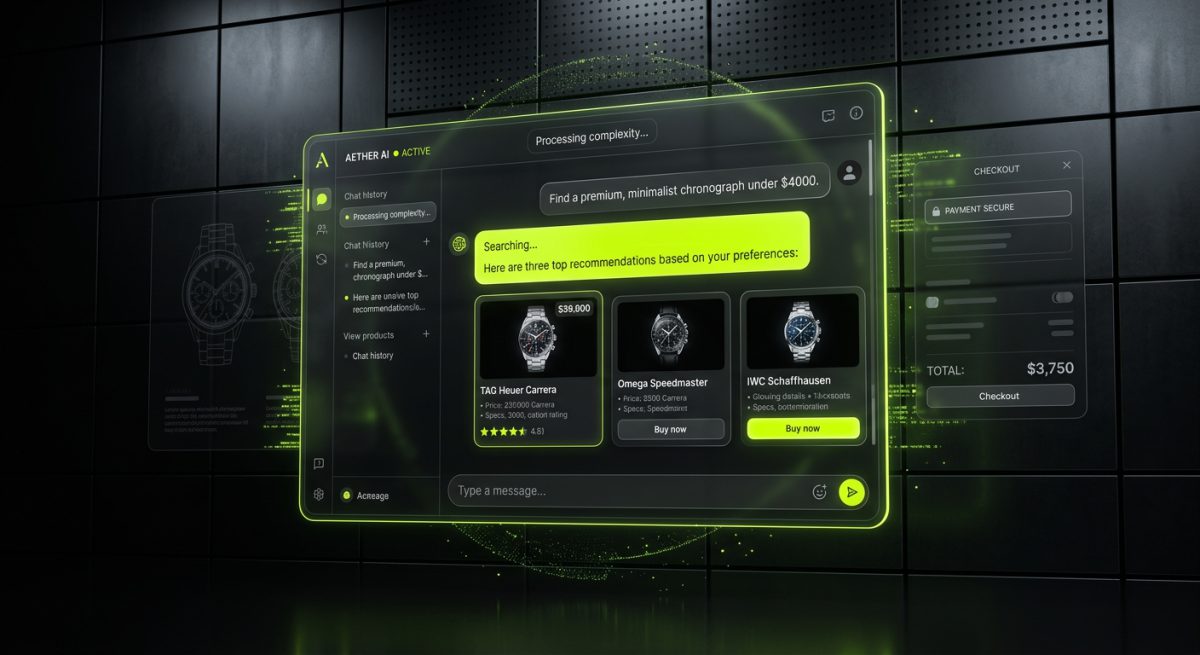
The landscape of digital commerce has undergone a seismic shift from static storefronts to dynamic, interactive ecosystems. Historically, eCommerce support relied on rigid, decision-tree-based chatbots that often frustrated users more than they helped. These legacy systems lacked the semantic understanding required to interpret complex queries, leading to a breakdown in the customer journey. Today, the integration of Large Language Models (LLMs) like GPT-4 and Claude has redefined what is possible, moving beyond simple keyword matching to nuanced, context-aware dialogue. For businesses operating on Shopify Plus enterprise builds or high-scale WooCommerce environments, this transition is not merely a luxury; it is a technical necessity to maintain competitiveness in a market where response time is a primary differentiator.
Modern conversational AI leverages Retrieval-Augmented Generation (RAG) to provide accurate, brand-specific information. Unlike standard AI models that may hallucinate or provide generic answers, a RAG-based system connects the LLM to a private knowledge base—such as your product catalog, shipping policies, and technical specifications. When a user asks a specific question about product compatibility or wholesale pricing, the system retrieves relevant data from your database before generating a response. This ensures that the AI functions as a highly trained digital clerk rather than a generic assistant. At werun.dev, we specialize in building these bridges, utilizing custom plugin development to ensure that your AI agent has real-time access to the data it needs without compromising site performance or security.
The technical stack required for this level of integration involves more than just an API key. It requires a robust middleware layer—often powered by n8n visual workflows—to orchestrate data movement between the LLM, the eCommerce platform's database, and external CRMs. This orchestration allows the AI to perform actions, not just talk. For instance, an AI agent can check real-time inventory levels via the Shopify Admin API, verify a customer’s membership status through a Webflow CMS architecture, and generate a personalized discount code all within a single chat session. This level of technical synergy transforms the chatbot from a support cost-center into a proactive sales engine that understands the intent behind every query.
Maximizing Conversion via Proactive AI Sales Agents
Conversion Rate Optimization (CRO) in the eCommerce sector has traditionally focused on UI/UX tweaks: button colors, checkout speed, and mobile responsiveness. While these remain critical, conversational AI introduces a new dimension to CRO by addressing the "intent gap"—the moment a user has a question that prevents them from clicking 'buy.' By deploying proactive AI agents, businesses can engage users at high-intent moments, such as when they spend an unusual amount of time on a pricing page or repeatedly view a specific SKU. This proactive engagement mimics the experience of a high-end retail store where a knowledgeable sales associate offers assistance exactly when needed.
For B2B organizations, the impact on conversion is even more pronounced. B2B sales cycles are notoriously long and involve multiple stakeholders. AI agents can be trained to qualify leads in real-time, asking the necessary discovery questions and syncing that data directly to a CRM via custom REST API endpoints. Instead of a generic contact form, a potential client interacts with an agent that understands their industry, offers relevant case studies, and schedules a meeting with the sales team based on real-time availability. This reduces the friction in the lead-gen funnel and ensures that your sales team only spends time on highly qualified prospects. This is where the intersection of web development and AI becomes a force multiplier for business growth.
Implementing these systems requires a deep understanding of user behavior and data flow. At werun.dev, we don't just embed a chat window; we architect the underlying logic that drives these interactions. This includes setting up event-based triggers that signal the AI to intervene. For example, if a user adds an item to their cart but hesitates at the shipping calculation, the AI can proactively offer a breakdown of delivery timelines or even a one-time incentive to complete the purchase. This is the future of Shopify development and WooCommerce management: a store that doesn't just wait for sales but actively works to close them. By integrating these agents into your existing tech stack, you create a seamless experience that guides the user from curiosity to conversion with zero latency.
Technical Implementation, Security, and API Orchestration
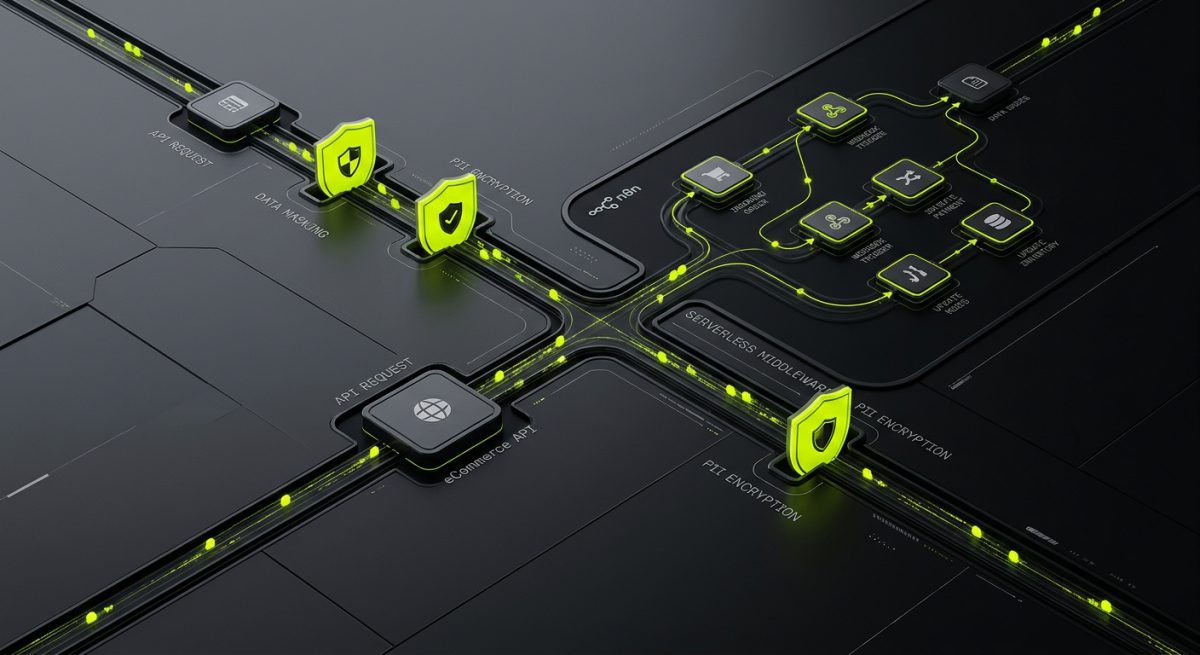
Moving an AI system from a proof-of-concept to a production-ready environment requires a rigorous focus on technical infrastructure and data security. One of the primary concerns for enterprise eCommerce brands is the handling of Personally Identifiable Information (PII). When building AI-driven support systems, it is essential to implement data masking and sanitization layers. These layers ensure that sensitive customer data—such as credit card numbers or home addresses—is never passed to the LLM provider. Instead, we build secure gateways that process the logic locally or via encrypted middleware before sending non-sensitive, contextual tokens to the AI model. This approach maintains compliance with GDPR, CCPA, and other data privacy frameworks while still reaping the benefits of advanced AI.
Scalability is another critical factor. A conversational AI system must be able to handle traffic spikes during Black Friday or major product launches without degrading the site's Core Web Vitals. This is achieved by offloading the heavy lifting of AI processing to serverless functions or dedicated automation environments like n8n, rather than running it directly on the WordPress or Shopify server. By using n8n automation workflows, we can create asynchronous processes that handle thousands of concurrent conversations without adding a single millisecond of load time to your frontend. This separation of concerns is fundamental to our philosophy at werun.dev: we build systems that are robust, maintainable, and built to run unsupervised.
Finally, the long-term success of an AI integration depends on continuous optimization. AI models require "fine-tuning" and regular updates to their knowledge base to remain effective. This involves monitoring conversation logs to identify where the AI might be struggling and updating the RAG data sources accordingly. It also involves technical maintenance of the APIs and webhooks that connect the system. Our monthly maintenance retainers include this level of technical oversight, ensuring that as your product line evolves and your business scales, your AI ecosystem evolves with it. We don't just launch an AI; we run it, ensuring it continues to deliver measurable ROI in the form of reduced support tickets and increased average order value. If you are ready to move beyond basic automation and build a truly intelligent eCommerce ecosystem, our team is ready to architect the solution.