Architectural Foundations of Enterprise AI and Workflow Orchestration
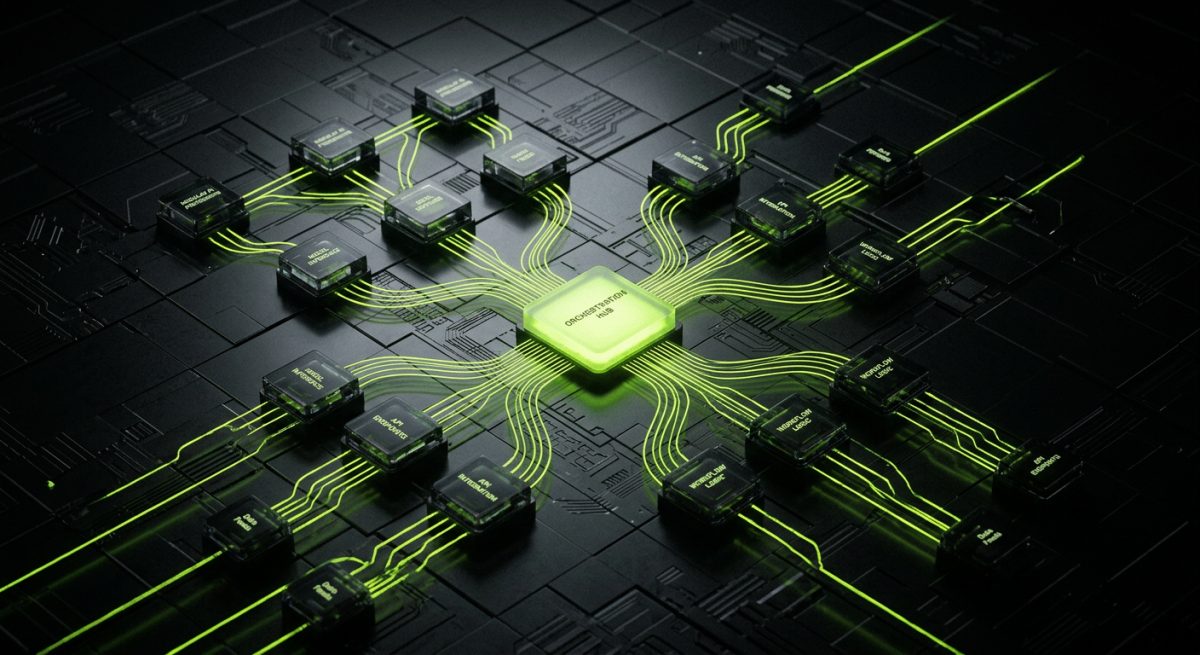
Transitioning from traditional deterministic automation to probabilistic AI-driven systems requires a fundamental shift in how enterprise architectures are designed. At werun.dev, we approach AI automation not as a standalone feature, but as a core layer of the modern business technology stack. The foundation of any scalable enterprise AI system begins with robust orchestration. While simple tools like Zapier offer basic connectivity, true enterprise-grade automation demands the flexibility and control of platforms like n8n. By self-hosting n8n on dedicated infrastructure, we ensure that data remains within the client’s control while providing the ability to execute complex, multi-branch logic that incorporates custom JavaScript or Python nodes for data transformation.
The Role of Retrieval-Augmented Generation (RAG)
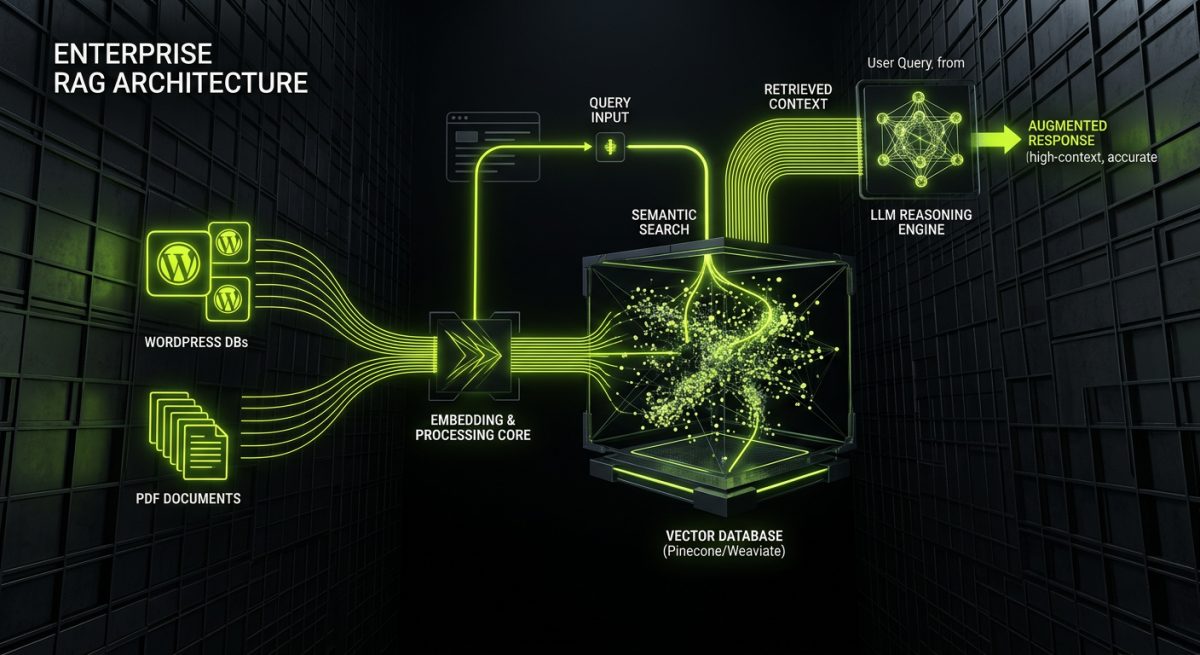
A critical component of enterprise AI architecture is the implementation of Retrieval-Augmented Generation (RAG). Standard Large Language Models (LLMs) like GPT-4 or Claude 3.5 Sonnet are powerful but lack specific knowledge of a company’s internal documentation, product catalogs, or customer history. To solve this, we build pipelines that ingest data from various sources—such as WordPress CMS, Shopify product databases, or internal PDFs—and convert them into vector embeddings. These embeddings are stored in high-performance vector databases like Pinecone or Weaviate. When a query is made, the system performs a semantic search to find the most relevant context and feeds it to the LLM. This ensures that the AI’s responses are grounded in real, proprietary data, significantly reducing hallucinations and increasing the utility of the system for B2B applications.
Decoupled Logic and API-First Design
Scalability in AI automation is achieved through a decoupled architecture. We avoid hard-coding AI logic directly into the frontend or the core CMS. Instead, we utilize an API-first approach where the AI engine acts as a middleware service. For example, a WordPress site might send a request to a custom endpoint on an n8n instance, which then orchestrates the calls to LLMs, vector databases, and internal CRMs like Salesforce or HubSpot. This separation of concerns allows for easier maintenance and the ability to swap out LLM providers as better models become available without rewriting the entire integration. By leveraging namespaces and custom endpoints within the WordPress REST API, we create secure, authenticated bridges that can handle high-concurrency requests while maintaining the 99.97% uptime our clients expect.
Infrastructure and Self-Hosting for Security
For enterprise clients, data privacy is paramount. Many generic AI tools process data in shared cloud environments that may not meet strict compliance standards. Our approach often involves deploying self-hosted instances of automation tools and utilizing private API deployments. This ensures that sensitive customer data from WooCommerce or Shopify Plus never leaves the controlled environment except when explicitly sent to a verified LLM provider via encrypted channels. Furthermore, by managing the infrastructure, we can implement custom logging and monitoring solutions that track every execution, providing a clear audit trail for compliance and performance optimization.
Implementing Scalable AI Workflows in WordPress and Shopify
Integrating AI into established platforms like WordPress and Shopify requires more than just installing a plugin; it requires custom development that adheres to professional coding standards. At werun.dev, we specialize in building the "parts that don't exist yet." In the context of WordPress, this often means developing custom plugins that utilize the WP_REST_Controller to handle AI-generated content or customer interactions. These plugins are built using hooks, filters, and proper sanitization to ensure they are secure and performant. By offloading heavy AI processing to background tasks via WP-Cron or the Action Scheduler, we ensure that the user experience remains fast, even when the system is performing complex data enrichment or content generation.
Custom Plugin Architecture for AI
When building AI features for WordPress, we follow a strict development workflow that includes version control via GitHub and automated deployment pipelines. Every custom plugin we deliver is documented and designed to be maintainable. For instance, an AI-driven product recommendation engine for a WooCommerce store would involve a custom plugin that monitors user behavior and sends data to an n8n workflow. The workflow processes the data through a recommendation model and updates the user's session or a custom meta field in real-time. This level of integration goes far beyond what off-the-shelf solutions can provide, offering a tailored experience that aligns with specific business goals and conversion strategies.
Shopify Plus and Enterprise Extensibility
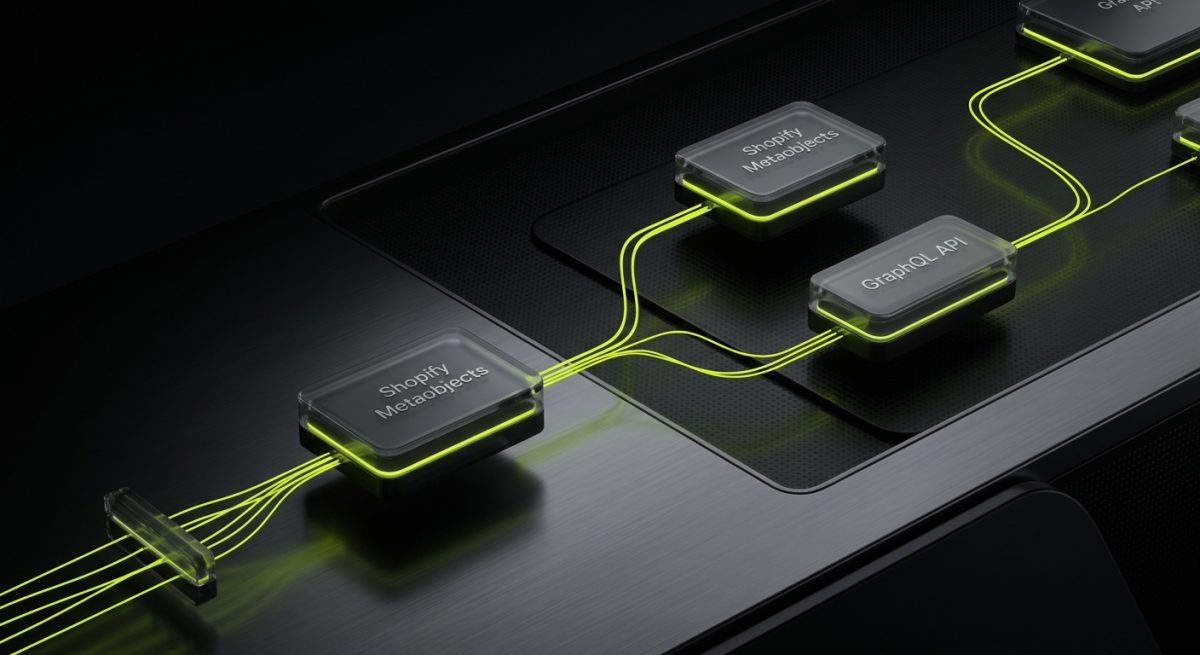
For Shopify merchants, particularly those on Shopify Plus, AI automation offers massive opportunities for operational efficiency. We utilize Shopify Flow in combination with custom App Blocks and Liquid templates to surface AI-driven insights directly on the storefront or within the admin dashboard. Whether it is automating B2B wholesale pricing logic based on historical purchase data or using AI to generate SEO-optimized product descriptions, the key is extensibility. By using Shopify’s GraphQL Admin API, we can perform bulk operations and manage complex data structures like Metaobjects, which serve as the perfect storage for AI-generated attributes and custom data points. This allows for a seamless blend of native Shopify functionality and advanced AI logic.
Handling High-Volume Transactions and Concurrency
Scalability is particularly challenging in e-commerce during peak traffic events. Our AI architectures are designed to handle volume through asynchronous processing and queue management. If a Shopify store receives thousands of orders per hour, the AI-driven fraud detection or fulfillment automation must not create a bottleneck. We implement retry logic and error-handling nodes within our n8n flows to ensure that if an external API (like OpenAI) experiences a temporary timeout, the transaction is not lost. Instead, it is queued and re-processed automatically. This resilience is what separates a hobbyist automation from an enterprise-grade system capable of supporting a global brand.
Best Practices for Security, Governance, and Long-Term Maintenance
In the rapidly evolving landscape of AI, the "build it and forget it" mentality is a recipe for technical debt and security vulnerabilities. Enterprise AI automation requires a rigorous governance framework and a commitment to long-term maintenance. At werun.dev, we manage over 200 active sites with a focus on durability. This starts with security at the API level. Every integration we build uses secure authentication protocols, such as JWT (JSON Web Tokens), OAuth 2.0, or API keys stored in environment variables. We never hard-code credentials, and we implement strict rate limiting to prevent abuse and manage costs associated with LLM token usage.
Error Handling and Proactive Monitoring
A robust AI system must be able to fail gracefully. In an enterprise environment, a broken automation can lead to lost revenue or damaged customer trust. We build comprehensive error-handling logic into every workflow. This includes using "Error Trigger" nodes in n8n that immediately alert our team via Slack or email if a critical failure occurs. Because we provide an SLA of less than 4 hours, our developers can intervene quickly to resolve issues before they impact the business. Furthermore, we implement logging mechanisms that capture not just the error, but the input data that caused it, allowing for rapid debugging and model fine-tuning.
Data Sanitization and Output Validation
One of the biggest risks with LLMs is the unpredictability of their output. When AI-generated content is being pushed directly to a production site—whether it's a Webflow CMS item or a WordPress post—it must be sanitized and validated. We implement a validation layer between the AI and the CMS. This layer checks the output for prohibited content, formatting errors, or broken HTML tags. In many cases, we use a "human-in-the-loop" workflow for high-stakes content, where the AI generates a draft in a custom post type with a status of 'pending,' and a human editor receives a notification to review and publish it. This balances the efficiency of AI with the necessary oversight of human expertise.
Versioning and GitHub-Driven Updates
To ensure long-term maintainability, all our custom code—including n8n workflow definitions, WordPress plugins, and Shopify themes—is version-controlled. We use GitHub as the single source of truth, enabling us to roll back changes if an update causes unexpected behavior. For our WordPress clients, we have developed a proprietary system for auto-updates via GitHub releases. This means that when we improve an AI feature or patch a security vulnerability in a custom plugin, the update is pushed automatically to the client's site, ensuring they are always running the most secure and efficient version of the software. This professional approach to deployment is a core differentiator of the werun.dev service model, providing enterprise clients with the peace of mind that their AI infrastructure is built to last.