The Technical Foundation of Brand-Consistent Generative AI
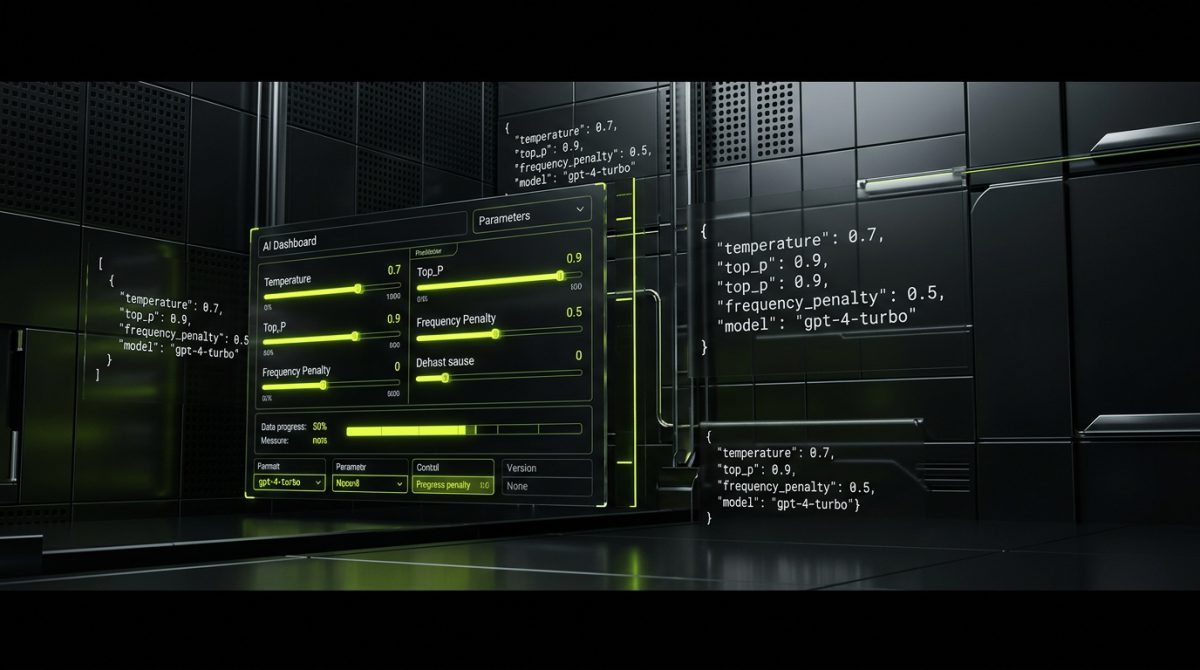
Large language models (LLMs) operate on statistical probabilities, which often leads to the "averaging" of content—a phenomenon where the output sounds professional but lacks the specific idiosyncrasies that define a unique brand voice. To scale content effectively, organizations must move beyond the consumer-grade "chat" interface and look into the API layer. By manipulating parameters such as temperature, top_p, and frequency_penalty, developers can control the creative variance of the model. A temperature of 0.7 might be ideal for creative blog posts, while a setting of 0.2 is better for technical documentation where precision is paramount. Furthermore, the system prompt serves as the "constitution" for the AI. Instead of simply saying "write in a friendly tone," a robust system prompt defines the brand’s persona, target audience, forbidden vocabulary, and preferred sentence structures.
This level of technical granularity is what separates a generic AI output from a brand-aligned asset. At werun.dev, we specialize in custom AI integrations that embed these parameters directly into the communication layer, ensuring that every API call is grounded in the brand's specific identity. This architectural approach prevents the "drift" that often occurs when non-technical teams use consumer-grade AI tools without centralized governance. When building these systems, we prioritize the use of JSON-mode outputs from models like GPT-4o or Claude 3.5 Sonnet to ensure that the generated content can be programmatically parsed and injected into CMS fields without manual reformatting.
Tokenization and context window management also play a critical role. If a prompt is too vague, the model relies on its general training data, which dilutes the brand voice. By providing "few-shot" examples—actual snippets of high-performing brand content—within the prompt, we anchor the model's output to the desired stylistic patterns. This technical strategy ensures that even as content volume increases by 300% or more, the stylistic delta between human-written and AI-generated text remains negligible.
Optimization through LLM Parameters
To achieve high-fidelity brand alignment, we utilize specific API configurations:
- Temperature (0.3 - 0.5): Balances predictability with enough linguistic variety to avoid repetitive phrasing.
- Presence Penalty (0.1 - 0.3): Encourages the model to discuss new topics, preventing the "looping" effect common in long-form AI generation.
- Frequency Penalty (0.1 - 0.4): Reduces the likelihood of the model repeating the same words verbatim, which is a hallmark of low-quality AI content.
Building Scalable Automation Pipelines with Retrieval-Augmented Generation (RAG)

The most significant advancement in maintaining brand voice at scale is the implementation of Retrieval-Augmented Generation (RAG). RAG allows the AI to "consult" a private library of brand assets—style guides, past successful campaigns, product specifications, and white papers—before generating a single word. This process involves a data pipeline where unstructured text is converted into vector embeddings using models like OpenAI's text-embedding-3-small. These embeddings are stored in a vector database such as Pinecone, Weaviate, or Milvus. When a content request is made, the system performs a semantic search to find the most relevant "brand context" and injects it into the LLM's context window.
This ensures the output is not just grammatically correct, but factually accurate and stylistically consistent with the company's historical output. Building these complex automation workflows requires a deep understanding of data orchestration and cloud infrastructure. werun.dev approaches these challenges by building secure, scalable middleware that sits between your data sources (like Google Drive, Notion, or internal wikis) and the AI providers. This ensures that sensitive brand data remains protected within your VPC (Virtual Private Cloud) while providing the AI with the rich context it needs to perform.
By automating the retrieval process, companies can reduce the time spent on manual fact-checking and stylistic editing by up to 60%. The workflow typically involves a Python-based orchestrator (using frameworks like LangChain or LlamaIndex) that manages the flow of data from the vector store to the LLM. This architecture allows for "dynamic grounding," where the AI's knowledge base is updated in real-time as your brand evolves. If your marketing team updates the brand guidelines in a shared folder, the RAG pipeline automatically re-indexes that document, and all subsequent AI-generated content reflects the new standards immediately.
import openai
from pinecone import Pinecone

# Example of a RAG-enabled content generation call
def generate_brand_content(query, brand_context_id):
    pc = Pinecone(api_key="YOUR_API_KEY")
    index = pc.Index("brand-voice-index")

    # Retrieve relevant brand snippets
    results = index.query(vector=get_embedding(query), top_k=3, include_metadata=True)
    context = " ".join([res['metadata']['text'] for res in results['matches']])

    # Generate content with context
    response = openai.chat.completions.create(
        model="gpt-4o",
        messages=[
            {"role": "system", "content": f"You are a brand editor. Use this context: {context}"},
            {"role": "user", "content": query}
        ],
        temperature=0.4
    )
    return response.choices[0].message.content
From Experiment to Production: A Shopify and WordPress Case Study
To illustrate the power of this approach, consider a mid-market B2B enterprise managing a multi-site WordPress environment and a high-volume Shopify store. Their challenge was producing 50+ localized product descriptions and 10 technical blog posts per week without ballooning their headcount or sacrificing the premium feel of their brand. werun.dev implemented a custom solution that integrated their integrated CRM systems with a centralized AI content engine. The workflow began in the CRM, where new product data or marketing briefs triggered a webhook.
This webhook sent the raw data to a Node.js microservice hosted on AWS Lambda. The service pulled the latest brand guidelines from a vector database, formatted a multi-stage prompt, and queried the LLM. The resulting content was then pushed via the WordPress REST API as a "draft" for human review. For their scalable eCommerce development needs, we applied similar logic to Shopify, automatically generating SEO-optimized meta descriptions and alt text based on image recognition metadata from their product catalog.
This implementation transformed their content department from a bottleneck into a high-speed engine. The technical credibility of such a system relies on the robustness of the API integrations and the error-handling logic. If the AI output fails a programmatic "brand check" (using a secondary LLM as a critic to verify tone and restricted word lists), the system automatically flags it for manual intervention. This "Human-in-the-loop" (HITL) model is the gold standard for enterprise AI, ensuring that scaling never comes at the cost of quality or reputation.
At werun.dev, we don't just connect APIs; we build the infrastructure that allows AI to function as a reliable member of your creative team. We focus on secure data handling, ensuring that your proprietary brand data is never used to train public models, and we build the monitoring tools necessary to track the ROI of your automation efforts. Whether you are looking to automate product launches on Shopify or manage a complex content calendar on WordPress, our technical team ensures your AI strategy is production-ready, secure, and perfectly aligned with your brand voice.
Ready to scale your content production without compromising your identity? Explore our AI integration services or book a technical consultation with our engineering team to discuss your specific automation needs.