Architecting Scalable AI Services with n8n and Custom Code
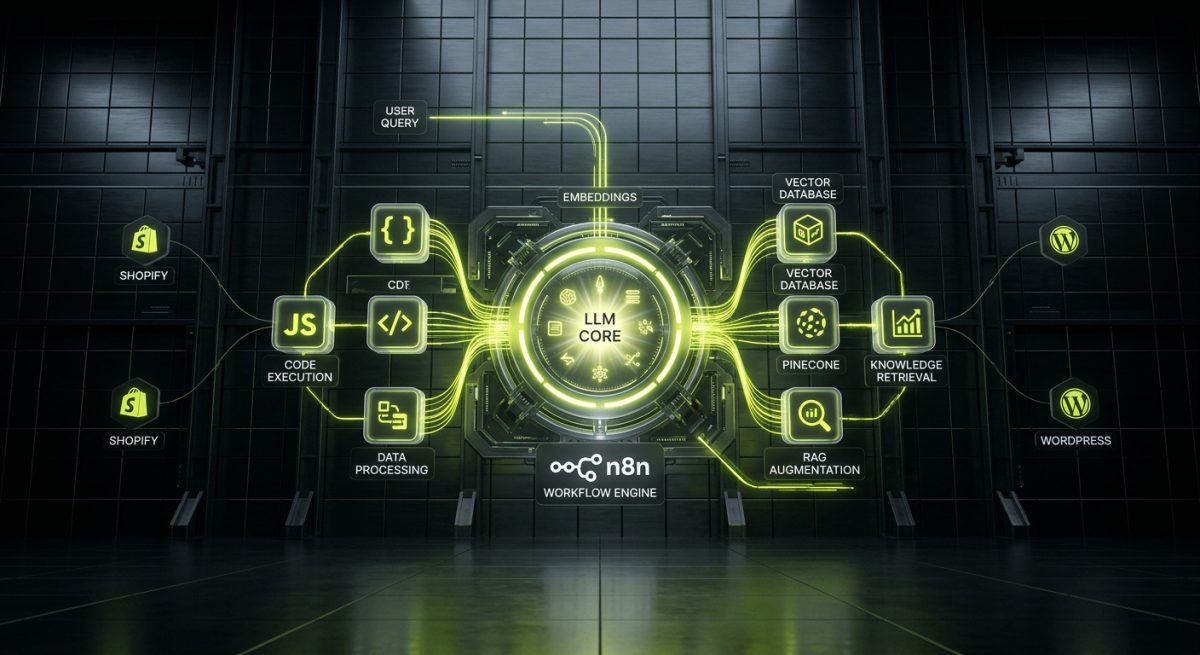
The transition from simple task automation to profitable AI-driven services requires a robust architectural foundation. At werun.dev, we specialize in building these foundations using n8n, an extensible workflow automation tool that allows for deep integration between Large Language Models (LLMs) and business ecosystems like WordPress, Webflow, and Shopify. Unlike closed-loop automation platforms, n8n provides the flexibility to self-host, ensuring data sovereignty and significantly lower operational overhead when scaling high-volume AI requests. To monetize these automations, you must first move beyond basic triggers and actions toward a structured "AI-as-a-Service" (AIaaS) model.
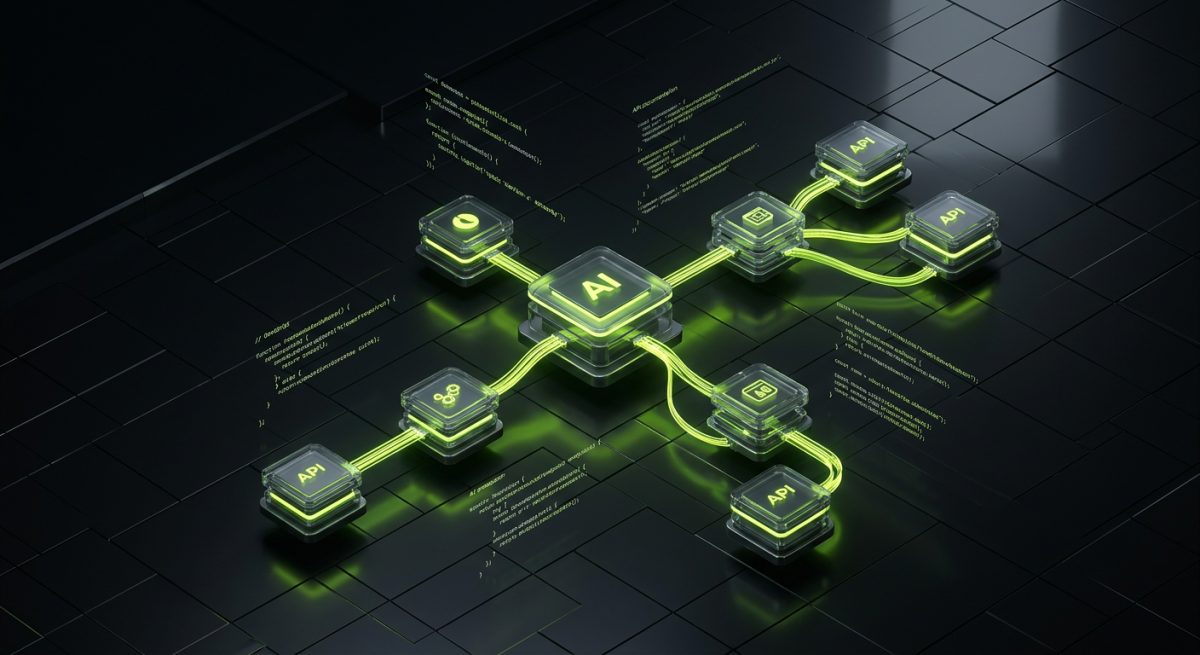
Building a scalable AI service begins with the selection of the right LLM provider—typically OpenAI’s GPT-4 or Anthropic’s Claude—and connecting them through n8n’s specialized AI nodes. However, the real value for B2B clients lies in the customization of these workflows. We often deploy custom JavaScript nodes within n8n to handle complex data transformation, ensuring that the input sent to the LLM is sanitized and structured correctly. For instance, if you are building an automated content enrichment tool for a Shopify store, your n8n workflow must fetch product metadata, pass it through a custom prompt engineering layer, and then validate the output before updating the Shopify API. This level of precision is what transforms a simple script into a premium, billable service.
Efficiency is the primary metric for monetization. By leveraging n8n’s self-hosted capabilities on dedicated infrastructure, businesses can avoid the per-task pricing models of competitors like Zapier, which often eat into the margins of AI-driven products. A self-hosted n8n instance, maintained with a 99.97% uptime standard, allows you to process thousands of complex multi-step workflows for a fraction of the cost. This architectural choice enables a 75% faster deployment cycle for new automation features compared to traditional hard-coded backend development. When you can iterate quickly and maintain low marginal costs, your ability to offer competitive pricing to end-users increases, directly impacting your bottom line. Furthermore, integrating vector databases like Pinecone or Weaviate through n8n allows for the implementation of Retrieval-Augmented Generation (RAG), providing users with AI that understands their specific business context, a feature that commands a significant price premium in the B2B market.
Monetization Strategies: From SaaS to Managed Services
Once the technical architecture is established, the focus shifts to the commercial layer. Monetizing AI automations is effectively achieved through three primary models: usage-based billing, subscription-based "AI Wrappers," and high-ticket managed automation services. Each of these models relies on a tight integration between your automation engine (n8n) and your billing and user management systems, typically powered by Stripe and WordPress. For B2B agencies and developers, creating a seamless bridge between these platforms is essential for recurring revenue.
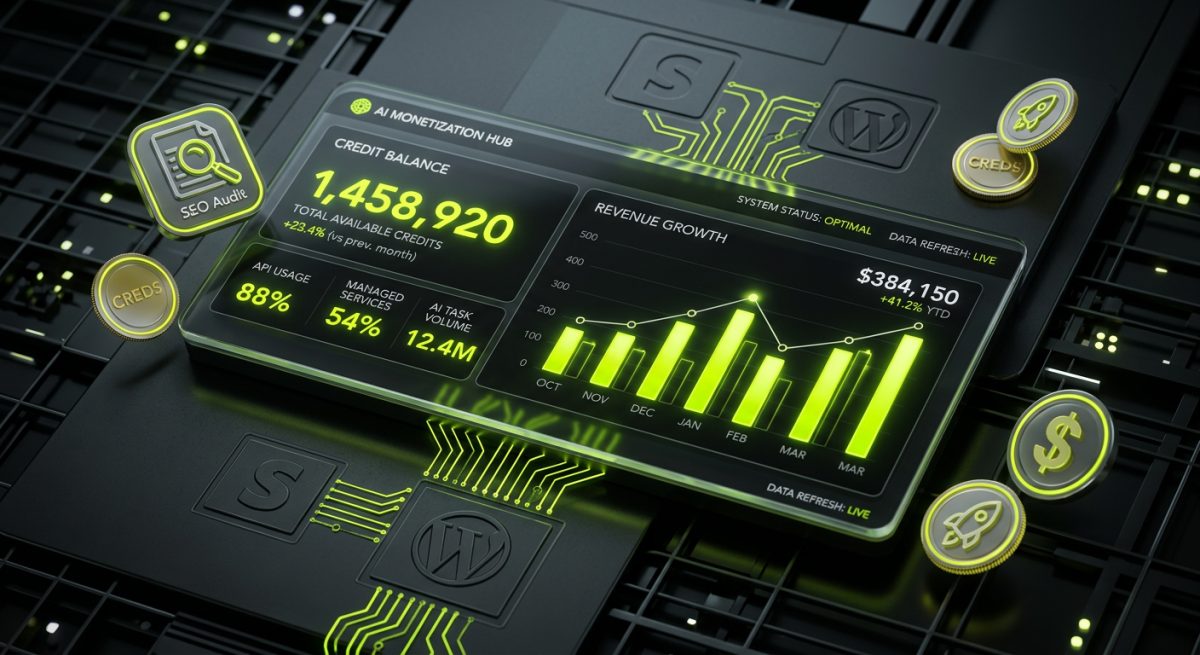
Usage-based billing is arguably the most transparent and scalable way to monetize AI. By utilizing the WordPress REST API and custom plugin development, we can create a "Credit System" where users purchase tokens to run specific AI tasks. For example, a user might pay for 100 "SEO Audit" runs. Each time the n8n workflow is triggered via a webhook from the user’s dashboard, the workflow performs the task and then sends a callback to the WordPress site to decrement the user’s credit balance. This requires sophisticated error handling; if the AI task fails, the credit must not be consumed. We implement these logic gates using n8n’s "Error Trigger" nodes and custom hooks to ensure transactional integrity. This model is highly attractive to enterprise clients who prefer to pay only for the value they consume, and it allows for a 40% reduction in operational friction by automating the entire billing-to-fulfillment cycle.
Alternatively, many of our clients opt for the managed service model. In this scenario, the monetization isn't derived from a self-service portal but from a high-value retainer. We design, deploy, and maintain bespoke n8n pipelines that connect a client's CRM (like Salesforce or HubSpot) with AI agents to automate lead qualification or customer support. The value proposition here is the elimination of manual labor. By demonstrating that an AI automation can replace 20 hours of manual data entry per week, the service pays for itself. To support this, we provide comprehensive logging and reporting within the n8n environment, giving clients visibility into every execution and the resulting ROI. Whether you are building a niche SaaS or an enterprise-grade automation suite, the key to monetization is the reliability of the integration. This is why our development standards include rigorous sanitization, nonces for security, and detailed API documentation for every custom endpoint we build to support these workflows.
Advanced Integration Patterns for Enterprise Reliability
Reliability is the difference between a side project and a professional AI business. When you monetize an automation, you are selling an uptime and performance guarantee. Enterprise clients expect that their AI-driven workflows will function 24/7 without intervention. Achieving this requires moving beyond basic "if-this-then-that" logic and implementing advanced integration patterns that handle the inherent instability of external APIs and LLM latency. At werun.dev, we apply rigorous engineering standards to n8n workflows to ensure they meet the demands of modern business environments.
One critical pattern is the implementation of robust error handling and retry logic. LLM APIs can occasionally time out or return rate-limit errors (429). A professional n8n setup uses "Wait" nodes and conditional loops to retry failed requests exponentially, ensuring that a temporary glitch doesn't break the entire customer experience. We also implement "Circuit Breakers"—if a specific service (like an LLM provider) is down, the workflow can automatically switch to a backup provider (e.g., switching from OpenAI to Anthropic) to maintain service continuity. This level of redundancy is a major selling point when pitching AI services to B2B clients who cannot afford downtime. Our experience shows that maintaining a 99.97% uptime for these middleware layers is crucial for long-term contract retention.
Security and data privacy also play a pivotal role in monetization, especially under regulations like GDPR. When building AI automations that process sensitive client data, we ensure that every API call is authenticated via JWT or OAuth 2.0 and that data is encrypted in transit. In n8n, this means managing credentials securely and using environment variables for sensitive keys. For WordPress-based AI tools, we develop custom REST API namespaces that include capability checks and input validation to prevent unauthorized access to the automation engine. By positioning your AI service as a "secure and compliant" solution, you can target higher-tier industries like finance, legal, and healthcare, where the willingness to pay for automation is significantly higher. Finally, we focus on performance optimization. AI tasks can be slow; therefore, we use asynchronous processing via WP Cron or Action Scheduler to ensure the user’s web interface remains responsive while the n8n engine works in the background. This architectural decoupling results in a superior user experience, which is the ultimate driver of customer satisfaction and recurring revenue in the competitive AI landscape.