The Architecture of Enterprise-Grade Automation Pipelines
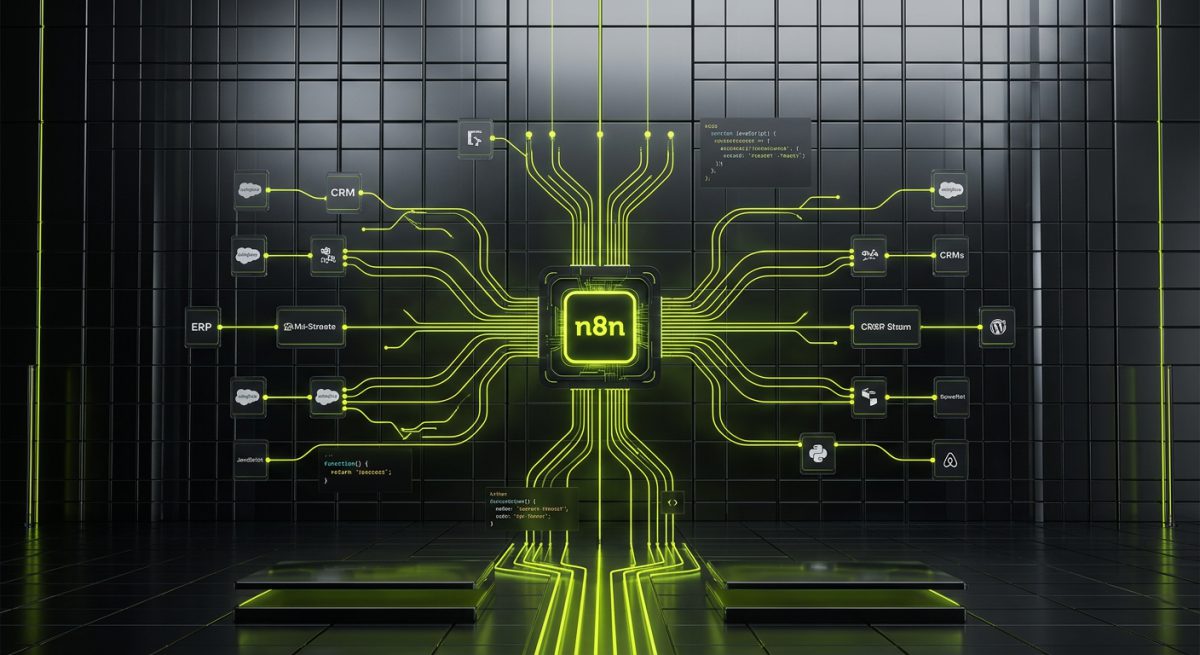
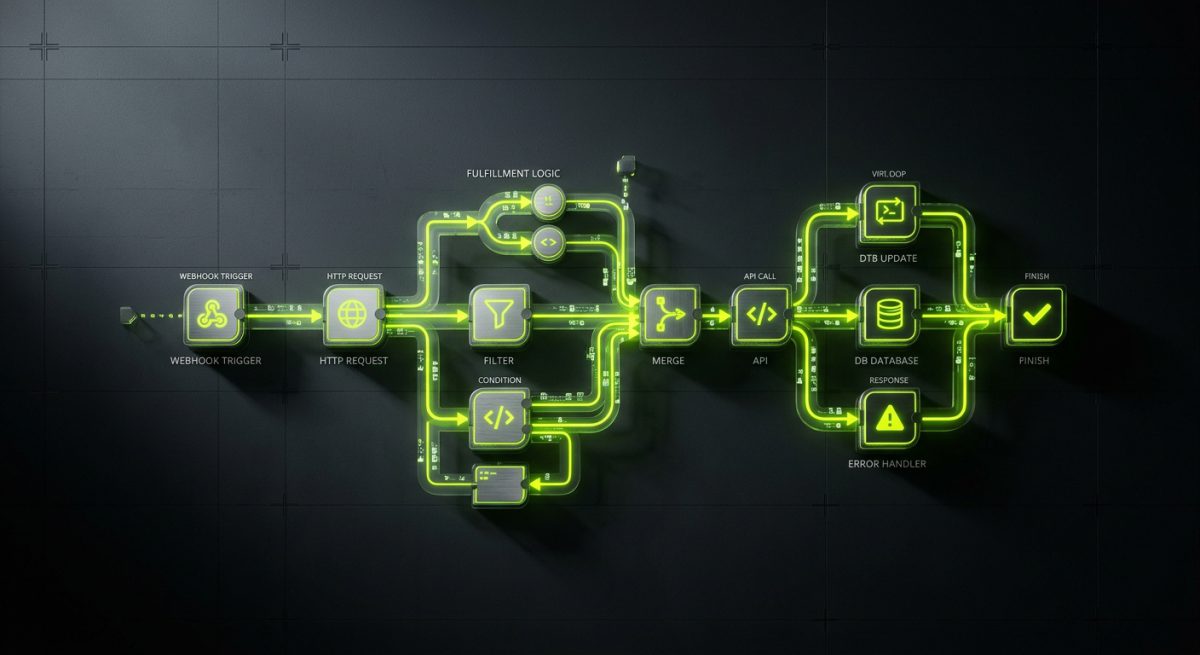
Modern B2B operations no longer rely on simple, linear "if-this-then-that" triggers. To achieve true scalability, organizations must transition toward complex process automation pipelines that act as the central nervous system of their digital ecosystem. At werun.dev, we specialize in designing these systems using n8n as a core orchestration engine, allowing for a level of flexibility and depth that standard SaaS automation tools cannot match. An enterprise-grade pipeline is characterized by its ability to handle multi-step, multi-branch logic, connecting disparate platforms like CRMs, ERPs, and custom databases through a unified workflow.
The foundation of a robust pipeline begins with the trigger mechanism. While basic automations might rely on a single webhook, sophisticated pipelines utilize multi-trigger configurations. This includes scheduled cron jobs for data synchronization, real-time webhooks for immediate action, and form-event triggers for lead capture. By centralizing these triggers within n8n, businesses can ensure that data flows seamlessly across their stack without manual intervention. A critical differentiator in our approach is the use of custom code nodes. While many platforms limit users to pre-built connectors, we leverage JavaScript and Python nodes to manipulate data precisely as it moves through the pipeline. This allows for complex data transformation, such as reformatting JSON payloads for legacy systems or performing mathematical calculations before updating a financial record.
API orchestration is another pillar of high-level automation. Most modern B2B tools offer APIs, but the challenge lies in managing the rate limits, authentication protocols, and data schemas unique to each provider. A well-designed pipeline handles these complexities transparently. For instance, when connecting a Shopify store to a high-end ERP, the pipeline must manage inventory updates in batches to avoid hitting API limits while ensuring that every transaction is accounted for. This level of orchestration requires a deep understanding of asynchronous processing. By decoupling the trigger from the execution, we build pipelines that can handle spikes in traffic—such as during a product launch or a marketing campaign—without losing a single byte of data. This architectural resilience is what separates a simple script from a professional automation pipeline that powers a multi-million dollar business.
// Example of a custom JavaScript node in n8n for data normalization
const items = input.all();
const normalizedData = items.map(item => {
    return {
        json: {
            internal_id: item.json.id.toString().padStart(8, '0'),
            formatted_price: new Intl.NumberFormat('en-US', { style: 'currency', currency: 'USD' }).format(item.json.price),
            sync_timestamp: new Date().toISOString()
        }
    };
});
return normalizedData;
Beyond simple data movement, these pipelines serve as the infrastructure for business logic. Instead of hardcoding rules into individual applications, the pipeline acts as a middleware where business rules are applied globally. If a company changes its lead scoring algorithm, the update only needs to happen in one place—the automation pipeline—rather than across multiple marketing and sales tools. This centralized logic ensures consistency across the entire organization and drastically reduces the technical debt associated with managing multiple siloed integrations. If you are ready to move beyond basic triggers, contact our team at https://werun.dev/ to design your custom architecture.
Integrating AI and Retrieval-Augmented Generation (RAG)

The next evolution of process automation is the integration of Intelligence. At werun.dev, we don't just move data; we make it smarter. By embedding Large Language Models (LLMs) like OpenAI’s GPT-4 or Anthropic’s Claude directly into n8n pipelines, we enable businesses to automate cognitive tasks that previously required human judgment. This is achieved through advanced AI nodes that can analyze sentiment, summarize long-form documents, or categorize support tickets based on context. However, the true power of AI in automation is realized through Retrieval-Augmented Generation (RAG).
A RAG-enabled pipeline connects your automation flows to a private knowledge base. Instead of the AI providing generic answers, it queries your internal documentation, wikis, or product manuals to provide contextually accurate responses. We build these systems by creating vector embeddings of your data and storing them in specialized databases. When a trigger occurs—such as a customer inquiry via a chatbot—the pipeline searches the vector database for the most relevant information and feeds it to the LLM. This ensures that the output is not only intelligent but grounded in your specific business facts. This technology is transformative for customer support, where agents can be replaced or assisted by bots that have instant access to every technical manual and past interaction ever recorded.
Data enrichment is another area where AI-driven pipelines excel. In a traditional B2B sales cycle, a lead might enter a CRM with only an email address. A werun.dev automation pipeline can take that email, trigger a web scraping agent to find the person’s LinkedIn profile, visit their company website to extract the latest news, and then use an LLM to write a personalized outreach email based on that specific data. This entire process happens in seconds, transforming a cold lead into a highly qualified prospect without a human ever lifting a finger. These autonomous agents can run on a schedule, constantly scanning for new opportunities and enriching your database with high-value insights.
Furthermore, AI nodes can be used for sophisticated data validation. Standard regex can only go so far in verifying user input. An AI node can "read" a form submission and determine if the message is spam, a legitimate sales inquiry, or a technical support request, routing it to the appropriate department with high accuracy. This reduces the noise for your team and ensures that high-priority tasks are handled first. The integration of AI into pipelines creates a self-improving system; as more data flows through the pipeline, the models can be refined to provide even more accurate results. This synergy between traditional automation and modern AI is the ultimate competitive advantage for B2B agencies looking to scale efficiently. To implement these intelligent agents in your business, visit https://werun.dev/ for a consultation.
Resilience, Error Handling, and Infrastructure Management
A pipeline is only as valuable as its reliability. In a production environment, failure is not an option. When an API goes down or a server times out, the automation must be capable of self-healing. At werun.dev, we build pipelines with comprehensive error-handling logic, including retry strategies and circuit breakers. If an external service fails to respond, the pipeline doesn't just crash; it enters a retry loop with exponential backoff, attempting to complete the task once the service is back online. If the failure persists, the system triggers an alert via Slack or email, providing developers with detailed execution logs to diagnose the issue immediately. This level of monitoring is essential for maintaining our 99.97% uptime standard.
Infrastructure choice is a critical decision in the deployment of these pipelines. While cloud-hosted solutions offer convenience, many of our clients opt for self-hosted n8n installations. Self-hosting provides several key advantages: data sovereignty, enhanced security, and significant cost savings. When processing high volumes of data, SaaS-based automation tools can become prohibitively expensive due to per-execution pricing. By hosting n8n on your own infrastructure (or a private cloud managed by us), you eliminate these variable costs while ensuring that sensitive customer data never leaves your controlled environment. This is particularly important for B2B companies in regulated industries like fintech or healthcare, where data privacy is a legal requirement.
Managing complex, multi-branch pipelines also requires a disciplined approach to version control and deployment. We treat automation as code. This means that changes to a pipeline are tested in a staging environment before being pushed to production. We use n8n’s ability to export and import workflows as JSON files to maintain a history of changes, allowing us to roll back to a previous version instantly if an error is detected. This "DevOps" approach to automation ensures that your business processes are stable, predictable, and easy to maintain over the long term. We also implement detailed logging for every execution, allowing for comprehensive reporting on pipeline performance and ROI.
Finally, scalability must be built into the infrastructure from day one. As your business grows, the number of executions your pipelines handle will increase exponentially. A self-hosted n8n instance can be scaled horizontally or vertically to meet this demand. Whether you are processing a hundred leads a month or a million transactions a day, the pipeline must remain performant. By optimizing node execution and managing database connections efficiently, we ensure that your automation infrastructure grows with you, rather than becoming a bottleneck. The goal is to create a system that runs silently in the background, allowing your team to focus on high-level strategy while the pipeline handles the operational heavy lifting. For a resilient automation setup that scales with your ambition, connect with us at https://werun.dev/.