The Architecture of Autonomy: Moving Beyond Static Workflows
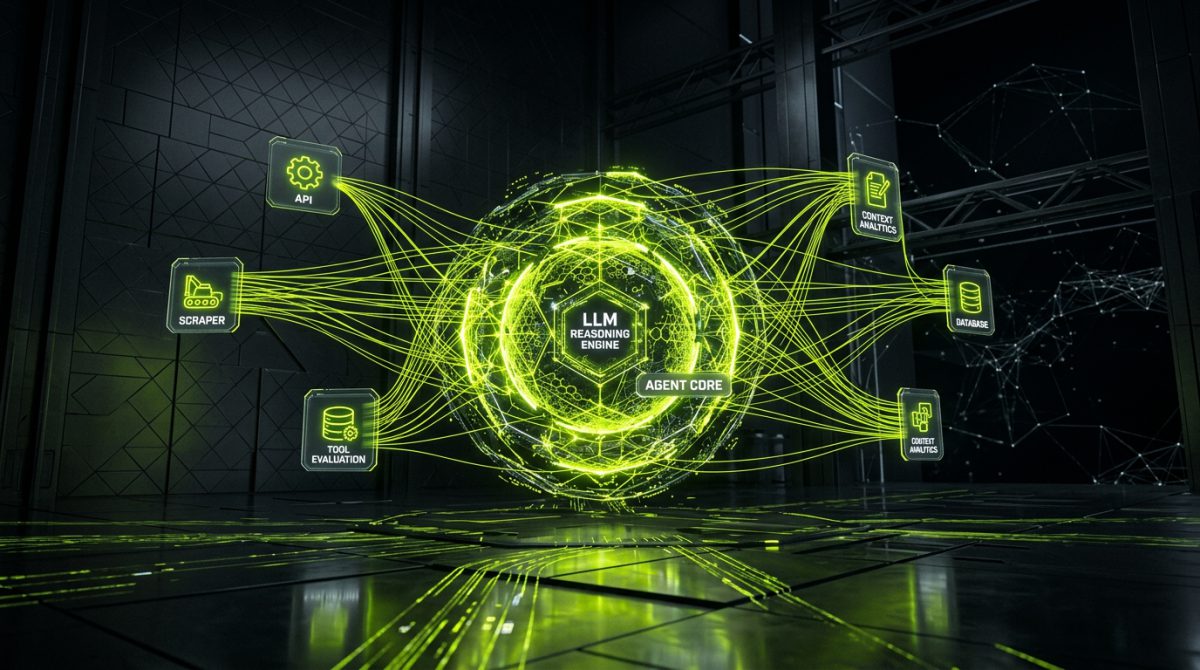
The landscape of business process automation has undergone a fundamental shift. For years, enterprises relied on Robotic Process Automation (RPA) and linear workflows—systems that followed strict "if-this-then-that" logic. While effective for repetitive tasks, these systems lacked the flexibility to handle ambiguity or unexpected variables. Enter Autonomous AI Agents. Unlike traditional bots, these agents leverage Large Language Models (LLMs) like GPT-4 and Claude 3.5 Sonnet as their central reasoning engines. They do not just follow a script; they interpret goals, decompose complex objectives into actionable steps, and self-correct when they encounter obstacles. At werun.dev, we specialize in moving beyond basic automation by building intelligent systems that act as virtual employees capable of managing end-to-end business functions.
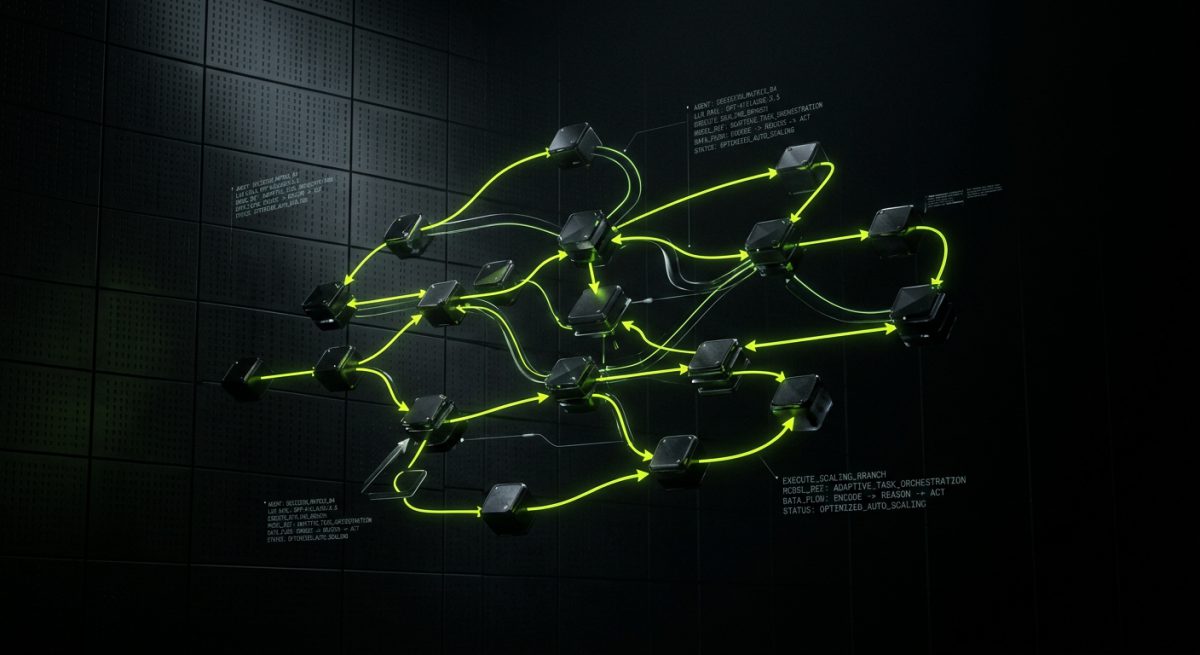
An autonomous agent operates through a continuous loop of perception, reasoning, and action. When a goal is assigned—such as "Identify and enrich 500 high-intent leads from LinkedIn and sync them to our CRM"—the agent doesn't just execute a single API call. It first plans the strategy, identifies the necessary tools (scraping modules, search APIs, and database connectors), and begins execution. If a specific website blocks a scraper, the agent doesn't simply fail; it analyzes the error, attempts a different proxy or method, and continues until the objective is met. This level of dynamic reasoning is what differentiates a simple n8n workflow from a true autonomous agent. The reasoning engine allows the system to handle unstructured data, making decisions based on context rather than rigid rules. This capability is critical for B2B environments where data is often messy and requirements change rapidly.
Implementing these agents requires a sophisticated stack that balances power with reliability. We utilize advanced prompting techniques like Chain-of-Thought (CoT) and ReAct (Reasoning and Acting) frameworks to ensure the agent remains focused on the primary objective. By providing the agent with a "toolbox"—a set of custom JavaScript nodes, API connectors, and vector database lookups—we empower it to interact with the digital world just as a human operator would. This shift from manual task execution to goal-oriented autonomy allows businesses to scale their operations without a linear increase in headcount. The result is a system that not only works faster but works smarter, identifying efficiencies that a human might overlook during a standard workday.
Orchestrating Intelligence: n8n and the Agentic Stack

Building a robust autonomous agent is not merely about choosing the right LLM; it is about the orchestration layer that connects the brain to the body. At werun.dev, we leverage n8n as our primary orchestration platform to create complex, multi-branch pipelines. The flexibility of n8n allows us to host the infrastructure locally or in the cloud, ensuring data privacy and security—a non-negotiable requirement for our B2B clients. Within this ecosystem, we build agents that utilize "Knowledge Bases" through Retrieval-Augmented Generation (RAG). By connecting an agent to a vector database like Pinecone or Weaviate, we provide it with real-time access to your company’s internal documentation, product catalogs, and historical client interactions. This ensures that every action the agent takes is grounded in your specific business context, eliminating the "hallucination" risks often associated with generic AI models.
// Example of a custom n8n node logic for an autonomous agent
// This snippet handles dynamic tool selection based on LLM output
const toolMapping = {
  search: "google_search_node",
  scrape: "web_scraper_node",
  crm_update: "hubspot_integration_node"
};

const action = items[0].json.suggested_action;
const targetNode = toolMapping[action];

if (targetNode) {
  return [{ json: { route: targetNode, payload: items[0].json.data } }];
} else {
  throw new Error("Agent requested an unknown tool.");
}
The technical complexity of these agents involves managing state and memory. An agent must remember what it has already done to avoid infinite loops and wasted API credits. We implement sophisticated logging and error-handling mechanisms that allow the agent to "save its progress" and resume after a failure. This is particularly important for long-running tasks like deep-web scraping or massive data enrichment pipelines. By using custom Python and JavaScript nodes within n8n, we can extend the agent's capabilities far beyond standard integrations. Whether it is performing sentiment analysis on customer feedback or generating personalized outreach emails based on a prospect's recent financial reports, the agentic stack provides a level of customization that off-the-shelf software cannot match.
Furthermore, the integration of multiple LLMs allows for a "mixture of experts" approach. We might use GPT-4 for high-level planning and Claude for long-context document analysis, while utilizing smaller, faster models for basic data formatting. This multi-model strategy optimizes both performance and cost. For our clients, this means a system that is resilient, highly specialized, and capable of operating 24/7 with minimal supervision. Our focus is on building pipelines that don't just run—they evolve. By analyzing execution logs, we continuously refine the agent's instructions and toolsets, ensuring that the automation grows more efficient over time, directly contributing to the 99.97% uptime and reliability our services are known for.
Strategic Deployment: Real-World B2B ROI and Use Cases
The true value of autonomous AI agents lies in their ability to reclaim thousands of human hours and redirect them toward high-value strategic work. In the B2B sector, the most impactful use cases involve data-heavy processes that require a degree of qualitative judgment. For instance, consider a customer satisfaction reporting pipeline. Traditionally, a team would manually gather tickets from Zendesk, survey results from Typeform, and usage data from a CRM, then spend days synthesizing this into a report. An autonomous agent built by werun.dev can automate this entire cycle: it fetches the data, uses RAG to understand the context of specific complaints, performs sentiment analysis, and generates a comprehensive report with actionable recommendations—all delivered to a Slack channel or email inbox every Monday morning without fail.
Another high-impact area is intelligent web scraping and data enrichment. Static scrapers break when a website changes its layout. An autonomous agent, however, can use computer vision or HTML structure analysis to "understand" where the data has moved and adapt its strategy in real-time. This is invaluable for competitive intelligence, price monitoring, or lead generation. When combined with automated enrichment tools, the agent can take a simple company name and return a full profile including recent news, key decision-makers, and current tech stack. This data is then automatically pushed into your ERP or CRM, ensuring your sales team always has the most up-to-date information. The ROI is immediate: reduced manual data entry, higher lead conversion rates, and a significantly shorter sales cycle.
Beyond simple tasks, these agents are transforming customer support through intelligent chatbots that do more than answer FAQs. By integrating with your internal knowledge base and having the authority to perform actions—such as checking order status or updating account details via API—these agents provide a "self-service" experience that feels truly human. They can escalate complex issues to a human agent only when necessary, providing the human with a full summary of the interaction to date. This synergy between human intelligence and machine autonomy is the future of B2B operations. To start building your own autonomous workforce and multiply your business results, visit our main site to discuss your project with our automation experts. We design systems that don't just assist your team—they empower your business to run itself.
Ready to automate your business? Contact us at https://werun.dev/