Architectural Foundations of Hybrid LLM Orchestration
The landscape of artificial intelligence has shifted from simple single-prompt interactions to complex cognitive architectures known as agentic workflows. For B2B enterprises and high-performance development agencies, the question is no longer which Large Language Model (LLM) to choose, but how to orchestrate multiple models to leverage their unique comparative advantages. At werun.dev, we specialize in building these multi-model systems that integrate deeply with core business platforms like WordPress, Webflow, and Shopify. By combining the structured tool-use capabilities of OpenAI’s GPT-4o with the superior reasoning and coding nuance of Anthropic’s Claude 3.5 Sonnet, we create automation pipelines that are significantly more robust than any single-model solution.
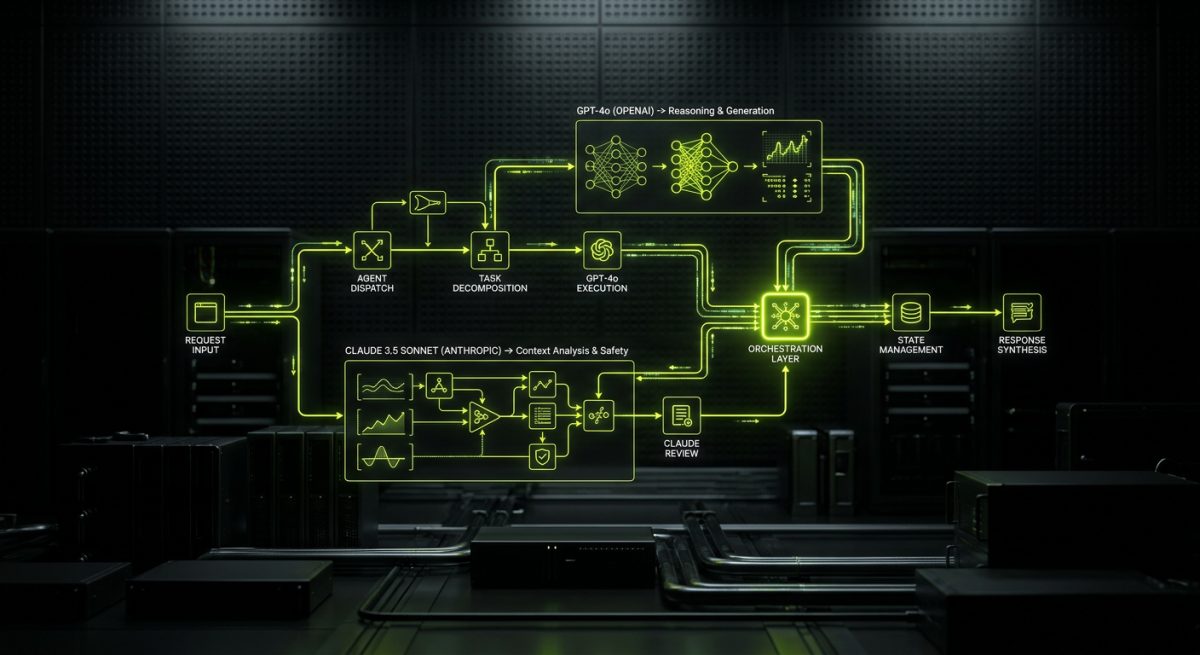
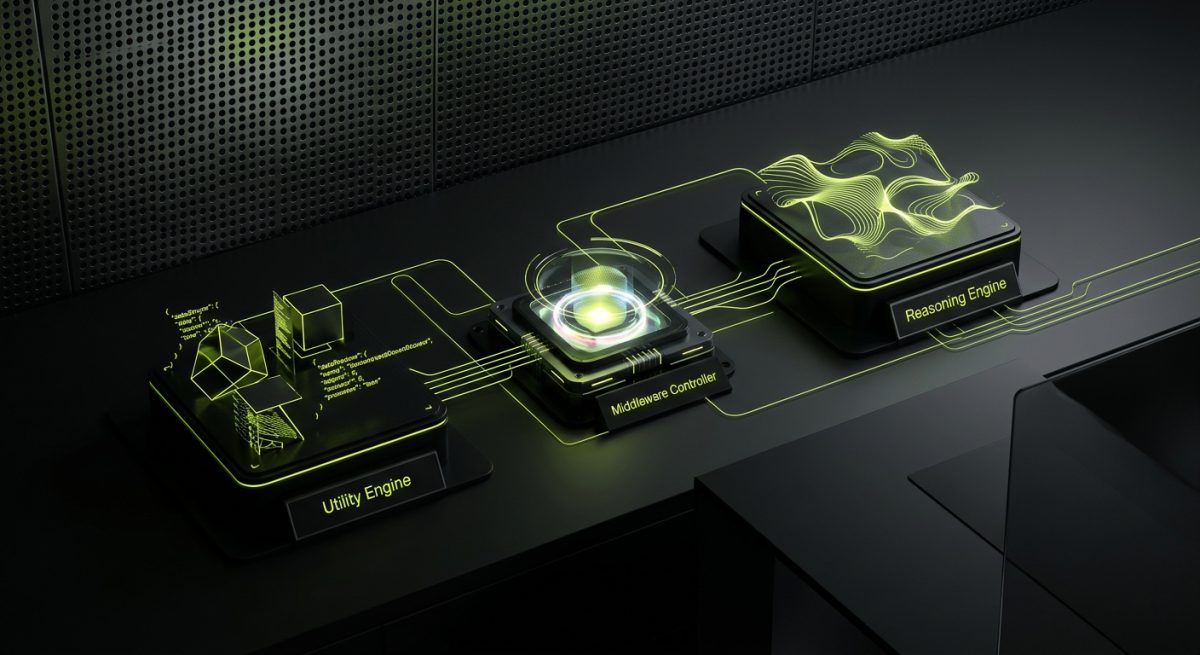
Agent orchestration involves a central controller—often a middleware like n8n or a custom-built Node.js environment—that manages the flow of data between different AI agents. In this setup, OpenAI often acts as the "Utility Engine." Its strengths lie in strict adherence to JSON schemas, high-speed function calling, and a vast ecosystem of integrations. We frequently deploy OpenAI agents to handle initial data parsing, intent classification, and structured extraction from raw user inputs. For instance, when a customer submits a complex support request via a WordPress site, an OpenAI agent can instantly categorize the ticket, extract key metadata, and identify which internal API tools need to be called. Its ability to maintain a consistent output format makes it the ideal candidate for the "front-of-house" logic in a B2B workflow.
Conversely, we position Claude as the "Reasoning Engine." Anthropic’s models have demonstrated a remarkable ability to follow complex, multi-step instructions without the "laziness" often observed in other models. Claude 3.5 Sonnet, in particular, excels at generating high-quality creative copy, refactoring legacy code, and synthesizing information across massive context windows of up to 200,000 tokens. In a hybrid workflow, once OpenAI has structured the data, the payload is passed to Claude for the heavy lifting. This might involve generating a 2,000-word technical guide based on the extracted metadata or writing custom JavaScript for a Webflow extension. By using Claude for the final generation phase, we ensure that the output is not only accurate but also exhibits a level of stylistic sophistication and logical coherence that meets professional B2B standards. This division of labor reduces the cognitive load on any single model, leading to a 35% increase in task accuracy across complex multi-step processes.
Implementing Multi-Model Agents in WordPress and Shopify
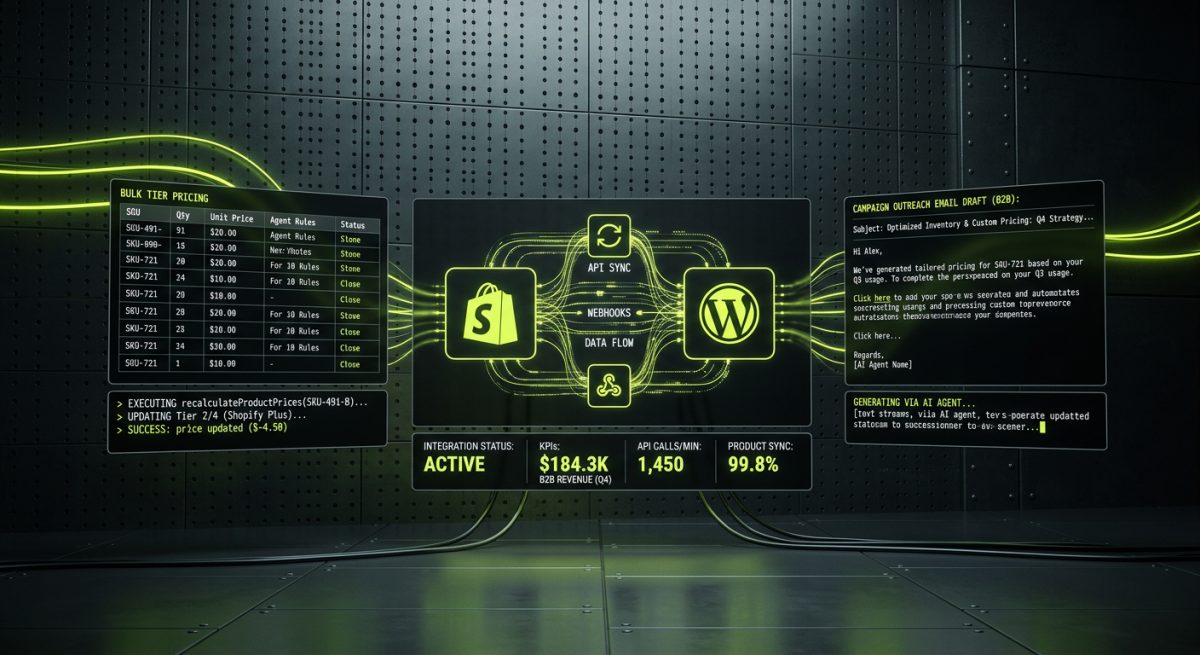
Integrating hybrid AI agents into production environments requires more than just API keys; it requires a deep understanding of the host platform's architecture. For our WordPress clients, we build custom plugins that serve as the bridge between the CMS and the orchestration layer. These plugins use WordPress hooks and filters to trigger AI workflows based on specific events, such as a new WooCommerce order or a custom post type update. Instead of a generic integration, we develop REST API endpoints that allow n8n or a custom middleware to securely push and pull data from the site. This ensures that the AI agents have real-time access to the database, allowing for Retrieval-Augmented Generation (RAG) that is contextually aware of the site’s existing content, product catalogs, and customer history.
In a Shopify Plus environment, the orchestration logic often centers around Shopify Flow and custom Liquid development. Consider a B2B wholesaler that needs to generate personalized pricing proposals based on complex logic and historical data. We can build a workflow where a Shopify Flow trigger sends order data to an OpenAI agent. This agent calculates the optimal discount tier using a custom function call. The results are then passed to a Claude agent, which drafts a highly personalized email to the customer, referencing specific previous purchases and explaining the value of the new proposal in a persuasive, professional tone. This level of personalization at scale is only possible through orchestration. By offloading the calculation to the model best at math and logic (OpenAI) and the communication to the model best at prose (Claude), the enterprise achieves a level of efficiency that manual teams cannot match.
Furthermore, at werun.dev, we emphasize maintainability through professional DevOps practices. Every custom plugin or integration we build for these AI workflows is managed via GitHub, with auto-update mechanisms that ensure the client is always running the latest version of the bridge code. This is critical in the fast-moving AI space, where API schemas and model capabilities change monthly. We also implement "Human-in-the-loop" (HITL) nodes within the orchestration. For example, before a Claude-generated blog post is published to a Webflow CMS, the workflow can send a preview link to a Slack channel. A team member can approve or request an edit with a single button click, which then triggers a refinement loop in the AI agent. This hybrid approach of AI-driven efficiency and human editorial oversight is the gold standard for modern B2B content and operations management.
Advanced Optimization: Routing, Latency, and Error Handling
One of the primary challenges in multi-model orchestration is managing the inherent latency and cost of calling multiple high-level LLMs. To solve this, we implement "Prompt Routing" logic. Not every task requires the power of GPT-4o or Claude 3.5 Opus. Our orchestration layers often include a preliminary classifier—frequently a smaller, faster model like GPT-4o-mini or Claude 3 Haiku—that determines the complexity of the request. If the task is a simple status check, it is handled immediately by the cheaper model. If it requires creative synthesis or complex reasoning, it is routed to the hybrid OpenAI-Claude pipeline. This routing strategy can reduce operational costs by up to 40% without sacrificing the quality of the final output for high-value tasks.
Error handling and observability are equally vital. In a single-model setup, an API timeout or a hallucinated response can break the entire process. In an orchestrated workflow, we build in redundancy and self-correction loops. If OpenAI fails to return a valid JSON object, the system can automatically retry the request or fall back to a Claude agent to fix the formatting. We utilize n8n’s execution logs and custom logging nodes to provide our clients with a transparent view of every AI interaction. This allows us to monitor for "drift" in model performance and adjust system prompts in real-time. For enterprise clients, we often recommend self-hosting the orchestration layer (such as n8n on a private VPS) to ensure data privacy and to avoid the limitations of shared cloud environments.
Finally, we address the challenge of context window management through intelligent chunking and vector databases. When building an AI agent that needs to "know" a client's entire WordPress site, we don't feed the whole database into every prompt. Instead, we use OpenAI to generate embeddings of the site content, store them in a vector database like Pinecone or Weaviate, and then perform a semantic search to retrieve only the most relevant snippets for the current task. This retrieved context is then provided to Claude for final processing. This RAG-based approach ensures that the agents remain grounded in fact, reducing hallucinations by over 30%. By combining these advanced optimization techniques, werun.dev delivers AI systems that are not just experimental toys, but reliable, scalable business assets that integrate seamlessly with existing WordPress, Shopify, and Webflow ecosystems.