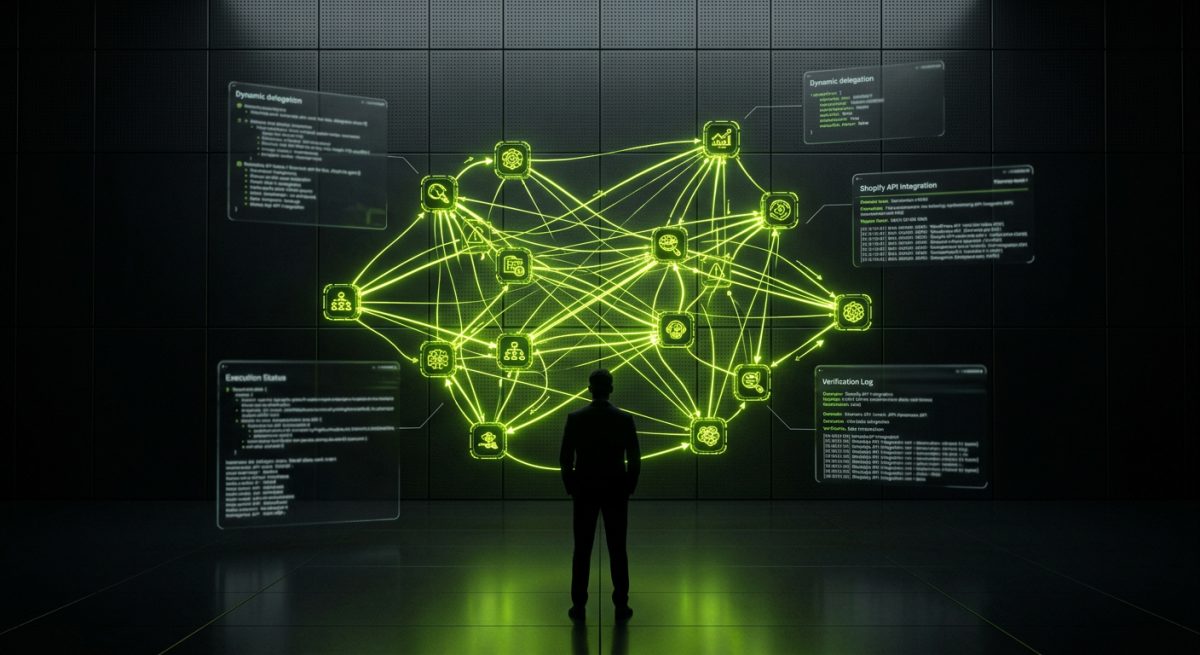
The era of single-prompt AI interactions is giving way to something far more powerful. Agentic AI and multi-agent systems represent a fundamental architectural shift — moving from isolated AI responses to coordinated networks of specialized agents that plan, delegate, execute, and verify entire workflows autonomously. For B2B organizations running complex digital operations on platforms like WordPress, Webflow, or Shopify, understanding this shift is not optional. It is a strategic imperative.
What Agentic AI Actually Means in Practice
The term "agentic" derives from the concept of agency — the capacity to act independently toward a goal. An agentic AI system does not simply respond to a prompt. It receives an objective, breaks it into sub-tasks, selects tools or APIs to accomplish those tasks, monitors its own progress, and adjusts its approach based on intermediate results.
This is categorically different from a chatbot or a one-shot language model query. The distinction matters enormously for business applications.
The Core Components of an Agentic System
A well-designed agentic AI system typically includes:
- A planning layer: The orchestrating agent interprets the high-level goal and decomposes it into executable steps
- Tool access: Agents are equipped with APIs, web browsers, code interpreters, databases, or custom functions they can invoke
- Memory: Short-term context (within a session) and long-term memory (stored knowledge bases or vector databases) allow agents to maintain coherence across complex tasks
- Feedback loops: Agents evaluate their own outputs and retry or escalate when results fall short of defined criteria
- Human-in-the-loop checkpoints: Configurable approval gates where human oversight is required before proceeding
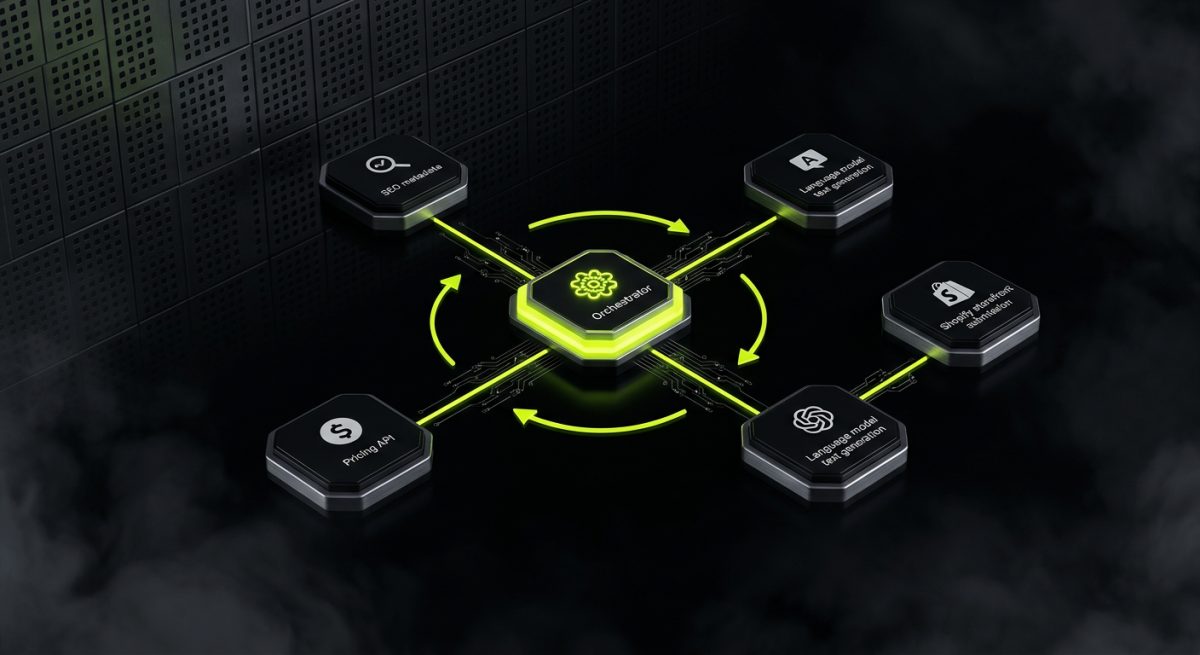
Consider a practical example in the e-commerce space. An agentic system tasked with "optimize product listings for Q4" might independently audit current SEO metadata, query competitor pricing via an API, generate revised product descriptions using a language model, flag listings with low-quality images for human review, and submit approved changes directly to a Shopify store — all without manual intervention at each step.
This is not a future scenario. Frameworks like LangChain, AutoGen, CrewAI, and OpenAI's Assistants API are making this architecture production-ready today.
Why Single-Agent Systems Hit a Ceiling
Single-agent architectures struggle with tasks that require simultaneous expertise across multiple domains. A single agent handling a full marketing campaign must be a copywriter, SEO analyst, data scientist, and campaign manager simultaneously. Context windows overflow. Error rates compound. Latency increases.
Multi-agent systems solve this by distributing cognitive load. Each agent is specialized, and specialization improves accuracy. A research agent focuses exclusively on gathering data. A writing agent focuses on content generation. A QA agent reviews outputs against predefined standards. The orchestrator coordinates handoffs.
This mirrors how high-performing human teams operate — and it produces measurably better outcomes at scale.
Multi-Agent Architecture: Design Patterns and Technical Foundations
Building effective multi-agent systems requires deliberate architectural decisions. There is no universal blueprint, but several design patterns have emerged as reliable starting points for production deployments.
Hierarchical Orchestration
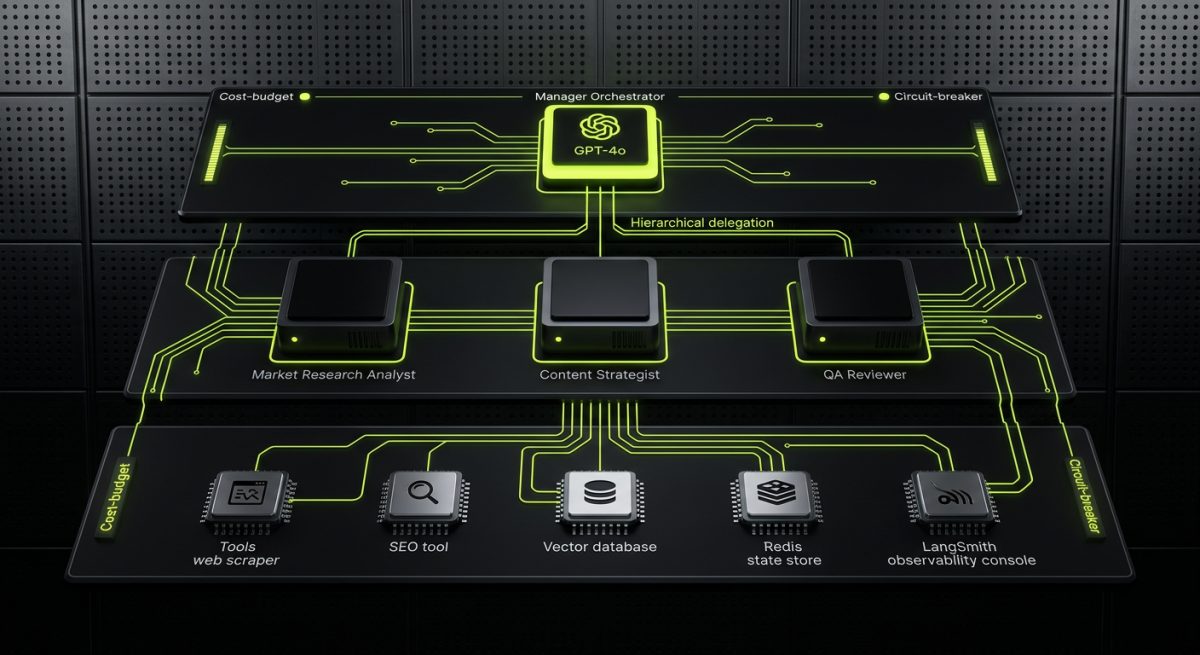
The most common pattern is hierarchical orchestration, where a top-level "manager" agent receives the primary objective and delegates sub-tasks to specialized worker agents. The manager aggregates results, resolves conflicts between agent outputs, and determines when the overall objective has been met.
# Simplified CrewAI example: hierarchical multi-agent setup
from crewai import Agent, Task, Crew, Process

research_agent = Agent(
    role='Market Research Analyst',
    goal='Gather competitive intelligence on target market segment',
    backstory='Expert in B2B SaaS market analysis with tool access to web search and databases',
    tools=[search_tool, scraping_tool]
)

content_agent = Agent(
    role='Content Strategist',
    goal='Produce SEO-optimized content briefs based on research findings',
    backstory='Senior content strategist specializing in B2B technology sectors',
    tools=[seo_tool]
)

qa_agent = Agent(
    role='Quality Assurance Reviewer',
    goal='Validate content accuracy and brand alignment',
    backstory='Editorial reviewer with strict accuracy standards',
    tools=[]
)

crew = Crew(
    agents=[research_agent, content_agent, qa_agent],
    tasks=[research_task, content_task, qa_task],
    process=Process.hierarchical,
    manager_llm='gpt-4o'
)

result = crew.kickoff()
In this pattern, the manager LLM (GPT-4o in this case) dynamically assigns tasks based on agent capabilities and monitors completion. The developer defines agent roles, goals, and tool access — the system handles coordination logic.
Peer-to-Peer Collaboration
An alternative pattern allows agents to communicate laterally. Agent A completes a task and passes its output directly to Agent B, which may return feedback or request clarification before Agent A proceeds. This is particularly effective for iterative creative or analytical tasks where back-and-forth refinement improves quality.
Event-Driven Agent Networks
For asynchronous workflows — common in e-commerce operations, CRM integrations, or content publishing pipelines — event-driven architectures work well. An event (a new order, a form submission, a content publish) triggers a specific agent or chain of agents. Results are written back to a shared state store or message queue.
Key Infrastructure Considerations
Deploying multi-agent systems in production requires attention to:
- Observability: Logging every agent decision, tool call, and handoff is non-negotiable for debugging and compliance. Tools like LangSmith or custom logging middleware are essential
- Cost management: Each agent invocation carries LLM API costs. Poorly designed loops or redundant tasks can escalate costs rapidly. Token budgets and circuit breakers should be implemented
- State persistence: Long-running workflows need durable state storage. Redis, PostgreSQL, or purpose-built vector databases serve different use cases
- Security boundaries: Agents with tool access must operate within strict permission scopes. An agent that can write to a production database needs explicit authorization controls, not just prompt instructions
- Fallback handling: When an agent fails or returns low-confidence output, the system needs defined escalation paths — to another agent, to a human reviewer, or to a graceful failure state
The architectural investment is real, but so is the return. Organizations that build robust multi-agent infrastructure gain a reusable automation layer that compounds in value as new workflows are added.
Practical Applications for WordPress, Webflow, and Shopify Ecosystems
For web development agencies and their clients, multi-agent systems open concrete operational opportunities across the platforms that power modern digital businesses. The key is identifying workflows that are high-frequency, rule-governed, and currently dependent on manual coordination across multiple tools or team members.
Shopify: Autonomous Merchandising Operations
Shopify stores generate continuous operational demands — inventory management, pricing updates, SEO optimization, customer review responses, and promotional campaign execution. Each of these tasks involves multiple steps, multiple data sources, and multiple platform APIs.
A multi-agent merchandising system might deploy:
- An inventory monitoring agent that watches stock levels via the Shopify Admin API and triggers reorder workflows when thresholds are breached
- A pricing intelligence agent that scrapes competitor pricing, applies margin rules, and proposes price adjustments for human approval
- A content optimization agent that audits product descriptions against current SEO benchmarks and generates improved copy
- A review response agent that drafts responses to customer reviews, routes negative reviews to a customer service queue, and publishes approved positive-review responses
These agents share a common data layer — the Shopify store's product catalog, order history, and customer data — and operate on configurable schedules or event triggers.
WordPress: Intelligent Content Operations
Content-heavy WordPress sites — particularly those running editorial operations, knowledge bases, or inbound marketing programs — are natural candidates for multi-agent automation.
A content operations agent network might include:
- A keyword research agent that queries SEMrush or Ahrefs APIs to identify content gaps and high-opportunity topics
- A brief generation agent that produces structured content briefs including target keywords, competitor analysis, and recommended headings
- A draft writing agent that generates initial post drafts aligned to brand voice guidelines stored in a vector database
- A WordPress publishing agent that formats content, assigns categories and tags, schedules publication, and configures Yoast SEO fields via the WordPress REST API
// WordPress REST API: automated post creation from agent output
const response = await fetch('https://yoursite.com/wp-json/wp/v2/posts', {
  method: 'POST',
  headers: {
    'Content-Type': 'application/json',
    'Authorization': `Bearer ${process.env.WP_AUTH_TOKEN}`
  },
  body: JSON.stringify({
    title: agentOutput.title,
    content: agentOutput.bodyHtml,
    status: 'draft', // human review before publish
    categories: agentOutput.categoryIds,
    tags: agentOutput.tagIds,
    meta: {
      _yoast_wpseo_title: agentOutput.seoTitle,
      _yoast_wpseo_metadesc: agentOutput.seoDescription
    }
  })
});
Human editors remain in the loop for final approval, but the research-to-draft pipeline runs autonomously — compressing what previously took days into hours.
Webflow: Dynamic Site Management at Scale
Webflow's CMS API and Logic features create integration points for agent-driven site management. Agencies managing multiple client Webflow sites can deploy agent networks that monitor site performance metrics, generate CMS content updates, manage collection items, and trigger Logic workflows based on external data sources.
For clients running Webflow-powered marketing sites, an agent system can continuously A/B test landing page copy variations, monitor conversion metrics, and recommend or implement winning variants — creating a self-optimizing marketing asset.
The Agency Opportunity
For web development agencies, multi-agent systems represent a service differentiation opportunity. Clients are not just buying a website build — they are buying an intelligent operational layer that runs on top of their digital infrastructure. Agencies that can design, deploy, and maintain these systems command higher retainers, deeper client relationships, and defensible competitive positioning.
The technical barrier to entry is real but shrinking rapidly. Frameworks are maturing, documentation is improving, and the pattern library of production-proven architectures is expanding. The agencies that invest in this capability now will be positioned as the preferred partners when enterprise clients — who are already piloting these systems internally — look for external expertise to scale them.