The Architecture of Cognitive Orchestration and Real-Time Logic
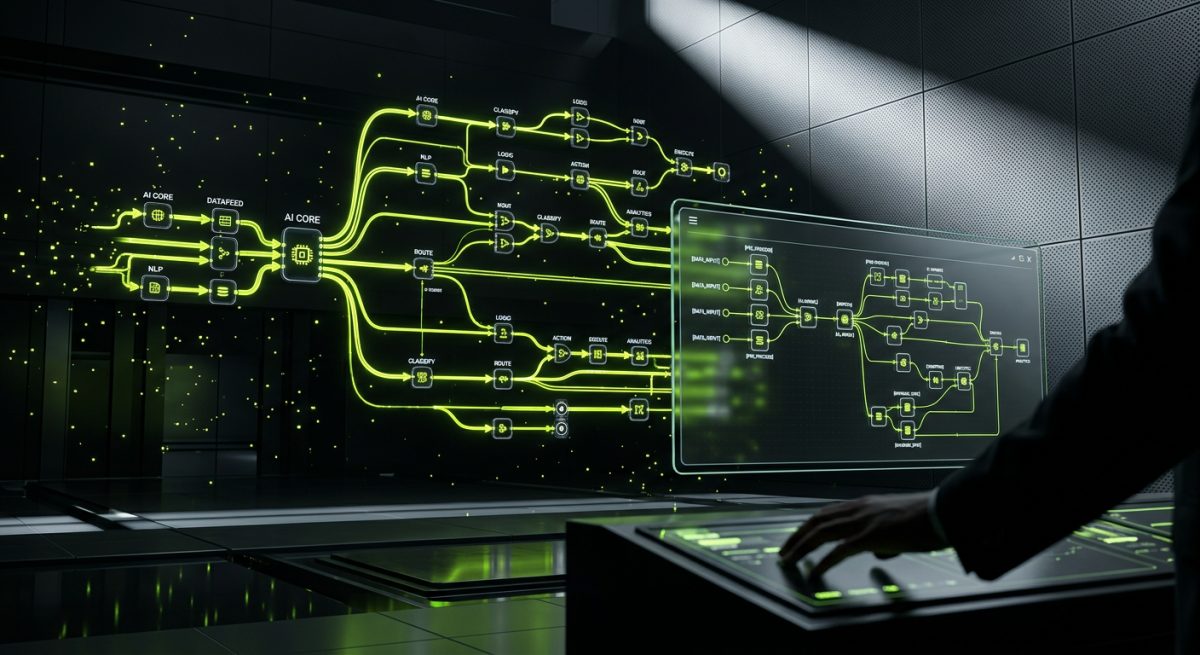
Modern business environments no longer tolerate the latency inherent in manual data processing or the rigidity of traditional deterministic automation. When we discuss designing systems that make real-time decisions, we are moving beyond simple "If This, Then That" (IFTTT) logic into the realm of cognitive orchestration. This involves building a stack where an orchestration layer—typically n8n in our production environments—serves as the nervous system, connecting disparate data sources to Large Language Models (LLMs) like GPT-4 or Claude 3.5 Sonnet. These models act as the decision-making engine, processing unstructured data and returning structured JSON that can be immediately executed by a web application or an ERP.
The core of a real-time decision system is the feedback loop. Unlike batch processing, where data is collected and analyzed at the end of a cycle, real-time systems must ingest, analyze, and act within milliseconds or seconds. This requires a robust middleware strategy. At werun.dev, we leverage n8n's self-hosted capabilities to ensure that data never leaves a controlled environment longer than necessary. By using custom JavaScript nodes within n8n, we can sanitize incoming webhook data before it ever reaches an AI prompt. This ensures that the "decision" made by the AI is based on clean, relevant context. For instance, a real-time system might monitor incoming customer support tickets via a WordPress REST API endpoint. Instead of just routing the ticket, the system uses an AI agent to perform sentiment analysis, check the user's lifetime value (LTV) in a database, and decide whether to offer an immediate discount code or escalate the ticket to a human manager.
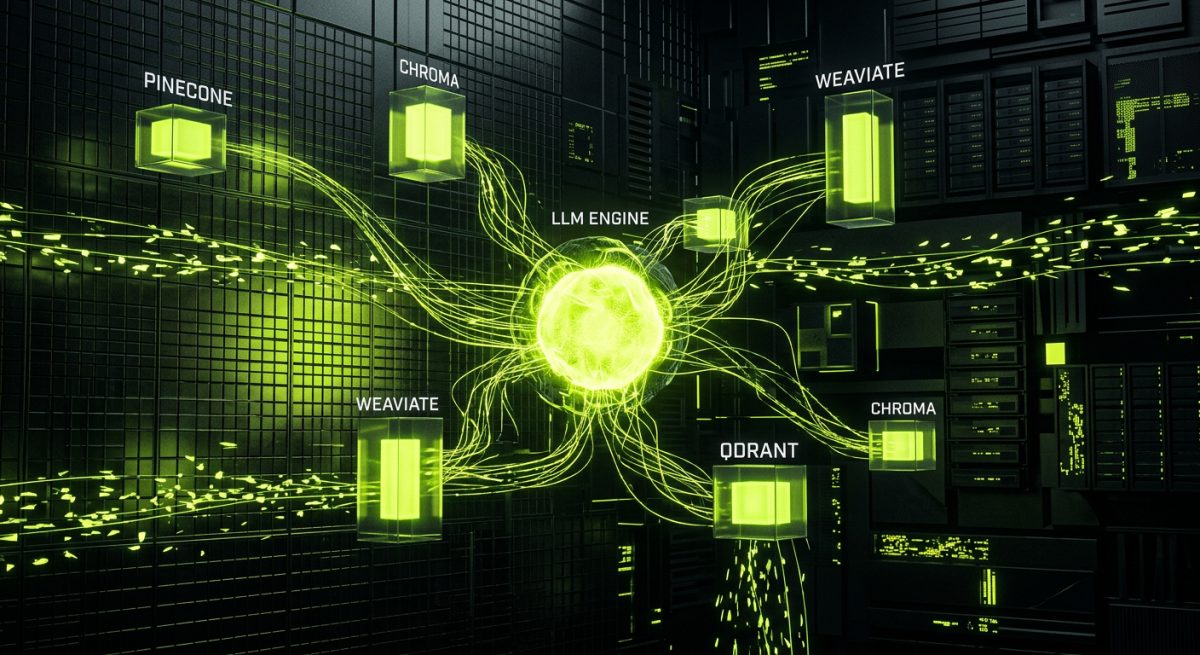
To achieve this, the architecture must support Retrieval-Augmented Generation (RAG). Real-time decisions are only as good as the context provided to the model. By integrating vector databases like Pinecone or Weaviate, or even using simpler search-based retrieval within n8n, we provide the AI with a "long-term memory." When a trigger occurs, the system queries the vector store for relevant documentation or past decisions, injects that context into the prompt, and receives a highly informed output. This eliminates the common issue of AI hallucinations and ensures that every decision aligns with specific business rules and historical data. The technical challenge lies in the latency of these lookups; optimizing the retrieval pipeline is essential to maintain the "real-time" nature of the system. We focus on minimizing the token count and using efficient embedding models to ensure the entire cycle completes before the user or the external system times out.
Integrating Autonomous Intelligence into WordPress, Shopify, and Webflow

Bridging the gap between high-level AI reasoning and the practical constraints of a CMS or E-commerce platform is where the most significant value is created. For WordPress, this often involves the development of custom plugins that act as listeners and executors. A standard implementation involves registering a custom namespace in the WP REST API. When an event occurs—such as a new WooCommerce order or a specific user interaction—the plugin sends a payload to an n8n workflow. The workflow processes the data through an AI agent and sends a POST request back to the WordPress site. The custom plugin then uses WordPress hooks and filters to modify the site’s behavior dynamically. This might mean updating a user’s meta-data to change their pricing tier in real-time or generating a personalized landing page layout based on the user's inferred intent.
In the Shopify ecosystem, we utilize Shopify Flow in conjunction with custom App Blocks and Liquid extensions to create intelligent storefronts. While Shopify’s native automation is powerful, it lacks the cognitive depth required for complex decision-making. By building a bridge between Shopify Plus and an external AI pipeline, we can automate high-level tasks such as dynamic fraud detection that goes beyond simple rule-based flags. If an order looks suspicious, the AI can cross-reference the customer’s social footprint or past communication history (ingested via API) to decide whether to fulfill the order, hold it, or request additional verification. This happens in the seconds between the checkout completion and the fulfillment trigger, providing a seamless but secure experience. For B2B clients, this can extend to real-time wholesale pricing adjustments where the AI calculates the optimal discount based on current inventory levels and the client's historical purchase frequency.
Webflow development requires a different approach, often relying on custom JavaScript and the Webflow Logic feature or external middleware. Since Webflow is a SaaS platform, we often use it as the "head" in a headless or decoupled architecture. Real-time decisions here might manifest as dynamic content injection. When a visitor arrives, their IP or behavior data is sent to an edge function. This function queries an AI agent to determine the most relevant case study or product to display. The result is returned to the browser, and custom JS updates the Webflow CMS items on the fly. This level of personalization was previously only available to enterprise-level builds with massive budgets, but by using modular AI agents and efficient API integrations, we make it accessible for high-growth B2B sites. The key is to ensure that these integrations are built with fail-safes; if the AI pipeline takes too long to respond, the system must default to a high-performing static version of the site to maintain a 99.97% uptime standard.
Engineering for Reliability: Guardrails, Error Handling, and Scalability
Deploying an AI system that makes real-time decisions introduces unique risks that traditional software does not face. The non-deterministic nature of LLMs means that the same input could, in theory, yield different outputs. To mitigate this in a B2B production environment, we implement strict guardrails. This starts with structured output enforcement. We utilize Pydantic models or JSON schema validation to ensure that the AI’s decision is returned in a format our code can parse. If the AI returns a malformed response or a decision that falls outside of predefined parameters (e.g., trying to give a 100% discount), the system must catch this error. At werun.dev, we build these checks directly into our n8n workflows and custom WordPress plugins, ensuring that a "Human-in-the-Loop" (HITL) notification is triggered via Slack or email whenever a decision threshold is breached.
Scalability is the next major hurdle. A system that works for ten decisions a day may crumble under ten thousand. Real-time AI systems are resource-intensive, both in terms of API costs and processing time. We manage this by implementing sophisticated queuing and background processing. In WordPress, we avoid performing heavy AI tasks during the main request-response cycle. Instead, we offload these to the Action Scheduler or WP-Cron. This ensures that the user's page load speed is never compromised by an external API call. For higher volume Shopify or Webflow sites, we use serverless functions (like AWS Lambda or Vercel Functions) to handle the heavy lifting. These functions can scale horizontally to handle spikes in traffic, ensuring that the decision-making pipeline remains responsive even during peak sales events or marketing campaigns.
Security and maintainability are the final pillars of our approach. Every AI integration we build follows the same professional standards as our core web development. This means all code is version-controlled via GitHub, and we use automated deployment pipelines to push updates. We implement strict rate limiting and authentication (JWT or OAuth 2.0) on all custom REST API endpoints to prevent unauthorized access to the AI logic. Furthermore, we maintain detailed logs of every decision made by the system. This "decision audit trail" is crucial for B2B clients who need to understand why a certain action was taken. By logging the input context, the prompt used, the AI's raw response, and the final action taken, we provide transparency and the ability to fine-tune the system over time. This iterative process of monitoring, logging, and refining is what transforms a simple automation into a truly intelligent, autonomous system that grows with the business.