From Autocomplete to Agentic Coding Workflows

The landscape of software development has shifted from simple predictive text to sophisticated agentic workflows. In the early days of AI-assisted coding, developers relied on basic autocomplete functions that could suggest the next line of a function or a common CSS property. However, with the emergence of advanced Large Language Models (LLMs) like Claude 3.5 Sonnet and GPT-4o, the paradigm has shifted toward "AI pair programming at scale." This transition is particularly relevant for agencies managing hundreds of high-stakes environments, such as the 200+ sites maintained by werun.dev. Scaling AI in a development context isn't just about generating snippets; it’s about managing context, ensuring security, and maintaining consistency across diverse stacks including WordPress, Webflow, and Shopify.
At the enterprise level, the primary challenge is no longer whether an AI can write a function, but whether it can understand the architectural implications of that function within a massive, multi-file codebase. Claude’s ability to handle large context windows—up to 200,000 tokens—has fundamentally changed how we approach refactoring and complex integrations. When building custom WordPress plugin development solutions, we can now feed an entire plugin’s directory into the model to identify hooks, filters, and potential conflicts with third-party extensions. This holistic view prevents the "fragmented code" syndrome where AI-generated snippets solve a local problem but break global state.
Scaling these tools requires a move toward agentic behavior, where the AI doesn't just suggest code but actively participates in the debugging and testing cycles. For instance, when we develop custom Liquid theme development for Shopify, we utilize LLMs to simulate various edge cases in the cart logic before a single line is deployed to production. This proactive approach reduces the feedback loop between development and QA. However, the human element remains the critical filter. At werun.dev, our senior developers use AI as a high-speed drafting tool, but every line of logic is vetted against our strict internal standards for security, performance, and maintainability. The lesson for B2B organizations is clear: AI is a force multiplier for senior talent, not a replacement for it. To scale successfully, you must define the guardrails—such as mandatory unit testing and linting—that the AI must follow to ensure the output remains production-ready.
Architecting for AI-Assisted Predictability and Standards
One of the most significant lessons learned from deploying AI pair programming at scale is that the quality of AI output is directly proportional to the cleanliness of the existing codebase. AI models are trained on patterns; if your codebase follows idiosyncratic or non-standard patterns, the AI will likely hallucinate or produce suboptimal code. This is why we emphasize WordPress coding standards—including proper use of hooks, filters, and the Settings API—as a prerequisite for AI integration. When a project is built on a foundation of clean, semantic code, the AI can accurately predict the intended architecture, making the pair-programming experience seamless.
For businesses operating on Webflow, this translates to a scalable class architecture. When our team builds custom site design and CMS architecture, we use BEM-style naming conventions. When an AI tool is asked to generate a custom JavaScript interaction for a Webflow site, it can look at the existing DOM structure and class names to produce code that integrates perfectly without manual renaming. This predictability is what allows us to scale development across dozens of projects simultaneously. Without these standards, AI becomes a source of technical debt, generating "spaghetti code" that is difficult to maintain long-term.
At werun.dev, we bridge the gap between AI experimentation and production-ready systems by treating AI as a junior developer that requires a very specific "Standard Operating Procedure" (SOP). We document our internal APIs and custom REST API endpoints extensively so that the LLM has a clear reference point. This is particularly vital when building complex integrations between a WordPress frontend and an enterprise ERP like SAP or Odoo. By providing the LLM with the API documentation and a set of "golden examples" of previous successful integrations, we can automate the generation of boilerplate code, authentication wrappers, and error-handling logic. This doesn't just speed up development; it ensures that every integration follows the same security protocols, such as nonce verification and capability checks, which are often overlooked in rushed manual development.
Furthermore, we leverage GitHub-powered auto-update systems for all our custom builds. This means that even as AI helps us iterate faster, the deployment pipeline remains rigid and controlled. Every AI-assisted pull request undergoes automated testing to ensure it doesn't degrade the site's Core Web Vitals or introduce security vulnerabilities. This blend of high-speed AI generation and high-rigor human oversight is the only way to maintain a <4h response SLA for complex B2B ecosystems. Scaling AI is effectively a challenge of scaling your internal standards and ensuring they are machine-readable.
Bridging the Gap: From Local IDEs to Enterprise Automation
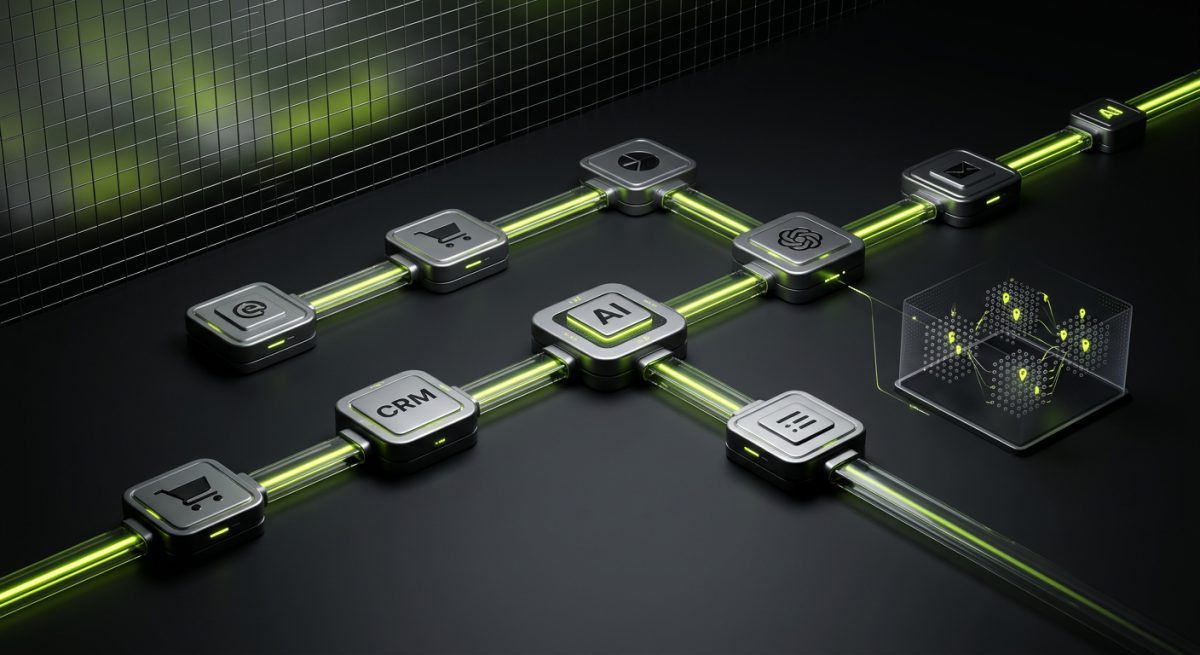
To truly realize the benefits of AI pair programming at scale, organizations must move beyond the local IDE (Integrated Development Environment) and integrate LLM capabilities into their broader business logic. This is where AI & Automation services become transformative. Instead of just using Claude or GPT to write code, we are now building autonomous systems that use these models to process data, manage workflows, and even self-heal common site issues. For example, we design n8n workflows that connect a Shopify store's webhook to a Claude-powered agent. When a complex B2B order is placed, the AI can analyze the order metadata, check it against custom pricing rules, and automatically generate a custom invoice or update a CRM like Salesforce or HubSpot without human intervention.
Consider a real-world scenario: A global franchise needs to maintain consistent content and functionality across 50 different WordPress sites. By using a combination of WordPress Multisite architecture and AI-driven automation, we can deploy a single update across the entire network while using AI to verify that the update hasn't broken site-specific customizations. The AI acts as a sentinel, scanning each site's logs and frontend for anomalies after the deployment. This level of oversight would be impossible for a human team to perform manually at scale, but it becomes trivial when powered by advanced LLM tooling and custom data pipelines.
We also see immense value in Retrieval-Augmented Generation (RAG) for internal knowledge bases. By feeding our 12+ years of development history into a private, secure vector database, we allow our developers to ask questions like, "How did we handle the Stripe subscription edge case for the 2022 project?" The AI doesn't just give a generic answer; it provides the specific code snippet and the context of why that decision was made. This preserves institutional knowledge and prevents the "reinventing the wheel" problem that plagues large agencies.
As businesses move from experimentation to production-ready AI, the focus must shift toward secure, scalable, and measurable impact. At werun.dev, we specialize in building these bridges. Whether it’s integrating an AI chatbot that qualifies leads based on your specific B2B sales cycle or building a custom app that uses LLMs to enrich product data in Shopify, our approach is always grounded in technical excellence. We don't just launch projects; we run them, ensuring that the AI systems we build today are maintainable and secure for years to come. If your organization is ready to move beyond basic prompts and into the world of scalable AI-driven development, we invite you to explore our AI & Automation services or book a technical consultation to discuss your specific infrastructure needs.