The Architecture of a Modern AI-Powered Website Automation Studio
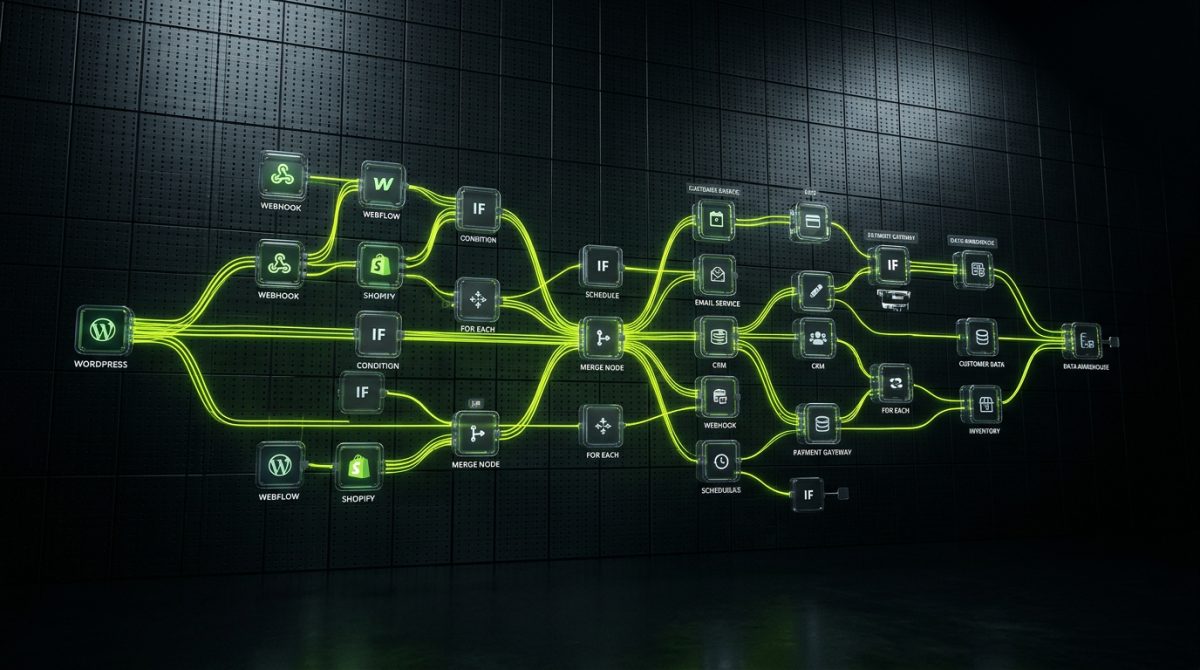
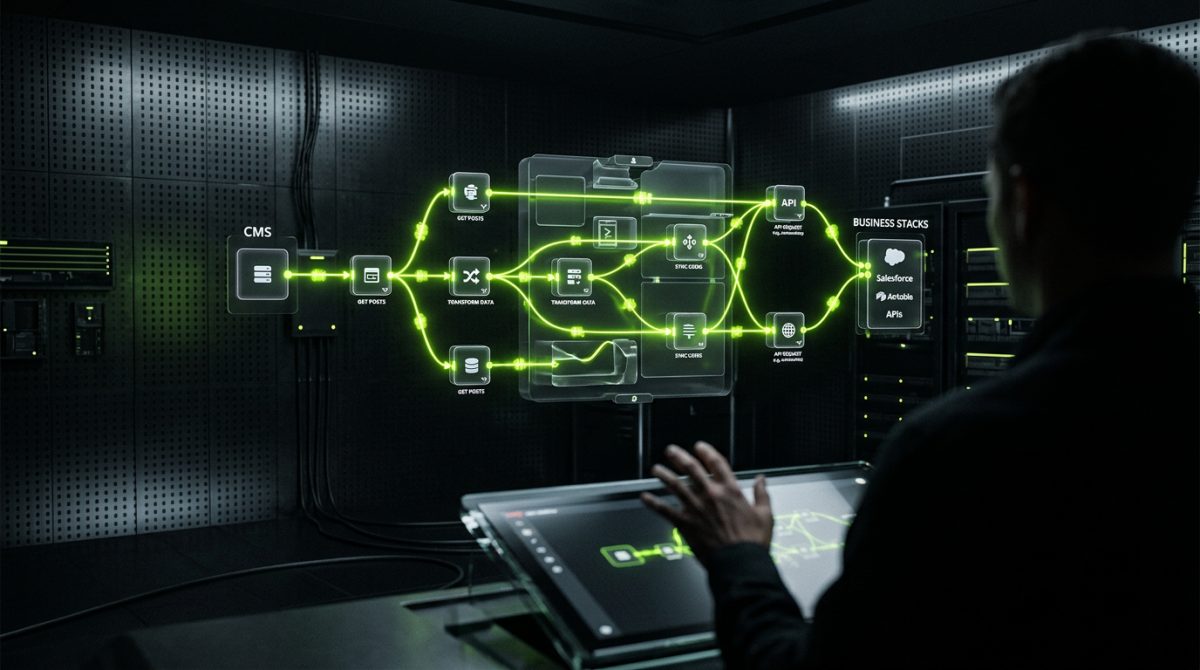
The transition from a static corporate website to a high-performance digital asset requires more than just a clean UI; it demands an underlying orchestration layer that connects disparate business systems. At werun.dev, we define an AI-Powered Website Automation Studio as a centralized engine that leverages low-code and no-code tools, specifically n8n, to bridge the gap between your CMS (WordPress, Webflow, or Shopify) and your internal business stack. This approach moves away from simple, linear automations toward multi-branch pipelines that utilize Artificial Intelligence to make decisions, categorize data, and generate content in real-time. By self-hosting these automation environments, we ensure that B2B enterprises maintain full control over their data sovereignty while benefiting from the rapid deployment cycles of modern automation frameworks.
Central to this architecture is the integration of Large Language Models (LLMs) like Claude (Anthropic) and OpenAI’s GPT-4. Rather than using these models as simple text generators, werun.dev implements them as intelligent nodes within a broader workflow. For instance, a lead capture form on a WordPress site doesn't just trigger an email notification; it initiates a sequence where an AI agent analyzes the prospect’s company URL, scrapes relevant metadata, cross-references it with your CRM (HubSpot or Salesforce), and assigns a lead score based on predefined B2B criteria. This level of automation transforms the website from a passive marketing tool into an active participant in the sales cycle. We build these systems using professional standards, ensuring that every webhook listener and REST API endpoint is properly authenticated and rate-limited to prevent system fatigue.
The Role of n8n in Orchestrating Complex Workflows
While tools like Zapier offer basic connectivity, werun.dev specializes in n8n due to its flexibility and the ability to inject custom JavaScript or Python code nodes directly into the workflow. This is crucial for complex B2B operations where data needs to be transformed or validated before reaching its final destination. Our "Automation Studio" approach involves creating self-healing pipelines. If an API call to a shipping provider fails during a Shopify checkout process, the n8n workflow detects the error, executes a retry logic sequence, and alerts the operations team via Slack if the issue persists. This level of operational resilience is what differentiates a standard website from an enterprise-grade digital platform.
We also implement Retrieval-Augmented Generation (RAG) to power knowledge-base chatbots. These aren't generic bots; they are trained on your specific documentation, service offerings, and pricing structures. By using vector search and live context, these agents provide accurate, pre-sales support directly on Webflow or WordPress sites. This reduces the burden on human support teams and ensures that potential clients receive immediate, high-quality information regardless of the time zone. At werun.dev, we don't just build these systems; we maintain them through our response SLA of less than 4 hours, ensuring that your automation studio remains operational as your business scales.
Transforming B2B Operations via Automated Content and E-commerce Workflows
For B2B companies operating on WordPress, Webflow, or Shopify, the primary bottleneck is often the manual management of content and customer data. werun.dev solves this by building custom automation studios that handle the heavy lifting of data synchronization and content lifecycle management. In the context of WordPress, this often involves custom plugin development that interfaces with the WP REST API. We build bridges that allow your CMS to "talk" to your ERP or CRM without manual intervention. Whether it is syncing WooCommerce customers with SAP or updating custom post types based on external database triggers, the goal is to eliminate human error and data silos.
In the Webflow ecosystem, where the Designer provides a visual-first experience, werun.dev extends the platform's capabilities through custom code and API integrations. We build automated CMS architectures that can be populated via AI-driven data extraction. For example, a B2B directory or a resource hub can be automatically updated by a scraping pipeline that identifies new industry reports, summarizes them using an LLM, and publishes the entry to the Webflow CMS—all without a developer having to touch the site. This allows marketing teams to focus on strategy rather than the mechanics of content entry. Our expertise in GSAP and custom JS logic ensures that even as these sites become more automated, they remain performant and visually stunning, maintaining 90+ scores on Core Web Vitals.
Shopify Plus and Enterprise-Level E-commerce Automation
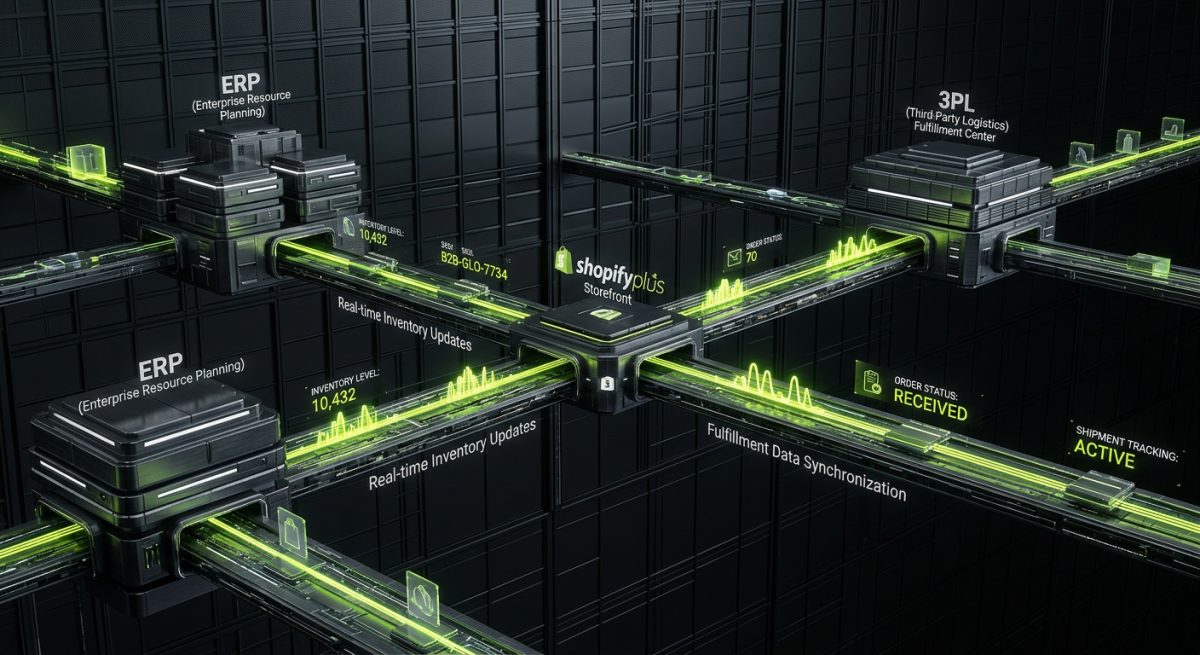
Shopify Plus users benefit significantly from our automation studio approach through the implementation of Shopify Flow and custom private apps. At werun.dev, we build Liquid themes from scratch that are optimized for conversion, but the real power lies in the backend. We automate wholesale B2B portals where pricing is dynamically adjusted based on the customer’s purchase history or volume. Our integrations connect Shopify to 3PL (Third-Party Logistics) and ERP systems via robust API bridges, ensuring that inventory levels, tracking numbers, and fulfillment statuses are synced in real-time.
// Example of a custom n8n node logic for B2B Lead Enrichment
const companyName = items[0].json.company;
const domain = items[0].json.domain;

// We use AI to categorize the lead based on industry and size
const aiAnalysis = await callLLM({
  prompt: `Analyze the B2B potential for ${companyName} in the SaaS sector.`,
  model: "gpt-4-turbo"
});

return {
  enrichedData: aiAnalysis,
  priority: aiAnalysis.score > 8 ? "High" : "Standard"
};
By implementing such logic, werun.dev helps businesses move from reactive to proactive operations. We also handle the migration of stores from platforms like WooCommerce or Magento to Shopify with zero data loss, ensuring that all historical automation triggers are preserved. Our focus is on building systems that run unsupervised, allowing your team to scale without a linear increase in headcount. Every integration we build is documented and maintained through our monthly retainers, providing the peace of mind that your digital infrastructure is built to last.
Technical Implementation and Scalability for Enterprise Ecosystems
The final pillar of an AI-Powered Website Automation Studio is the commitment to long-term maintainability and technical excellence. At werun.dev, we adhere to professional coding standards—using proper hooks, filters, and i18n for WordPress, and scalable BEM-style class naming for Webflow. This technical foundation is what allows our automations to remain stable even as the underlying platforms evolve. We utilize GitHub-powered auto-update systems for every custom plugin we build, ensuring that security patches and performance improvements are deployed instantly across your entire site network.
Security is a paramount concern when connecting a website to internal business tools. werun.dev implements advanced authentication protocols, including JWT (JSON Web Tokens) and OAuth 2.0, to secure REST API endpoints. We also utilize signature verification for webhook listeners to ensure that incoming data originates from trusted sources. In an era of increasing data privacy regulations, our self-hosted n8n deployments allow businesses to keep sensitive customer data within their own infrastructure, avoiding the risks associated with third-party cloud aggregators. This strategic approach to digital transformation is what makes us a preferred partner for B2B companies in markets like Miami, Madrid, and Buenos Aires.
Monitoring, Error Handling, and the dev-console Philosophy
Operating an automation studio requires constant vigilance. We don't just launch a project; we run it. This means implementing comprehensive logging and error-handling mechanisms. Every n8n workflow we design includes execution logs and Slack-based alerting systems. If a critical process—such as a payment sync or a lead delivery—fails, our team is notified immediately, often resolving the issue before the client even notices. This is the core of our "dev-console" philosophy: a live, running view of your web ecosystem's health and performance.
Furthermore, we integrate AI-powered data enrichment and customer satisfaction reporting into our automation pipelines. By analyzing customer interactions and feedback through LLMs, we provide businesses with actionable insights that drive better decision-making. We also offer consulting on how to transition from legacy manual processes to automated workflows, acting as a strategic partner in your digital evolution. Whether you are looking to build a custom Gutenberg block that pulls live data from an external API or a Shopify Plus store with complex B2B logic, werun.dev provides the senior talent and technical depth required to execute and maintain these systems long-term. Our goal is to build intelligent systems that multiply your results while eliminating the friction of manual work.