
The Architectural Shift: Terminal-Native Agents vs. Cloud-Centric Assistants
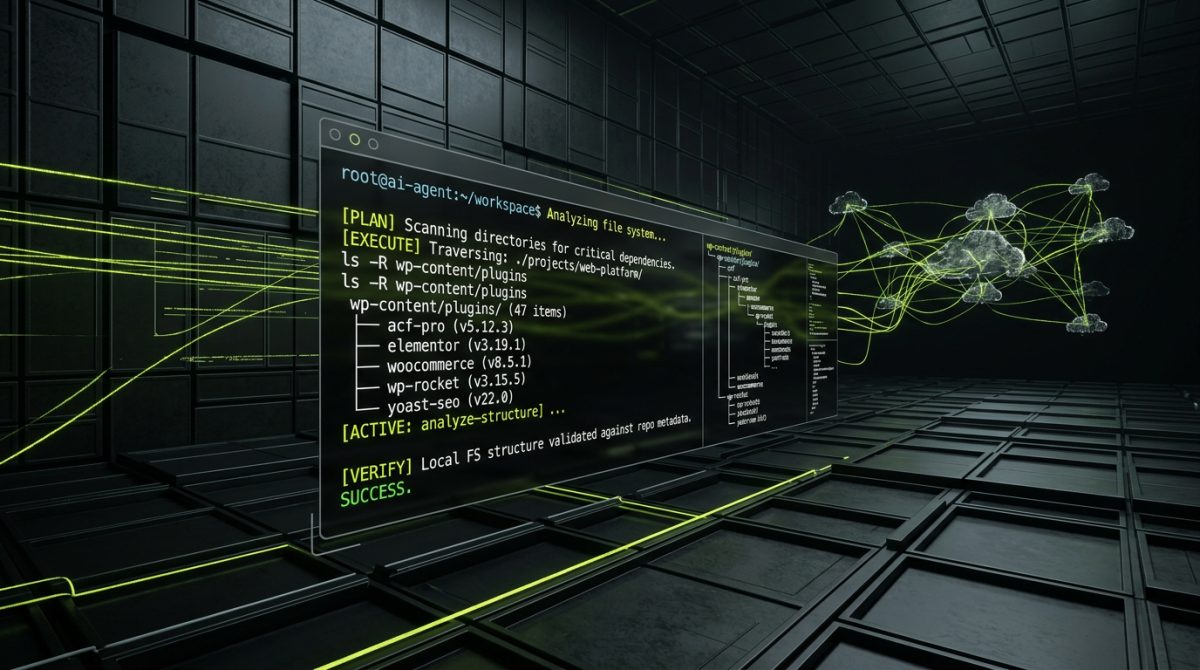
Claude Code and OpenAI’s suite of code agents represent a fundamental shift in how B2B development agencies like werun.dev approach engineering. Claude Code, Anthropic’s command-line tool, operates directly within the developer's local environment. This proximity to the file system allows for a tighter loop in "Plan-Execute-Verify" cycles. Unlike standard chat interfaces or web-based assistants, Claude Code can execute shell commands, read entire directories, and run test suites autonomously. For a WordPress agency building custom plugins, this means the agent can analyze the existing wp-content/plugins structure, identify potential hook conflicts, and propose a patch that respects the agency's specific coding standards without the developer having to manually upload files or copy-paste code blocks.
In contrast, OpenAI’s approach, primarily through the Assistant API and the Code Interpreter, often operates within a sandboxed cloud environment. While OpenAI excels in high-level architectural reasoning and complex mathematical logic within the code, it frequently requires more manual intervention or complex API plumbing to interact with a local repository. OpenAI’s strength lies in its ecosystem and the versatility of the Assistant API, which werun.dev leverages for building custom internal tools via n8n. These agents can be programmed with specific "instructions" and "tools" (function calling) to interact with external databases or CRM systems like Salesforce or HubSpot. However, for deep, iterative codebase manipulation, the local-first nature of Claude Code offers a lower-latency experience that mirrors the workflow of a senior human engineer.
The technical differentiator often comes down to context management and token efficiency. Claude 3.5 Sonnet, the engine behind Claude Code, features a massive 200,000-token context window, which is significantly larger than the 128,000-token window typically found in OpenAI’s GPT-4o. In the context of a complex WooCommerce ecosystem with thousands of lines of custom logic across multiple files, Claude’s ability to "see" the entire codebase at once reduces the frequency of hallucinations caused by missing context. When developing custom Gutenberg blocks or complex REST API endpoints, having the agent understand the relationship between the PHP controller, the React-based editor component, and the CSS variables is critical for maintaining the "uptime" and "performance" standards werun.dev guarantees. This architectural depth allows for more complex refactors, such as migrating a legacy WordPress multisite setup to a modern, streamlined architecture, with significantly less manual oversight.
Furthermore, the "agentic" behavior of Claude Code is more pronounced in its ability to self-correct. If a command fails or a test case returns an error, the agent analyzes the output and attempts a different approach. This is a departure from the traditional prompt-response model. For B2B stakeholders, this translates to faster turnaround times for complex integrations. At werun.dev, we prioritize tools that integrate into our existing dev-console workflows, and Claude's ability to operate within the terminal allows it to use the same Git commands, build tools, and deployment scripts that our human developers use, ensuring a seamless transition from AI-assisted development to production deployment.
Platform-Specific Implementation: WordPress, Shopify, and Webflow
Applying these AI agents to specific platforms like Shopify, Webflow, and WordPress reveals distinct performance profiles that directly impact the quality of the final product. For Shopify development, particularly when building custom Liquid themes or Shopify Plus checkout extensions, the agent must understand the nuances of the Online Store 2.0 architecture and JSON templates. Claude Code demonstrates a superior ability to follow strict file naming conventions and directory structures required by the Shopify CLI. It can help engineers scaffold sections and blocks that are "Sections Everywhere" compatible, ensuring that the final product is easily maintainable by the client’s internal team. Because Claude can read the local theme structure, it can ensure that new metafield integrations don't break existing Liquid logic, which is vital for high-volume stores where conversion is the primary metric.
In the Webflow ecosystem, where custom JavaScript and GSAP animations are often required to go "beyond the Designer," OpenAI’s agents often provide more creative logic for complex interactions. However, Claude Code’s ability to run a local development server and inspect the output of a build script—like a Vite or Webpack config for Webflow logic—makes it the preferred tool for technical implementation. When werun.dev builds pixel-perfect sites from Figma, the AI agents serve as a pair-programmer that ensures BEM naming conventions are strictly followed. This reduces technical debt and ensures that the CMS architecture is built for real editorial flows, not just for the initial launch. The ability to automate the generation of custom JS logic for Webflow Memberships or Outseta integrations saves dozens of hours in the development phase.
WordPress development presents the highest complexity due to the legacy nature of many hooks and the strict requirements for sanitization and escaping. When building custom plugins, werun.dev utilizes these agents to generate boilerplate that adheres to the WordPress Settings API and Metadata API. Claude Code is particularly effective at writing unit tests using WP_UnitTestCase, as it can execute the tests locally and iterate on the code until they pass. OpenAI’s agents are often better at explaining why a certain hook might be causing a race condition or a performance bottleneck in a multisite environment. By combining these strengths, B2B agencies can maintain a 99.97% uptime while deploying complex features faster. The focus shifts from "how to write the code" to "how to architect the system," allowing senior developers to focus on high-level integration logic with platforms like SAP or Odoo.
Moreover, the integration of custom REST API endpoints in WordPress requires a deep understanding of authentication protocols like JWT or OAuth 2.0. Claude Code can assist in generating the necessary namespaces and endpoints while ensuring that every request is correctly authenticated and rate-limited. For a B2B client, this means their integration with a CRM like HubSpot is not only functional but secure and scalable. The agents can also assist in writing the documentation for these APIs, using the actual code as the source of truth, which ensures that the documentation never drifts from the implementation. This level of technical rigor is what separates a "launched" project from a "managed" project that is built to last.
Operational ROI: Security, Scalability, and Automation Pipelines
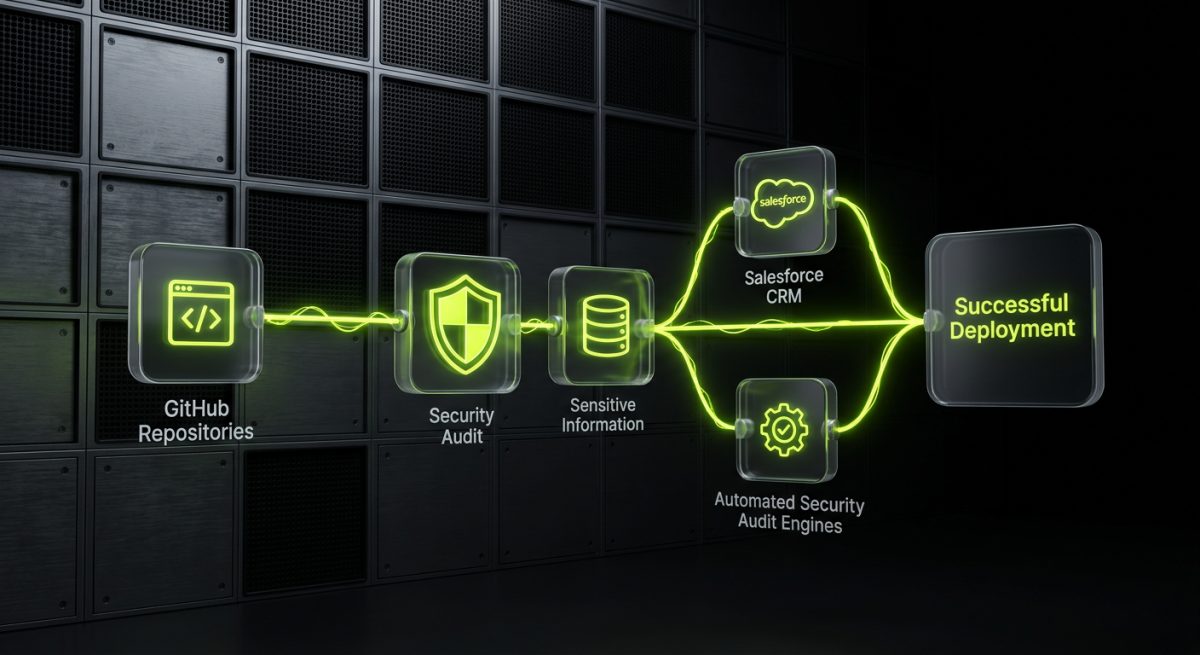
Operational efficiency in a B2B environment requires more than just code generation; it requires integration into existing CI/CD pipelines and automation workflows. At werun.dev, we emphasize the use of n8n for automating repetitive development tasks. OpenAI’s API is exceptionally well-suited for these "headless" automation tasks. For instance, an n8n workflow can be triggered by a GitHub release, using an OpenAI agent to automatically generate documentation, update a changelog, or even perform a preliminary security audit of the new code. This aligns with our commitment to delivering "built to last" software that is maintained long-term. By using the OpenAI Assistant API within n8n, we can build custom pipelines that enrich data, handle error logging, and even send Slack alerts when a deployment fails.
Claude Code, being a CLI tool, is currently more focused on the individual developer's productivity and "in-the-moment" engineering tasks. However, its efficiency in handling large-scale refactors cannot be overstated. When a client moves from a legacy WooCommerce setup to a modern, headless architecture using Next.js or Astro, Claude can analyze the old PHP-based logic and translate it into TypeScript with minimal intervention. This reduces the migration timeline and minimizes the risk of data loss. The cost-to-performance ratio is also a factor. While OpenAI’s API costs have seen significant reductions, Claude 3.5 Sonnet often provides a "smarter" output per token for technical tasks, potentially lowering the overall R&D spend for complex integration projects that require deep reasoning over large files.
Security remains the primary concern for B2B stakeholders. Both Anthropic and OpenAI offer enterprise-grade data privacy, ensuring that client code is not used to train future models. However, the "local-first" nature of Claude Code provides an additional layer of perceived security for many CTOs, as the agent operates within the company's controlled environment. When integrating WordPress with sensitive platforms like Salesforce or Stripe, this control is paramount. We use these agents to implement robust authentication mechanisms, ensuring that every REST API endpoint we build is correctly authenticated, sanitized, and escaped. The agents can be tasked with searching for common vulnerabilities like SQL injection or Cross-Site Scripting (XSS) within a custom plugin, acting as a first-line security audit before the code ever reaches a human reviewer.
Ultimately, the choice between Claude Code and OpenAI agents depends on the specific use case. For autonomous, terminal-based engineering and codebase refactoring, Claude Code is the current market leader. For building integrated, multi-step automation workflows and customer-facing AI features, OpenAI’s Assistant API remains the gold standard. At werun.dev, we don't choose one over the other; we integrate both into our stack to ensure that our WordPress, Webflow, and Shopify builds are the most advanced in the market. This hybrid approach allows us to maintain our <4h response SLA and 99.97% uptime, as AI agents handle the routine syntax while our senior developers focus on the complex business logic and architectural integrity that our clients depend on for their long-term growth.