The Architecture of Automated Design-to-Code Handoffs
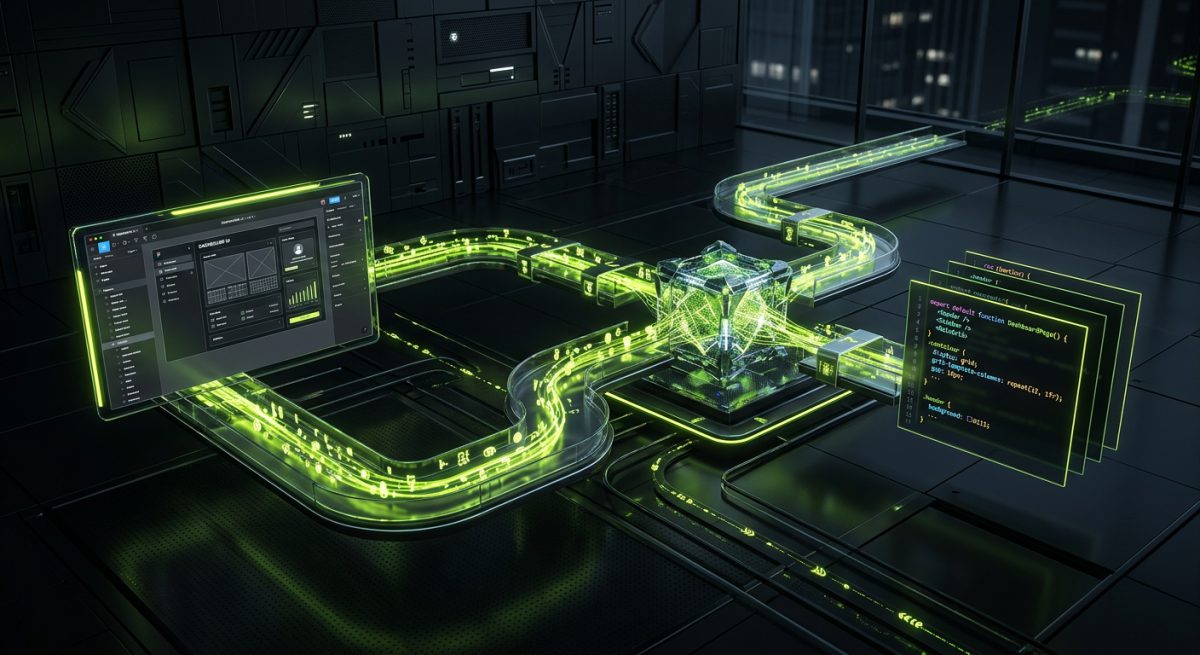
For years, the transition from a high-fidelity Figma mockup to a functional production environment has been the primary bottleneck in digital product development. In traditional B2B environments, this "handoff" often involves a messy exchange of redlines, asset exports, and endless Slack threads clarifying padding values or responsive behavior. However, the emergence of Large Language Models (LLMs) and sophisticated vision-based AI has fundamentally shifted this paradigm. We are moving away from manual translation and toward automated pipelines where design intent is programmatically converted into clean, maintainable code. At werun.dev, we view this not as a replacement for developers, but as an evolution of the "Web Development Partner" role—shifting the focus from repetitive coding to high-level system architecture and performance optimization.
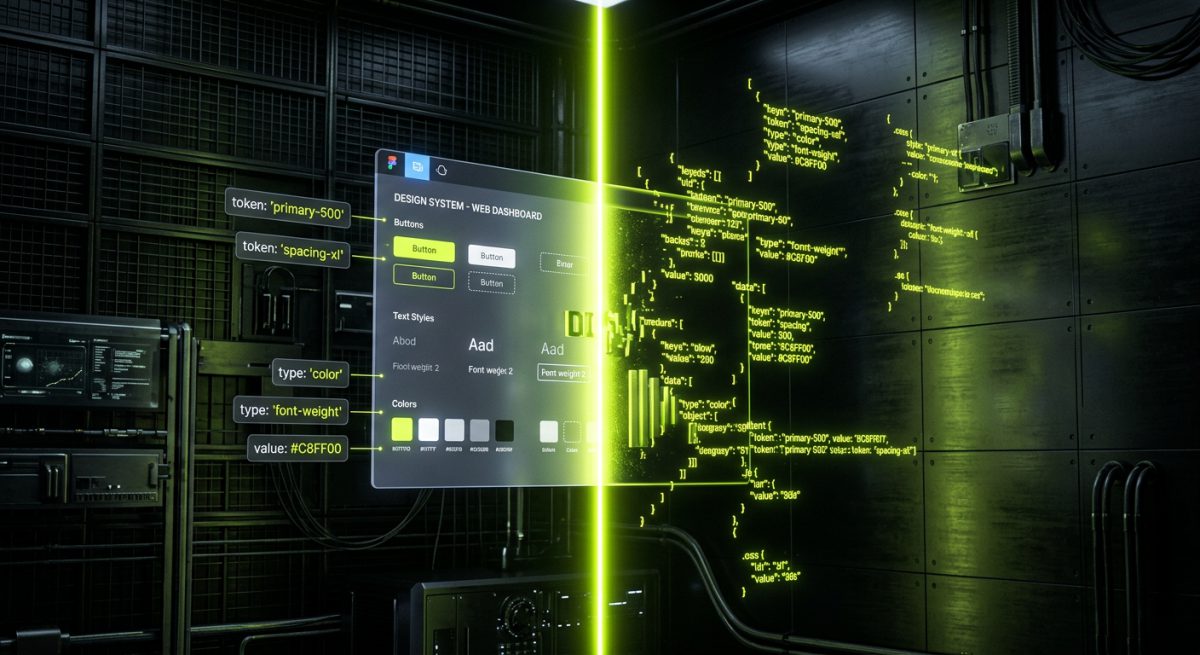
The core challenge of manual handoffs is the loss of fidelity and the introduction of technical debt. When a developer manually recreates a design, they often rely on "magic numbers" or inconsistent CSS classes that become a nightmare to maintain. AI-powered pipelines solve this by utilizing design tokens as a single source of truth. By integrating the Figma API with LLMs like Claude 3.5 Sonnet or GPT-4o, teams can now extract spatial data, color variables, and typography scales directly into structured JSON. This data is then processed by custom AI & Automation workflows that generate the initial boilerplate for components. This approach ensures that the 60% reduction in handoff time we observe in modern pipelines isn't just about speed; it is about the 90% accuracy in design token synchronization that prevents visual drift over the project lifecycle.
To implement a robust pipeline, organizations must move beyond simple "export to code" plugins. Professional-grade workflows require a middle layer that understands the specific constraints of the target platform—whether that is a custom WordPress plugin or a complex Shopify Liquid theme. This middle layer, often built using tools like n8n or custom Node.js scripts, acts as a validator. It checks the AI-generated code against established BEM (Block Element Modifier) naming conventions, accessibility standards (WCAG 2.1), and performance budgets. By the time the code reaches a pull request, it has already been vetted for structural integrity, allowing senior developers to focus on complex logic and third-party integrations rather than fixing broken margins or inconsistent font weights.
Platform-Specific Implementation: WordPress, Webflow, and Shopify
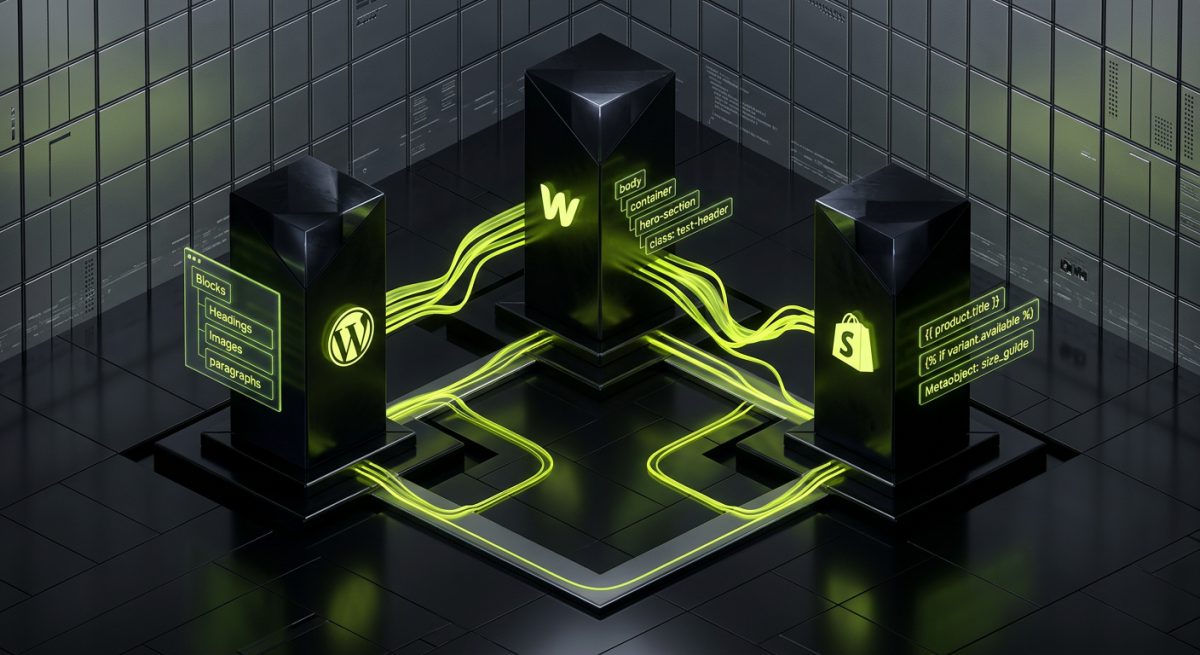
While the theory of AI-powered pipelines is universal, the execution must be tailored to the specific ecosystem of the site. At werun.dev, we specialize in three core platforms, each requiring a unique approach to design-to-code automation. For Webflow services, the pipeline focuses on scalable class architecture. Webflow’s Designer is powerful, but without a strict naming convention like Client-First or Finsweet’s systems, projects quickly become unmanageable. AI agents can now be trained to read Figma layers and automatically apply these naming conventions within the Webflow environment, ensuring that the final build is as clean as a hand-coded React application. This is particularly valuable for B2B firms in Miami or Madrid that need to move fast without accumulating the technical debt typically associated with "no-code" builds.
In the WordPress ecosystem, the pipeline takes a different form. We leverage AI to bridge the gap between Figma components and custom Gutenberg blocks. Instead of manually writing the PHP, React (JSX), and CSS for every block, our internal tools use LLMs to generate the block.json and the edit/save scripts based on the Figma component structure. This ensures that the editor experience in WordPress perfectly mirrors the design constraints set in Figma. Furthermore, for companies requiring integration services, these AI-generated blocks can be pre-configured to fetch data from custom REST API endpoints, significantly reducing the time required to build data-driven dashboards or dynamic content sections. The result is a WordPress site that works harder, built to professional standards with proper hooks and filters, rather than a bloated page-builder mess.
Shopify development presents its own set of challenges, particularly regarding Online Store 2.0 standards. A production-ready Shopify Plus solution requires a deep understanding of Liquid, JSON templates, and schema settings. Our AI-driven pipelines for Shopify focus on transforming Figma sections into modular Liquid components. By programmatically mapping Figma variables to Shopify Metafields and Metaobjects, we create a seamless flow where the merchant can manage complex product data without ever touching the code. This level of automation allows us to deliver bespoke Shopify themes that score 90+ on Core Web Vitals, as the AI-assisted code generation prioritizes semantic HTML and optimized asset loading. For enterprise clients, this means a faster time-to-market for new seasonal campaigns or B2B wholesale portals, without sacrificing the stability of the core e-commerce engine.
// Example: Custom n8n node logic for syncing Figma Tokens to CSS Variables
const figmaTokens = items[0].json.document.sharedToLibrary;
const cssVariables = figmaTokens.map(token => {
  const cleanName = token.name.replace(/\s+/g, '-').toLowerCase();
  return `--${cleanName}: ${token.value};`;
}).join('\n');

return { css_output: `:root {\n${cssVariables}\n}` };
Scaling Production with Intelligent Automation and n8n
The final piece of the design-to-code puzzle is the integration of continuous synchronization. A website is never truly "finished"; it is a living entity that evolves with the business. Traditional agencies launch and leave, but at werun.dev, we use AI & Automation to maintain the link between design and production long after the initial launch. For instance, consider a B2B SaaS company that frequently updates its brand guidelines. In a manual workflow, updating 50+ landing pages across a WordPress multisite network would take weeks of developer time. With an AI-powered pipeline managed via n8n, a designer can update the primary color in Figma, and a webhook triggers a workflow that automatically updates the CSS variables across the entire production environment, runs a regression test, and notifies the team via Slack.
This use-case driven approach is where we see the most significant business impact. By automating the "low-value" tasks of CSS updates and HTML boilerplate generation, we empower our clients to focus on "high-value" activities like conversion rate optimization (CRO) and lead generation strategy. Our implementation of integration services often includes AI agents that monitor the health of these pipelines. If a design change in Figma is detected that would break an existing API connection or accessibility requirement, the system flags it before it ever reaches production. This proactive maintenance is a core part of our "We Run It" philosophy, ensuring that the digital assets we build for clients in Buenos Aires, Uruguay, or London remain performant and secure in the long term.
Technical credibility in this space requires more than just using the latest tools; it requires a deep understanding of how these tools interact with the underlying infrastructure. Whether we are deploying self-hosted n8n instances for secure data processing or using GitHub-powered auto-update systems for custom plugins, the goal is always the same: a seamless, resilient, and invisible bridge between design and code. As AI continues to evolve, we are exploring the use of RAG (Retrieval-Augmented Generation) to train models on our specific coding standards and historical project data. This allows the AI to generate code that isn't just "correct," but is specifically tailored to the werun.dev standard of excellence—clean, documented, and built to scale. For businesses looking to move from experimentation to a production-ready AI strategy, the path forward starts with a unified design-to-code pipeline that treats code as a product of intentional system design.