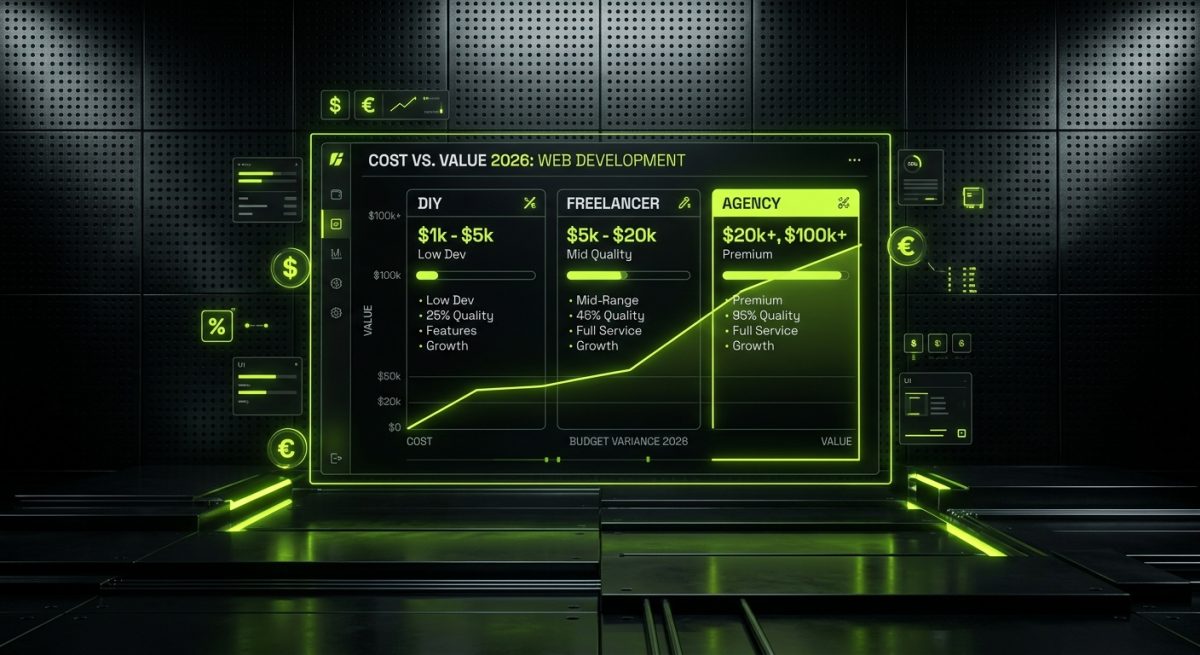
Budgeting for a custom WordPress website in 2026 is harder than it looks. Search for pricing online and you'll find everything from "$500 websites" on Fiverr to six-figure agency proposals — with almost no explanation of what separates them. This breakdown cuts through the noise with real numbers, honest trade-offs, and a clear framework for matching your budget to your actual requirements.
The Real Price Ranges: Agency, Freelancer, and DIY in 2026
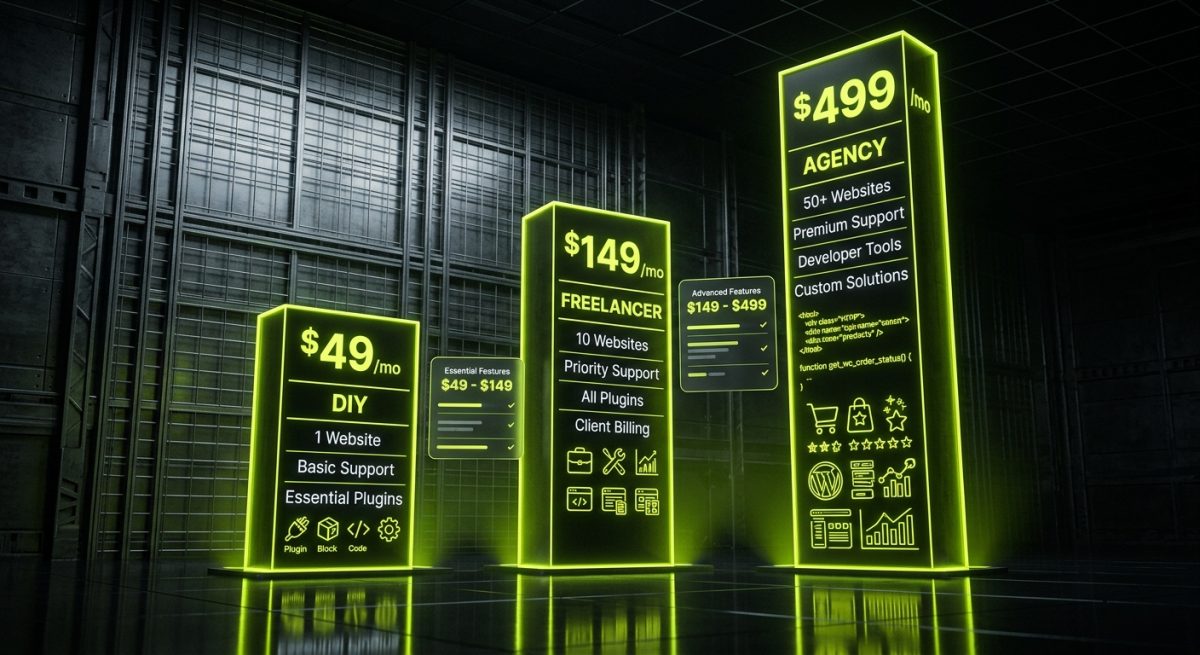
WordPress pricing exists on a spectrum, and where you land depends on three variables: who builds it, what gets built, and how much ongoing support you need. Here's how those three paths break down in practice.
DIY with a Page Builder or Block Theme
The all-in cost for a self-built WordPress site in 2026 typically runs $300–$1,500 per year, covering hosting, a premium theme, essential plugins, and a domain. Platforms like SiteGround (a werun.dev hosting partner) make setup reasonably accessible, and the WordPress block editor has matured enough that non-developers can produce respectable results with a block theme.
What DIY doesn't cover:
- Custom functionality beyond what plugins offer out of the box
- Performance optimization to hit 90+ Core Web Vitals scores
- Security hardening beyond default settings
- Scalable architecture for traffic growth or third-party integrations
DIY is viable for solo consultants, early-stage startups validating an idea, or simple brochure sites with no complex workflows. The moment you need a custom post type, a WooCommerce integration with your ERP, or a Gutenberg block that matches your design system exactly, you've outgrown the DIY tier.
Freelancer Builds
Freelance WordPress developers in 2026 typically charge $2,500–$20,000 for a complete project, depending on experience level and geography. A mid-market freelancer with five or more years of WordPress-specific experience will quote $8,000–$15,000 for a well-scoped brochure or marketing site with a custom theme and a handful of integrations.
The freelancer tier works well when:
- Your scope is clearly defined and unlikely to change mid-project
- You don't need a team (designer + developer + QA + project manager)
- You're comfortable managing the relationship and chasing deliverables yourself
- Post-launch support is minimal or you have an internal developer who can maintain the site
The risk isn't competence — many freelancers are excellent engineers. The risk is bandwidth and continuity. A single developer juggling multiple clients can't always prioritize your emergency at 9pm before a product launch. And if they move on, you're left with undocumented code and no handoff.
Agency Builds
A specialist WordPress agency in 2026 typically starts at $10,000 for a straightforward custom theme build and scales to $100,000+ for enterprise WooCommerce stores, multisite networks, or complex plugin ecosystems. The mid-range for a serious B2B marketing site or a WooCommerce store with custom checkout logic sits at $25,000–$60,000.
At werun.dev, our project budgets align with what clients actually need:
| Project Type | Typical Budget Range |
|---|---|
| Custom WordPress theme + basic integrations | $10,000–$25,000 |
| WooCommerce store with custom product types | $25,000–$50,000 |
| Complex plugin development + REST API | $15,000–$40,000 |
| Enterprise multisite or B2B wholesale | $50,000–$100,000+ |
What you're buying at the agency level isn't just code. It's a team that includes project management, QA, documentation, and a structured handoff. Every plugin werun.dev ships comes with documentation and a GitHub-powered auto-update system — so your site runs the latest version without manual intervention. That operational infrastructure has real value that a solo freelancer rarely replicates.
What Actually Drives WordPress Project Costs
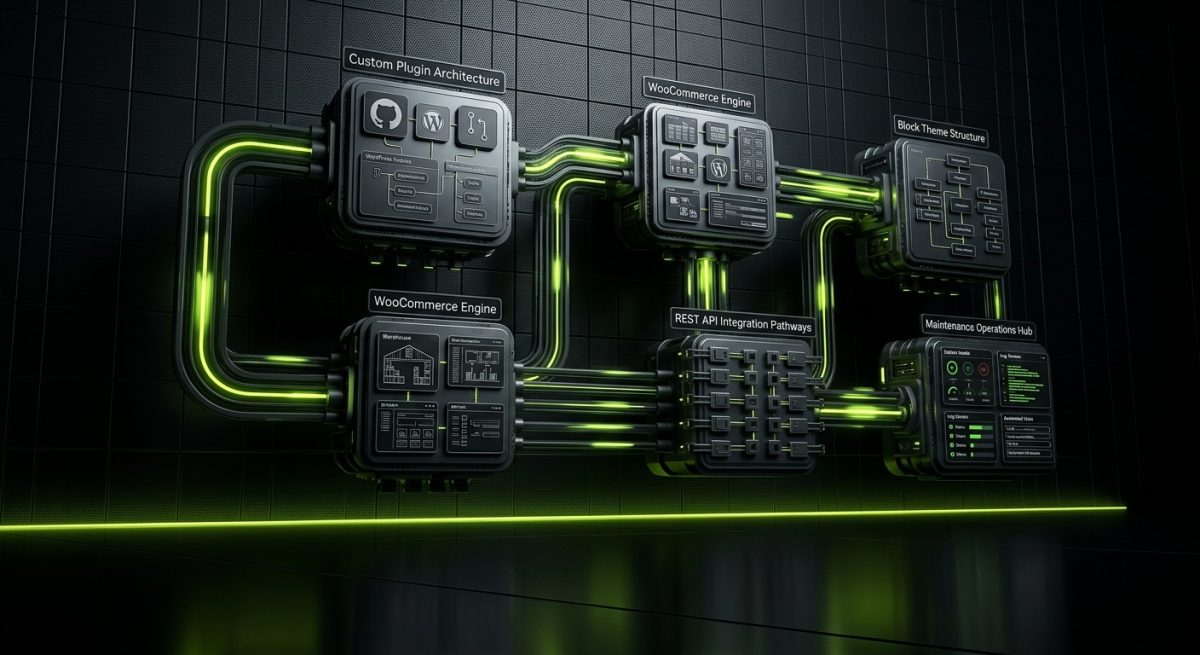
Understanding the line items behind any WordPress quote is the fastest way to evaluate whether a proposal is fair or inflated. These are the five cost drivers that move the needle most.
1. Custom Plugin Development
This is consistently the most underestimated cost in WordPress projects. A custom plugin built to WordPress coding standards — using hooks, filters, proper nonces, capability checks, sanitization and escaping — takes significantly longer than bolting together existing plugins with glue code.
A well-scoped custom plugin with:
- Custom post types, taxonomies, and meta
- Admin UI built with the Settings API
- WP REST API custom endpoints
- Background processing via WP-Cron
- Auto-updates via GitHub releases
...can represent $5,000–$20,000 of a project budget on its own, depending on complexity. That's not padding — that's the cost of doing it correctly so the plugin doesn't become a security liability or a maintenance nightmare two years later.
2. WooCommerce Complexity
Out-of-the-box WooCommerce is a commodity. What costs money is everything around it: custom product types and variations, B2B wholesale pricing rules, subscription and recurring billing logic, custom checkout flows, and integrations with ERP or CRM systems. A WooCommerce store that connects to a fulfillment platform, syncs inventory with a warehouse management system, and supports tiered wholesale pricing is a genuinely complex engineering project — not a theme install.
3. Theme Architecture
Custom block themes (Full Site Editing) built from scratch take longer than classic themes but deliver better long-term editorial flexibility. A theme that scores 90+ on Core Web Vitals, uses semantic HTML, accessible markup, and a clean component structure isn't a template purchase — it's a designed and engineered product. Expect this to represent $8,000–$20,000 of a project depending on design complexity.
4. Third-Party Integrations
Every integration with an external system — a CRM, payment gateway, ERP, marketing automation platform — adds scoped development time. REST API endpoints need to be built, authenticated, error-handled, and tested. Webhooks need to be reliable under load. This work is invisible to end users but critical to business operations, and it's rarely cheap to do correctly.
5. Ongoing Maintenance
WordPress is not a set-and-forget platform. Core updates, plugin updates, security patches, and performance monitoring are ongoing operational requirements. Monthly maintenance retainers from a specialist agency typically run $500–$3,000/month depending on scope. Skipping this isn't a cost saving — it's a deferred risk that usually surfaces as an emergency at the worst possible moment.
How to Evaluate a WordPress Quote Without Getting Burned
Most businesses don't get burned by choosing the wrong platform — they get burned by choosing the wrong partner at the wrong price for the wrong reasons. Here's a practical framework for evaluating any WordPress proposal in 2026.
Ask for a Technical Specification, Not Just a Price
A serious agency or freelancer should be able to produce a scoped technical specification before final pricing. This document should describe:
- The theme architecture (block theme, classic, hybrid)
- Which functionality will be built custom vs. handled by existing plugins
- How integrations will be implemented (REST API, webhooks, middleware)
- Hosting requirements and recommended infrastructure
- Post-launch support and update procedures
If a vendor quotes a fixed price without a specification, you're not getting a quote — you're getting a number that will change once the project starts.
Evaluate Code Quality Standards, Not Just Portfolio
Portfolios show design. They don't show whether the underlying code is maintainable. Ask directly:
- Do your plugins use WordPress nonces and capability checks?
- How are updates handled post-launch?
- Is code version-controlled in Git?
- What's the documentation standard for custom functionality?
At werun.dev, every plugin ships with documentation and a GitHub-powered auto-update system. That's not a marketing claim — it's a development standard that protects the client's investment over time.
Understand What Happens After Launch
The launch date is not the finish line. A WordPress site requires ongoing attention: core and plugin updates, security monitoring, performance audits, and incremental feature development. Before signing any contract, clarify:
- Who owns the code and the repository?
- What's the process for requesting changes post-launch?
- Is there a maintenance retainer option, and what does it cover?
- What's the SLA for critical issues?
Agencies that offer monthly maintenance retainers are signaling that they intend to be a long-term partner, not a project vendor. That distinction matters enormously when something breaks at 2am the night before a major campaign.
Red Flags in Low-Cost Proposals
A $3,000 quote for a "custom WordPress website" in 2026 almost always means one of the following:
- A pre-built theme with minimal customization sold as bespoke work
- No custom plugin development — everything handled by free plugins with no quality control
- No performance optimization or Core Web Vitals consideration
- No documentation or post-launch support
- Offshore labor with no project management layer
None of these are automatically disqualifying depending on your needs. But they need to be understood for what they are. A $3,000 WordPress site is a commodity product. A $30,000 WordPress site is an engineered business tool. Both have legitimate use cases — the mistake is paying $30,000 expecting one and receiving the other, or paying $3,000 and expecting functionality that requires ten times the investment.
Matching Budget to Business Requirement
The most useful question isn't "how much does a WordPress site cost?" — it's "what does my business need this site to do, and what's the cost of it failing to do that?"
For a B2B company where the website is the primary lead generation channel, a $40,000 investment in a properly built, well-integrated, fast, and maintainable WordPress site is a straightforward ROI calculation. For a local service business with five pages and a contact form, $40,000 is absurd. Budget calibration starts with honest scope definition, not with a number pulled from a competitor's pricing page.
If you're working through that scope definition and want a technical perspective on what your requirements actually demand, werun.dev offers project consultations — and responds within four hours.