The Fragmentation Crisis and the Emergence of MCP
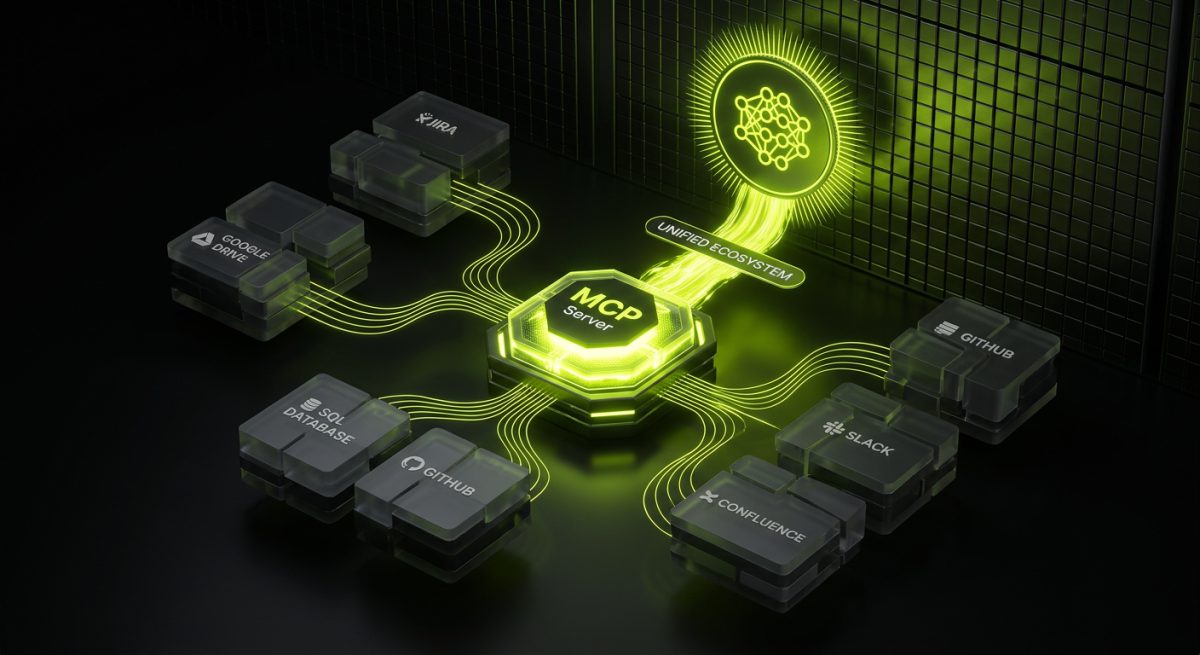
For the past two years, the primary hurdle in AI-driven development hasn't been the intelligence of the models themselves, but rather the isolation of the data they need to be effective. Large Language Models (LLMs) like Claude 3.5 Sonnet or GPT-4o are capable of incredible reasoning, yet they are often trapped in a "black box" environment. To make them useful in a professional B2B context—such as auditing a complex WordPress plugin development codebase or managing a Shopify Plus inventory—developers have had to build brittle, custom integrations for every single tool. This fragmentation has led to a "walled garden" problem where your AI agent might understand your code but has no idea what is happening in your Jira tickets, your Google Drive, or your local database without significant manual effort.
The Model Context Protocol (MCP), recently introduced by Anthropic, is an open standard designed to solve this exact problem. It acts as a universal translator between AI applications and the data sources they need to access. Instead of writing a custom API wrapper for every new tool, MCP allows developers to build a single "MCP Server" that any "MCP Client" (like a modern IDE or an AI agent) can instantly understand and interact with. This is a monumental shift for agencies like werun.dev, where we manage diverse tech stacks across AI & Automation services and enterprise web platforms. By standardizing how context is shared, we move away from the era of "copy-pasting code into a chat window" and toward a future of fully integrated, autonomous development ecosystems.
Technically, MCP operates on a client-server architecture using JSON-RPC 2.0. It supports two primary transport layers: Standard Input/Output (stdio) for local processes and Server-Sent Events (SSE) for remote connections. This flexibility means an MCP server can live on a developer’s local machine to provide access to a file system, or it can live in the cloud to provide a secure bridge to a custom REST API integration. The protocol defines three core primitives: Resources, Prompts, and Tools. Resources are data-centric (like reading a database schema), Prompts are template-centric (standardizing how tasks are assigned), and Tools are action-centric (allowing the AI to actually execute code or trigger a webhook). This structured approach ensures that the AI doesn't just "hallucinate" a solution but interacts with real-world data in a predictable, governed manner.
At werun.dev, we see this as the "REST API moment" for the AI era. Just as REST standardized how web services talk to each other in the 2000s, MCP is standardizing how AI models talk to the world. For our B2B clients, this means faster development cycles and more robust automation. We are no longer limited by what the LLM was trained on; we can now provide it with a live, high-fidelity map of a client's entire digital ecosystem, from their Shopify Plus enterprise architecture to their internal CRM data, all through a secure and standardized interface.
Implementing MCP in Production B2B Environments
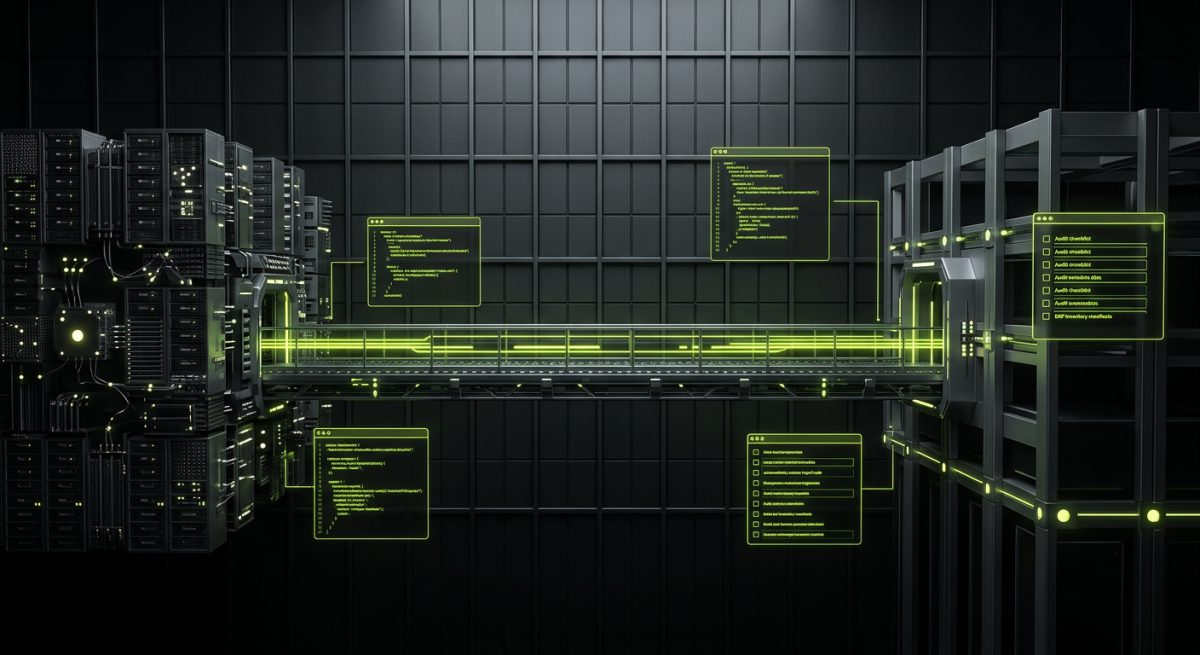
Moving from a theoretical understanding of MCP to a production-ready implementation requires a deep focus on the "Human-in-the-loop" (HITL) philosophy. At werun.dev, we don't just build autonomous bots; we build intelligent assistants that augment senior developer workflows. A primary use case for MCP in our agency involves complex site migrations and audits. Imagine a scenario where we are migrating a large-scale enterprise site from a legacy CMS to a Webflow CMS architecture. In a traditional workflow, a developer would manually map hundreds of database fields, check for broken links, and ensure that SEO metadata is preserved. This is a high-risk, labor-intensive process.
With an MCP-powered workflow, we can deploy a custom MCP server that connects directly to the legacy SQL database and the new Webflow API. An AI agent, operating as an MCP client within an IDE like Cursor, can then "see" both environments simultaneously. The developer can issue a high-level command: "Analyze the legacy 'Case Studies' table and generate a migration script for the Webflow CMS, ensuring all GSAP animation triggers are mapped to the new class structure." Because the AI has direct, standardized access to the file system and the APIs via MCP, it can generate the script, test it against a subset of data, and report discrepancies in seconds. This isn't just automation; it's a context-aware execution that understands the specific nuances of custom code and JS logic required for high-end B2B sites.
For Shopify merchants, MCP opens up even more sophisticated possibilities. We often build custom Liquid themes from scratch for clients with massive product catalogs. Ensuring that every product metaobject is correctly formatted and synced with a third-party ERP is a constant challenge. An MCP server can be configured to bridge the gap between the Shopify Admin API and the local ERP database. The AI agent can then perform real-time audits: "Scan the last 500 products added; identify any missing metafields required for the new B2B wholesale portal and suggest the correct values based on the ERP's inventory manifest." This level of integration ensures data integrity across the board, reducing the manual overhead that often plagues large e-commerce operations.
{
  "mcpServers": {
    "shopify-audit-tool": {
      "command": "npx",
      "args": ["@werun-dev/mcp-shopify-server"],
      "env": {
        "SHOPIFY_API_KEY": "your_key_here",
        "ERP_ENDPOINT": "https://api.internal-erp.com"
      }
    }
  }
}
This code snippet represents a simplified configuration for an MCP client. By simply pointing the AI to a specialized server, we grant it the "eyes" and "hands" it needs to perform expert-level tasks. This approach is central to how we handle monthly maintenance retainers. Instead of reactive bug fixing, we use MCP-enabled agents to proactively monitor codebases for technical debt, security vulnerabilities, or performance bottlenecks in WooCommerce stores, ensuring that our clients' sites run at peak efficiency 24/7.
The Strategic Advantage: Security, Scalability, and Agency Expertise
One of the most significant concerns for B2B enterprises when adopting AI is data security and governance. Sending sensitive proprietary data to a public LLM is often a non-starter for legal and compliance departments. This is where the Model Context Protocol provides a strategic advantage. Because MCP separates the reasoning (done by the LLM) from the data access (done by the MCP Server), companies can maintain strict control over their information. An MCP server can be hosted on-premise or within a private VPC, ensuring that the AI only sees the specific context it needs for a task, and that no sensitive data is ever used to train public models.
At werun.dev, our approach to AI integration focuses on building these secure bridges. We utilize tools like n8n visual workflows to orchestrate complex background tasks, but we use MCP to provide the "fine-grained" context required during the actual development and maintenance phases. For example, when building custom WordPress plugins, we use MCP servers to feed the AI our internal coding standards, specific API documentation, and the project's historical git logs. This ensures that every line of code generated by the AI adheres to our high standards for security hardening, proper sanitization, and escaping. It transforms the AI from a general-purpose tool into a specialized engineer that knows our specific methodology.
Furthermore, MCP enables a new level of scalability in how we manage Integrations and REST APIs. In the past, connecting a WordPress site to an ERP like SAP or Odoo required extensive documentation and manual mapping for every endpoint. Now, we can build an MCP server that "describes" the ERP's capabilities to the AI. This allows us to build complex, bidirectional data syncs in a fraction of the time. The AI can analyze the ERP's schema, understand the WordPress REST API's requirements, and suggest the most efficient webhook architecture to prevent timeouts and ensure reliability. This reduces the "time to value" for our clients, moving them from experimentation to production-ready AI systems much faster than previously possible.
As we look toward the future of agentic workflows, MCP will be the foundation upon which autonomous B2B systems are built. We are moving toward a world where your website isn't just a static brochure or a simple store, but an active participant in your business logic. Imagine a Webflow site that automatically updates its own "Team" page by pulling data from an HR portal via MCP, or a Shopify store that adjusts its pricing dynamically based on competitor data scraped and analyzed by an AI agent. These are the types of intelligent systems we are currently architecting for our clients.
If your organization is looking to move beyond basic chatbots and implement truly transformative AI workflows, the first step is building the right context. At werun.dev, we specialize in the technical architecture required to make these systems work in the real world. Whether you need to integrate your WordPress ecosystem with a complex CRM or build a custom Shopify app that leverages the power of MCP, our team of senior developers is ready to help. Explore our AI & Automation services or contact us today to discuss how we can modernize your development pipeline and drive measurable business impact through professional AI integration.