The Architecture of Multi-Agent Systems in B2B Environments
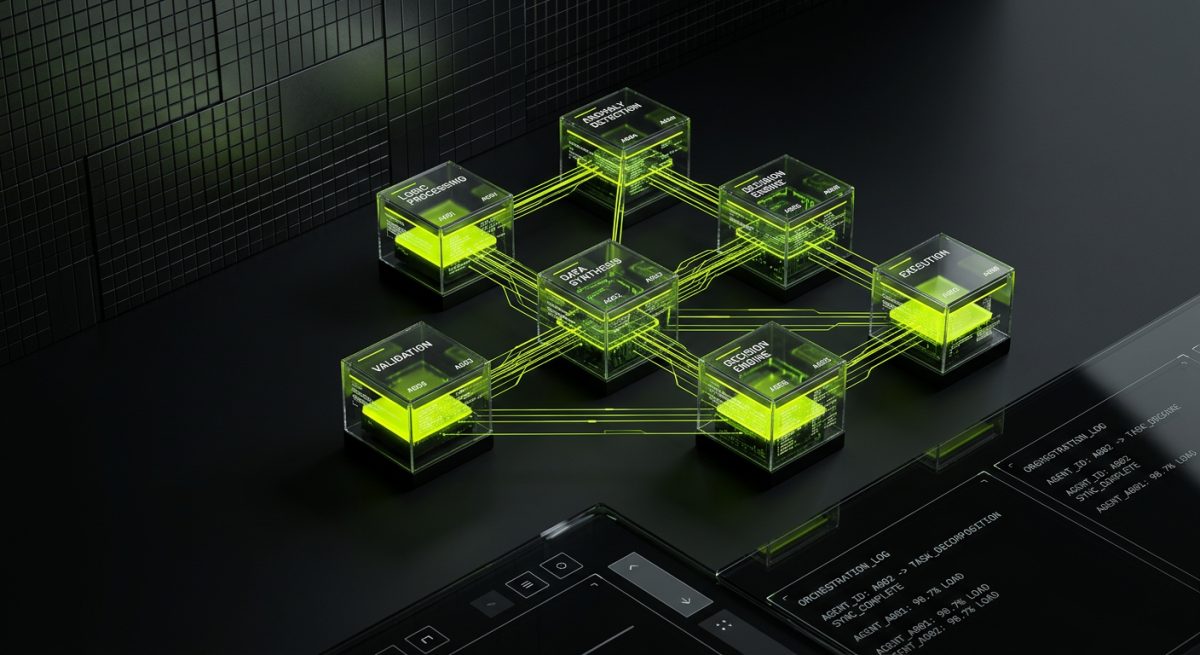
The transition from monolithic Large Language Model (LLM) interactions to Multi-Agent Systems (MAS) represents a fundamental shift in how enterprise automation is architected. In a standard single-agent setup, a model is expected to handle a broad range of tasks, which often leads to performance degradation, "hallucinations," and a lack of depth in specialized technical domains. Conversely, a Multi-Agent System decomposes complex business processes into smaller, manageable sub-tasks handled by specialized personas. At werun.dev, we view this as the logical evolution of the modern web ecosystem, moving beyond simple chatbots to autonomous workforces that interact with WordPress, Shopify, and Webflow via robust API integrations.
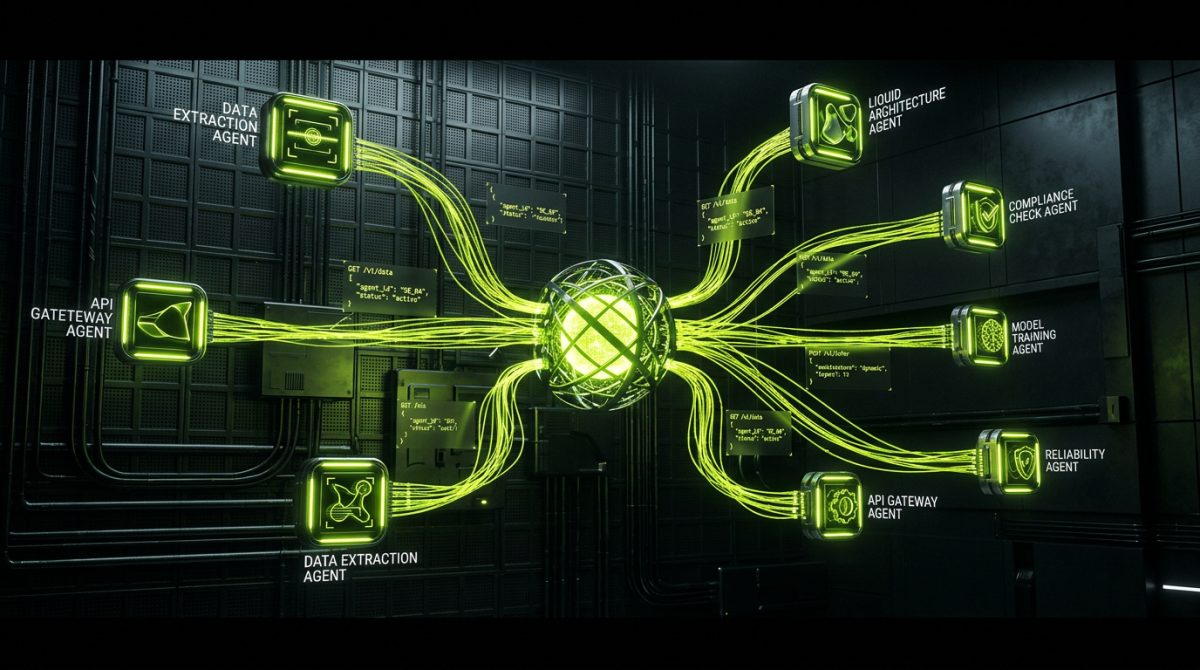
Designing an effective MAS requires a sophisticated orchestration layer. This layer acts as the "manager" or "dispatcher" that routes requests to the appropriate agent based on the required expertise. For instance, a complex migration from WooCommerce to Shopify Plus involves multiple distinct workflows: data extraction, schema mapping, asset optimization, and SEO redirection. A single agent attempting to manage this entire pipeline is prone to failure. However, by deploying a "Data Extraction Agent" specialized in the WordPress REST API and a "Liquid Architecture Agent" specialized in Shopify’s Online Store 2.0, the system achieves higher precision and reliability.
Communication protocols between these agents are typically handled through structured data formats, primarily JSON. By enforcing strict output schemas, we ensure that the output of one agent—such as a list of product metadata—serves as a valid, high-fidelity input for the next agent in the chain. This modularity allows for easier debugging and scaling. If the Shopify API updates its rate-limiting logic, we only need to update the toolset of the specific "Shopify Integrator Agent" rather than re-engineering the entire automation pipeline. This approach mirrors the microservices architecture that has dominated backend development for the last decade, bringing the same benefits of isolation, scalability, and maintainability to the world of Artificial Intelligence.
Furthermore, the implementation of state management is critical in MAS design. Agents must maintain context across multi-step interactions without exceeding token limits or losing track of the primary objective. We utilize advanced orchestration tools like n8n and custom-built middleware to manage this state, ensuring that if an agent encounters an error, the system can trigger a retry logic or escalate the issue to a human supervisor. This "Human-in-the-Loop" (HITL) capability is a cornerstone of our AI strategy at werun.dev, providing the safety nets required for enterprise-grade deployments where 99.97% uptime is the standard.
Designing Specialized Personas for Web Ecosystems
The efficacy of a Multi-Agent System is determined by the granularity and definition of its agent personas. A common mistake in AI implementation is creating agents that are too broad. To build a high-performing team, each agent must have a clearly defined scope, a specific set of tools, and a unique knowledge base. In the context of B2B web development, this means creating agents that understand the nuances of specific platforms like WordPress, Webflow, and Shopify at a code-level depth.
The WordPress Security and Audit Agent
For our WordPress maintenance services, we deploy agents specifically trained on WordPress coding standards. This agent’s primary role is to monitor custom plugin developments and theme modifications for security vulnerabilities. It is equipped with tools to scan for missing nonces, improper sanitization, and insecure SQL queries. By integrating this agent into a GitHub-based CI/CD pipeline, we can automate code reviews before a single line of code reaches the production environment. This agent doesn't just look for errors; it understands the context of the wp_remote_get() function and ensures that all API calls are handled with proper error logging and timeout management, aligning with our commitment to building things "the right way."
The Shopify Liquid and Conversion Agent
In the Shopify ecosystem, we utilize agents that specialize in Liquid optimization and Conversion Rate Optimization (CRO). This agent is granted access to theme files and Google Lighthouse metrics. Its task is to identify redundant scripts, optimize image loading through proper Shopify filters, and suggest improvements to the Online Store 2.0 JSON templates. When a client requests a new feature—such as a custom B2B wholesale portal—this agent works alongside a "Logic Agent" to ensure that the frontend implementation does not compromise the store's performance. The specialized focus allows the agent to navigate complex Shopify Plus features, such as checkout extensibility and Shopify Flow, with a level of detail that a generalist AI would miss.
The Integration and Middleware Agent
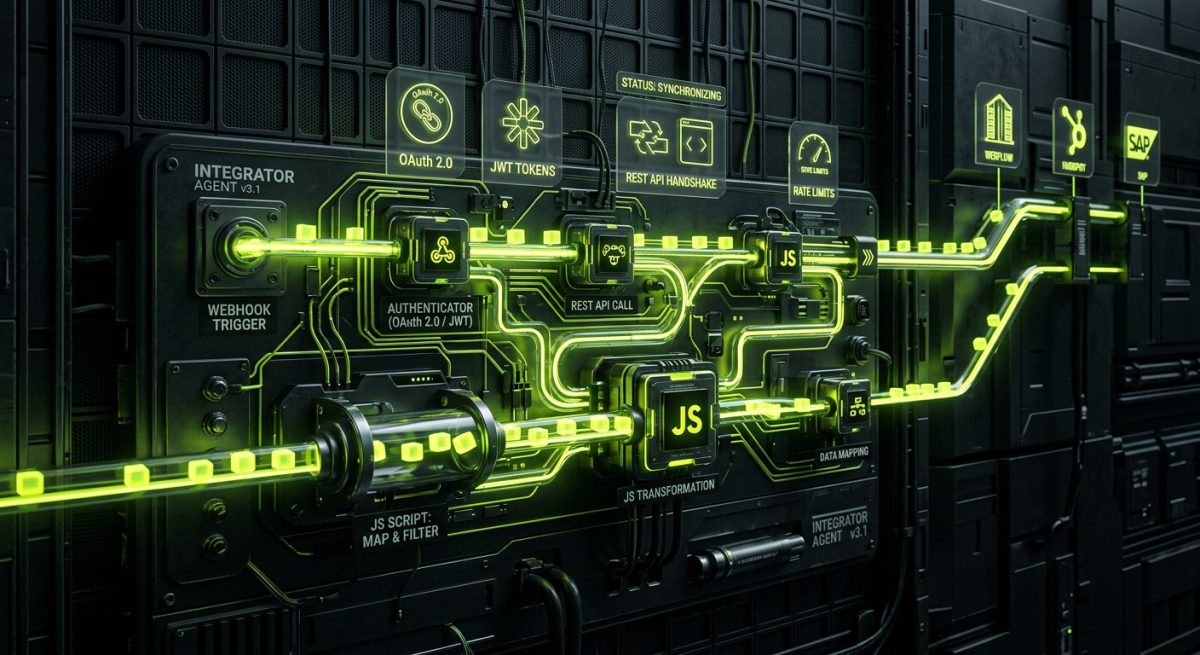
Perhaps the most vital persona in a MAS is the "Integrator." This agent is the expert on APIs, webhooks, and data synchronization. Whether connecting Webflow to a CRM like HubSpot or syncing WooCommerce with an ERP like SAP, the Integrator Agent manages the handshake between systems. It understands OAuth 2.0 flows, JWT authentication, and the specific rate limits of various platforms. By using n8n as the execution environment, this agent can dynamically build and execute JavaScript nodes to transform data on the fly. This eliminates the manual overhead of data mapping and ensures that the client's business logic is consistently applied across all platforms. The result is a seamless ecosystem where data flows bidirectionally without friction, supported by the 12+ years of experience our team brings to every integration project.
Implementation Frameworks and Operational Scalability
Moving a Multi-Agent System from a conceptual design to a production-ready environment requires a robust technological stack and a focus on long-term maintainability. At werun.dev, we leverage a combination of open-source orchestration frameworks and proprietary logic to ensure that our AI teams are not only intelligent but also resilient. The core of our MAS deployments often revolves around n8n, which provides a visual and programmatic interface for managing complex logic branches and multi-step workflows. This allows us to create "Agentic Pipelines" where the output of an LLM node can trigger a series of API calls, database queries, and subsequent LLM evaluations.
One of the critical components for scaling these systems is the implementation of Retrieval-Augmented Generation (RAG). To make agents truly specialized, they must have access to a client’s specific knowledge base—be it technical documentation, brand guidelines, or past support tickets. By using vector databases, we allow our agents to perform semantic searches and retrieve the most relevant context before generating a response. This ensures that a "Support Agent" for a Webflow site, for example, has the exact details of that site's custom JS logic and CMS architecture, leading to highly accurate and context-aware resolutions. This grounding in real data is what separates a toy implementation from a professional B2B solution.
Operational scalability also hinges on monitoring and observability. In a MAS, identifying where a breakdown occurred can be challenging if the system is a "black box." We implement comprehensive logging and tracing for every agent interaction. We track metrics such as:
- Token Consumption: Monitoring the cost and efficiency of each agent persona.
- Success Rate per Task: Evaluating which agents are performing optimally and which require prompt engineering or fine-tuning.
- Latency: Ensuring that the multi-agent chain does not introduce unacceptable delays in the user experience.
- Tool Usage Accuracy: Verifying that agents are calling the correct API endpoints with the correct parameters.
By treating AI agents as we would any other part of a client's infrastructure, we provide a managed service that evolves over time. Our SLA of <4h response time applies not just to traditional web issues but also to the maintenance of these AI pipelines. As LLM models improve—from GPT-4 to Claude 3.5 and beyond—we can swap out the underlying "brain" of an agent without rebuilding the entire system. This future-proofs our clients' investments in automation, allowing them to scale their operations without a linear increase in headcount. The goal of designing teams of specialized AI agents is ultimately to multiply results while eliminating the manual work that slows down growth in the competitive B2B landscape.