The Architecture of Retrieval-Augmented Generation (RAG) in B2B Ecosystems
Retrieval-Augmented Generation, or RAG, has emerged as the definitive standard for businesses seeking to leverage Large Language Models (LLMs) without the inherent risks of data hallucinations or outdated information. While foundational models like GPT-4 or Claude 3.5 Sonnet are incredibly capable, they are essentially static snapshots of information. For a B2B entity, relying on a model that doesn't know your current inventory in Shopify or your latest service documentation in WordPress is a recipe for operational failure. RAG solves this by providing the model with a "searchable library" of your private data, which it consults before generating a response. This process ensures that every output is grounded in verifiable, real-time facts specific to your organization.
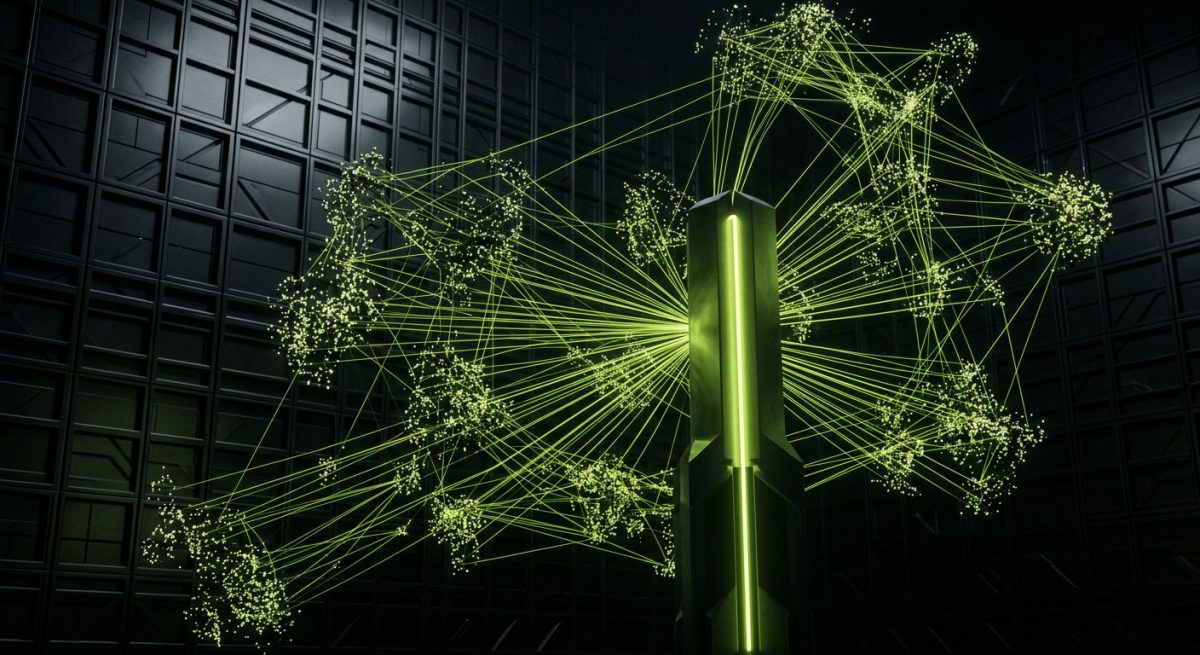
At the technical core of a RAG system lies the concept of vector embeddings. When we ingest data from a client’s ecosystem—whether it’s technical documentation from a Webflow CMS or complex product specifications from a WooCommerce store—we don't just paste text into a prompt. We transform that data into high-dimensional numerical vectors using embedding models. These vectors are then stored in a specialized vector database, such as Pinecone, Weaviate, or a self-hosted PGVector instance. When a user or an automated agent asks a question, the system converts that query into a vector, finds the most mathematically similar "chunks" of data in the database, and feeds those specific snippets to the LLM as context. This allows the agent to act as a highly specialized expert on your specific business logic, maintaining a level of accuracy that generic AI simply cannot match.
Implementing RAG at an enterprise level requires a sophisticated understanding of data chunking and metadata strategies. It is not enough to simply upload a PDF. At werun.dev, we focus on semantic chunking—breaking down information into logical segments that preserve context. For example, if we are indexing a Shopify Plus store's return policy, we ensure that the conditions, timelines, and exceptions are kept within the same context window. Furthermore, we attach metadata to these chunks, such as "last updated" timestamps or "product category" tags. This allows the retrieval engine to filter information dynamically. If an agent is helping a customer with a specific product line, the system can prioritize data chunks tagged with that specific ID, drastically reducing the noise and increasing the precision of the final output. This architectural rigor is what separates a basic chatbot from a professional-grade intelligent agent capable of handling high-stakes B2B interactions.
Beyond accuracy, RAG provides a critical layer of security and compliance. By using a retrieval-based approach, businesses can keep their sensitive data within their own controlled environment. Instead of fine-tuning a model—which effectively bakes the data into the model's weights and makes it difficult to retract—RAG allows for "hot-swapping" data. If a document becomes obsolete or a product is discontinued, you simply remove it from the vector database, and the AI agent immediately loses access to it. This level of granular control is essential for industries with strict regulatory requirements, ensuring that the AI never provides unauthorized or outdated information to users. By connecting your existing databases to these intelligent layers, you transform passive data into an active, conversational asset that scales with your business growth.
Bridging the Gap: Connecting CMS and E-commerce Databases to AI Agents
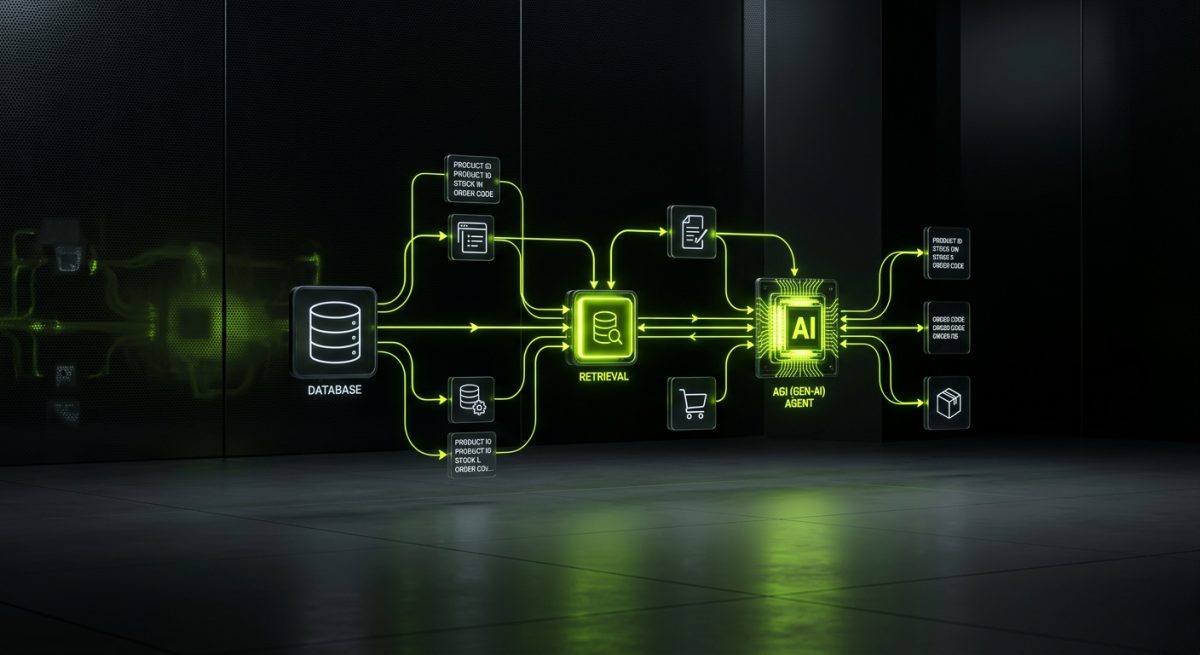
The true power of an intelligent agent is realized when it is seamlessly integrated with your primary sources of truth: your CMS and E-commerce platforms. For many of our clients, this means connecting an AI layer to WordPress, Webflow, or Shopify. The challenge lies in the fact that these platforms store data in structured relational databases or proprietary formats that LLMs cannot natively "read" in real-time. To bridge this gap, we build robust ETL (Extract, Transform, Load) pipelines that synchronize your operational data with the vector stores used by the AI agents. This ensures that the agent's "knowledge" is never more than a few minutes behind the actual state of your business.
In the context of WordPress, this often involves the development of custom REST API endpoints or the utilization of WP-Cron to trigger data syncs. When a new technical guide is published or a plugin documentation page is updated, a webhook triggers an n8n workflow. This workflow fetches the updated content, cleans the HTML to remove unnecessary boilerplate, generates new embeddings, and updates the vector database. This automated pipeline eliminates the need for manual data entry and ensures that the AI agent is always working with the latest version of the truth. At werun.dev, we prioritize building these integrations using professional standards—incorporating nonces for security, proper sanitization, and error-handling logic to ensure that the sync remains reliable even under heavy server loads. This is particularly vital for WooCommerce environments where product availability and pricing change frequently.
Shopify environments present a different set of opportunities, particularly with the advent of Metaobjects and Metafields. These structured data types are perfect candidates for RAG integration. By mapping Shopify Metaobjects to specific vector attributes, we can build agents that understand the intricate relationships between products, parts, and compatibility requirements. For instance, a B2B Shopify Plus merchant selling industrial machinery can have an agent that knows exactly which spare parts fit a specific serial number by querying the Metaobject structure through an n8n middleware. We use the Shopify GraphQL API to efficiently pull this data, ensuring that only the necessary information is processed, which optimizes both speed and API rate limit usage. This level of deep integration allows the AI to provide technical support that is indistinguishable from a human expert who has memorized the entire catalog.
Webflow deployments require a similarly tailored approach, focusing on the CMS API. Because Webflow is often used for high-end marketing and lead generation sites, the AI agents we deploy there are frequently focused on lead qualification and service explanations. By connecting the Webflow CMS to an intelligent agent, we can ensure the agent perfectly mirrors the brand voice and service offerings described on the site. If the marketing team updates a service description in the Webflow Designer, the n8n automation detects the change and refreshes the agent’s knowledge base automatically. This creates a unified ecosystem where the website content and the AI agent are always in perfect alignment. By treating your CMS as a live data source rather than a static repository, we enable a level of automation that significantly reduces the manual overhead of maintaining AI consistency across multiple digital touchpoints.
Orchestrating Autonomous Workflows with n8n and Tool-Calling Agents
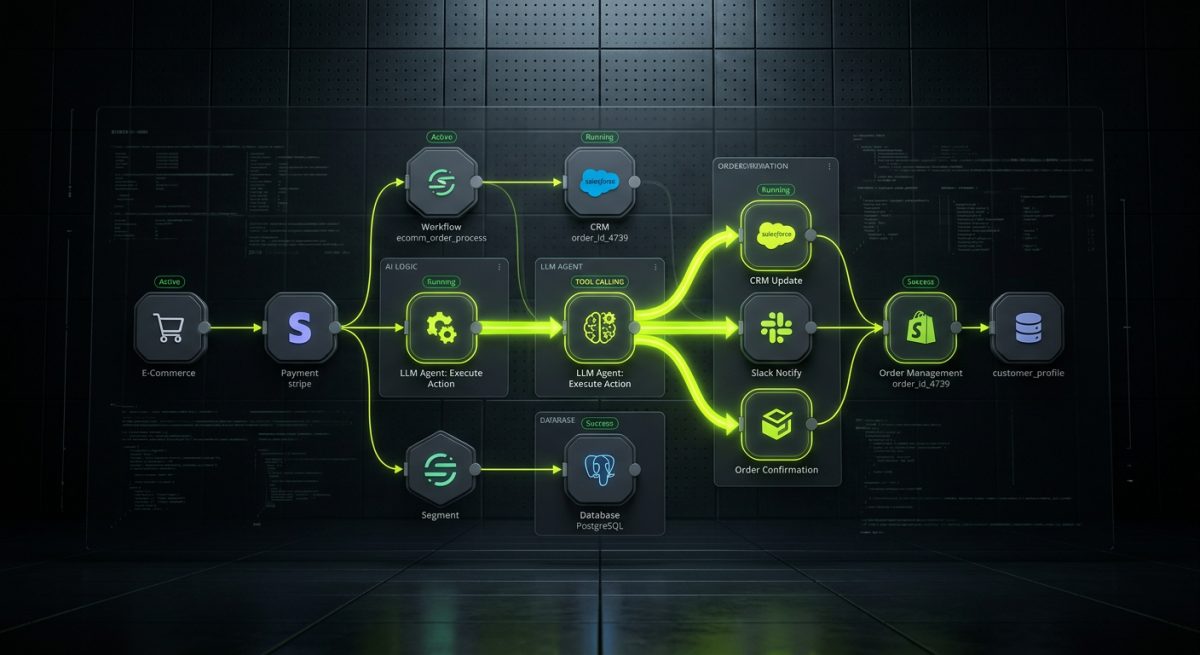
Moving beyond simple question-and-answer interactions, the next frontier in business automation is the deployment of "agentic" workflows. Unlike a standard chatbot that only retrieves and summarizes text, an intelligent agent equipped with tool-calling (or function-calling) capabilities can actually perform actions within your software stack. By using n8n as the orchestration layer, we can grant an AI agent the ability to interact with your CRM, your ERP, or your project management tools. This transforms the agent from a passive informant into an active participant in your business processes. When a client interacts with a werun.dev-built agent, that agent isn't just talking—it's executing logic that drives real-world results.
Technical implementation of these agents involves defining specific "tools" that the LLM can invoke. For example, we might define a tool called check_order_status that connects to a Shopify store via an n8n webhook. When a user asks, "Where is my last order?", the LLM recognizes the intent, identifies the necessary tool, and sends a structured JSON request to n8n. The n8n workflow then executes the actual API call to Shopify, retrieves the tracking number, and passes it back to the LLM to format into a friendly response. This loop allows the agent to handle complex, multi-step tasks that previously required human intervention. The beauty of this approach is that the LLM never has direct access to your API keys; n8n acts as a secure gateway, ensuring that the agent can only perform the specific actions we have explicitly permitted.
Error handling and reliability are paramount when deploying autonomous agents in a B2B setting. We design our n8n workflows with comprehensive logging and retry logic. If an external API is down or a request times out, the workflow doesn't just fail; it can trigger an alert in Slack or email the development team, while simultaneously instructing the AI agent to inform the user that a temporary delay is occurring. This professional-grade approach to automation ensures that the system is resilient and transparent. Furthermore, we implement "human-in-the-loop" checkpoints for sensitive actions. For instance, an agent might be able to draft a refund in WooCommerce, but the actual execution of that refund could require a manual approval via an n8n-generated link sent to an administrator. This balances the efficiency of AI with the necessary oversight of human expertise.
Finally, the integration of RAG with these agentic workflows creates a powerful feedback loop. As the agent performs tasks, it can also record the outcomes back into the database, which then becomes part of its future context. If an agent successfully resolves a complex technical issue for a user, that interaction can be summarized and stored in the vector database as a "case study" for future reference. This means the system literally gets smarter with every interaction. At werun.dev, we specialize in building these self-improving systems that connect WordPress, Shopify, and Webflow into a cohesive, intelligent whole. By leveraging n8n to connect disparate APIs and LLMs, we help businesses eliminate manual bottlenecks and scale their operations with a level of precision that was impossible just a few years ago. The goal is not just to automate, but to build a digital workforce that understands your business as deeply as you do.