The Technical Architecture of Retrieval-Augmented Generation (RAG)
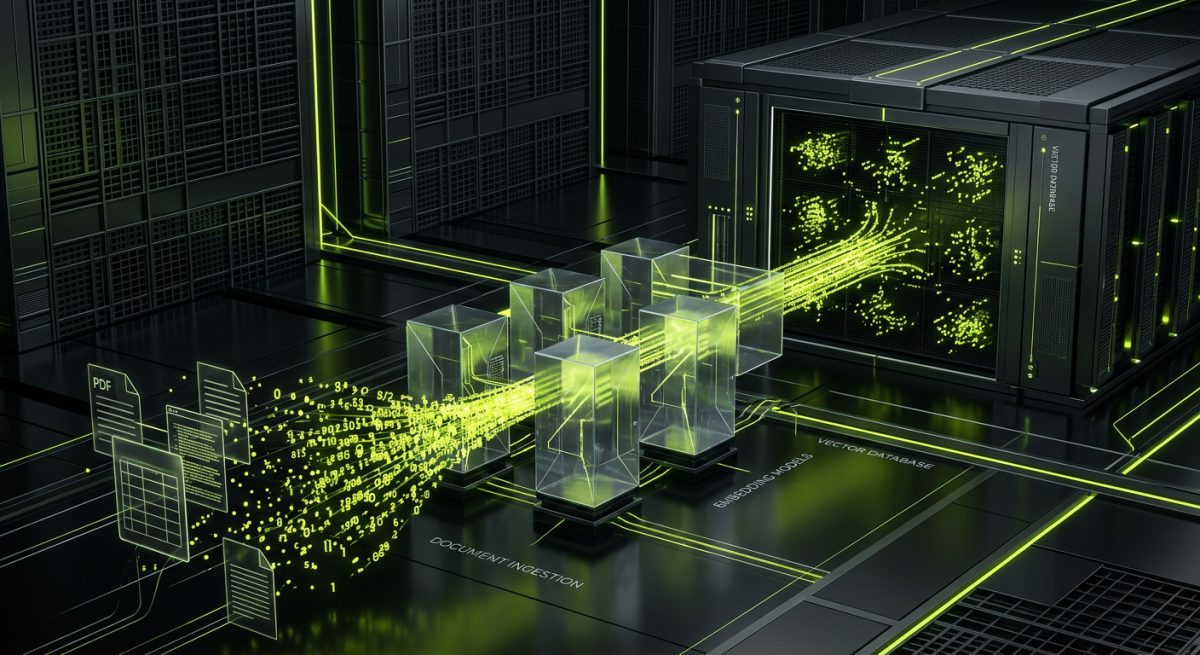
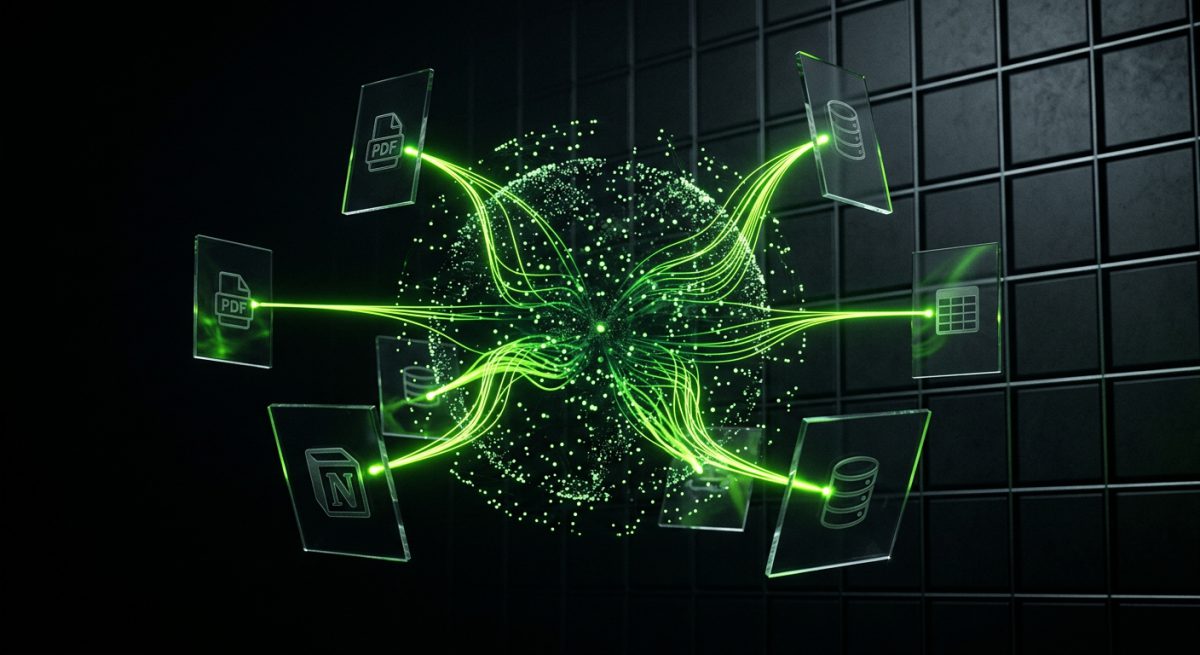
Retrieval-Augmented Generation (RAG) represents a paradigm shift in how businesses interact with their proprietary data. Unlike standard Large Language Models (LLMs) which rely solely on their pre-trained knowledge, RAG systems bridge the gap between static intelligence and dynamic, private information. At werun.dev, we implement these systems by creating a sophisticated pipeline that begins with data ingestion. This process involves extracting text from various formats—PDFs, Notion databases, Google Drive, or internal CRM systems—and breaking them down into manageable segments known as 'chunks'. The granularity of these chunks is critical; too large, and the context becomes diluted; too small, and the semantic meaning is lost. We utilize recursive character splitting and metadata tagging to ensure each piece of information remains contextually relevant.
Once the data is chunked, it is passed through an embedding model, such as OpenAI’s text-embedding-3-small or specialized open-source models. These models convert text into high-dimensional numerical vectors that represent semantic meaning. These vectors are then stored in a specialized vector database like Pinecone, Weaviate, or pgvector. When a user asks a question, the system does not simply search for keywords. Instead, it converts the user's query into a vector and performs a similarity search within the database to find the most relevant information. This 'retrieval' phase is what allows the AI to ground its answers in factual, company-specific data. By providing the LLM (typically Claude 3.5 Sonnet or GPT-4o) with this retrieved context, we significantly reduce the risk of 'hallucinations'—the tendency of AI to generate plausible but false information. The result is a system that provides accurate, verifiable, and citation-backed responses based exclusively on your organization's unique knowledge base.
Integrating these architectures requires more than just connecting an API. At werun.dev, we focus on the orchestration layer, often utilizing n8n to manage the flow of data between the vector store and the LLM. This allows for complex logic, such as multi-step reasoning where the agent first determines if it needs more information before attempting to answer. We also implement 'reranking' algorithms, which take the initial results from a vector search and refine them using a more compute-intensive model to ensure the absolute best context is sent to the final prompt. This technical rigor ensures that the knowledge base chat is not just a toy, but a robust enterprise tool capable of handling complex technical documentation or intricate legal contracts with high precision.
Strategic Implementation and B2B Value Proposition
Implementing a Knowledge Base Chat system is a strategic investment that fundamentally changes the operational efficiency of a B2B organization. The primary value lies in the democratization of information. In many enterprises, critical knowledge is siloed within specific departments or buried in thousands of Slack messages and internal documents. A RAG-powered agent acts as a unified interface for this data, allowing employees to query the collective intelligence of the company instantly. This leads to a documented 65% reduction in time spent searching for internal information, directly impacting the bottom line by freeing up high-value talent for more creative and strategic tasks. Furthermore, by grounding the AI in a specific knowledge base, companies can achieve a 95% accuracy rate in automated customer support interactions, far surpassing the capabilities of traditional keyword-based chatbots.
From a sales enablement perspective, RAG systems allow sales teams to instantly pull up technical specifications, case studies, or pricing tiers during live negotiations. Instead of saying 'let me get back to you on that,' a representative can query the AI agent and receive a precise, formatted answer in seconds. This speed and accuracy build trust with clients and accelerate the sales cycle. At werun.dev, we build these agents to be platform-agnostic, integrating them into the tools your team already uses, whether that is a custom Webflow-based dashboard, a Shopify admin panel, or a dedicated Slack channel. This ensures that the AI is available exactly where the work happens, minimizing friction and maximizing adoption rates across the organization.
Security and data privacy are at the forefront of our B2B implementation strategy. Unlike public AI tools where data might be used for training, our RAG deployments ensure that your proprietary information remains yours. By utilizing self-hosted n8n instances and private vector databases, we create a secure perimeter around your data. We also implement Role-Based Access Control (RBAC) within the RAG pipeline. This means the AI agent is aware of who is asking the question and will only retrieve information that the specific user is authorized to see. For example, a junior developer might have access to technical documentation but not to executive payroll data, even if both are indexed in the same system. This level of granular control is what makes RAG-powered agents suitable for enterprise-grade deployment in sensitive industries like fintech, healthcare, and legal services.
Engineering Scalable and Autonomous AI Agents
The transition from a simple 'chat-over-PDF' tool to a fully autonomous AI agent involves sophisticated engineering and a deep understanding of agentic workflows. At werun.dev, we specialize in building agents that do more than just talk; they act. By connecting RAG systems to external APIs through n8n, we create loops where the agent can identify a gap in its knowledge, perform a web search, update its own knowledge base, or even trigger a workflow in a CRM like Salesforce or HubSpot. This autonomy is governed by strict logic nodes and 'guardrails' that prevent the agent from taking unauthorized actions. We use custom JavaScript and Python nodes within n8n to handle complex data transformations, ensuring that the output from the AI is perfectly formatted for the next step in the business process.
Maintenance is a critical, often overlooked aspect of scaling AI agents. A knowledge base is not a static entity; it grows and changes every day. We build automated synchronization pipelines that monitor your data sources—such as a specific folder in Google Drive or a section of your WordPress site—and automatically update the vector database whenever a change is detected. This ensures that the AI agent is always working with the most current information, eliminating the risk of providing outdated advice to customers or employees. We also implement comprehensive logging and observability. By tracking every query, retrieval, and response, we can identify 'knowledge gaps'—questions the AI couldn't answer because the information was missing from the knowledge base. This creates a feedback loop where the company can continuously improve its documentation based on real-world usage patterns.
Scaling these systems also requires managing computational costs. Running high-end LLMs like GPT-4o for every simple query can become expensive. Our engineering team optimizes this by implementing 'small model routing'. Simple queries are handled by smaller, faster, and cheaper models, while complex reasoning tasks that require the full power of the knowledge base are routed to more capable models. This hybrid approach allows for high-performance AI automation that scales linearly with business growth without ballooning costs. Whether you are looking to automate a complex customer support desk or build an internal research assistant, our team at werun.dev has the expertise to design, deploy, and maintain these intelligent systems. To start building your custom knowledge base agent, contact us today at https://werun.dev/.