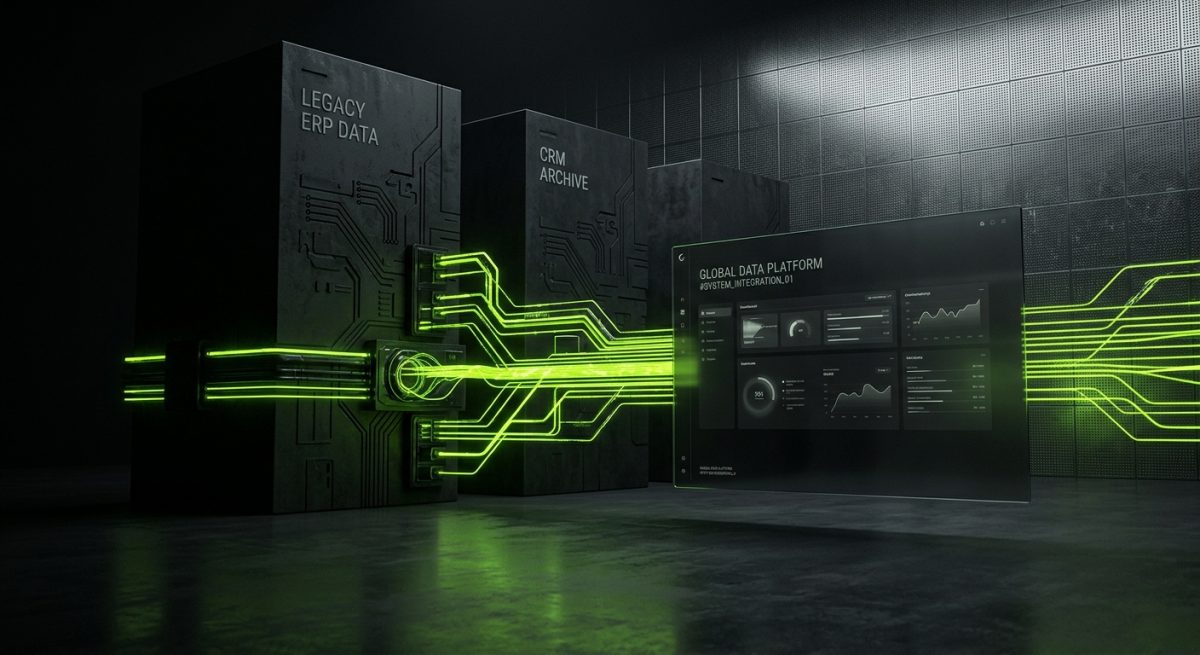
Fort Lauderdale's business landscape has matured fast. From marine industry suppliers and real estate firms along Las Olas to hospitality groups and SaaS startups in Flagler Village, the demand for serious web development — not templated, not outsourced, not phoned in — has never been higher. Choosing the right web development partner in Fort Lauderdale means the difference between a site that generates revenue and one that quietly drains your marketing budget.
This post breaks down exactly what separates a genuinely capable web development company from a generalist agency, what technical standards you should demand, and why werun.dev's platform-specific expertise makes it the right choice for B2B companies in South Florida and beyond.
What a Real Web Development Company in Fort Lauderdale Should Offer
Most agencies in Fort Lauderdale will tell you they build websites. Far fewer can tell you how they build them — the architecture decisions, the performance benchmarks, the long-term maintenance model. When you're evaluating web development partners, the conversation needs to go deeper than design portfolios and hourly rates.
Platform Depth, Not Platform Agnosticism
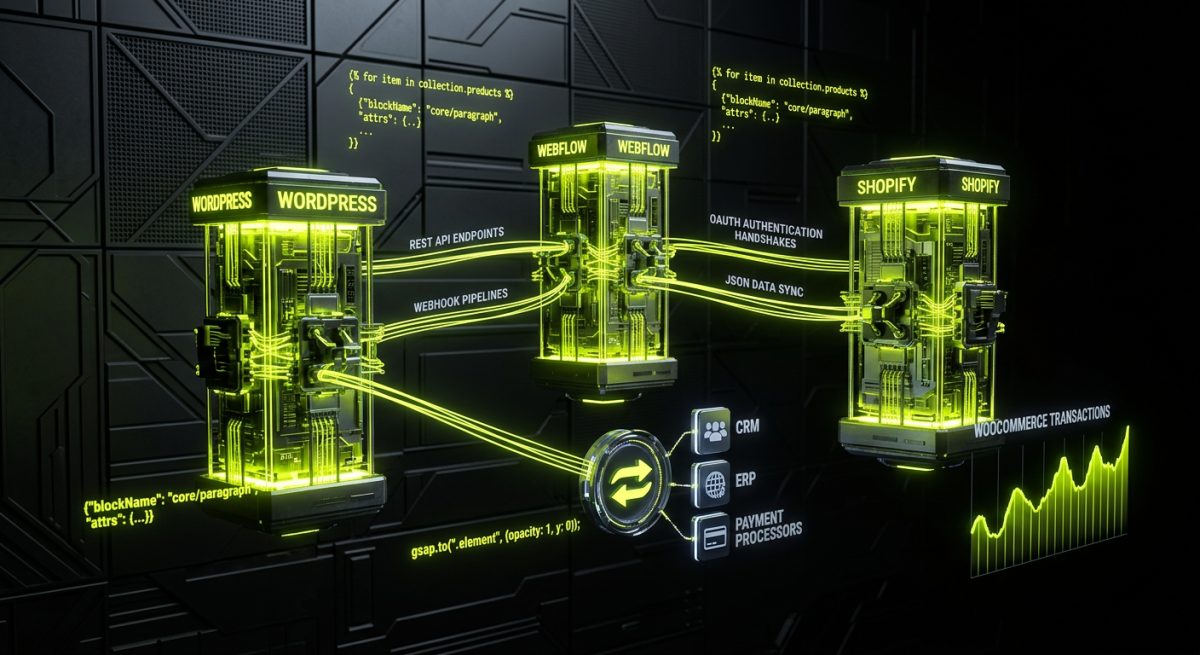
The best web development companies specialize. They don't build on every platform equally — they go deep on the platforms that matter for B2B clients. At werun.dev, that means three platforms with genuine technical depth:
- WordPress — Custom plugin architecture, WooCommerce ecosystems, Gutenberg blocks, REST API integrations, and Multisite networks. Not theme customization. Actual engineering.
- Webflow — Pixel-perfect builds from Figma, scalable CMS architecture, custom JavaScript interactions, GSAP animations, and integrations with tools like HubSpot, Memberstack, and Stripe.
- Shopify — Custom Liquid theme development from scratch, Online Store 2.0 JSON templates, Shopify Plus enterprise builds, B2B wholesale portals, and custom app development via the Admin and Storefront APIs.
This isn't a jack-of-all-trades model. It's 12+ years of focused WordPress development, 80+ plugins built, and 200+ sites actively maintained. That depth matters when your business depends on the site working correctly — every day, at scale.
Technical Standards That Hold Up Under Scrutiny
Any developer can install a WordPress theme. What separates a professional web development company is how they write code when no one is watching. The standards werun.dev applies to every project:
- WordPress plugins built with proper hooks, filters, nonces, capability checks, sanitization, escaping, and REST API endpoints — not procedural spaghetti
- WooCommerce builds that handle real transaction volume: custom product types, payment gateway integrations, subscription billing, and checkout flow customization
- Shopify themes architected from scratch using Online Store 2.0, not modified starter themes — optimized for Core Web Vitals and long-term maintainability
- Webflow projects with BEM-style class naming, clean component structure, and CMS architectures designed for content editors, not just developers
These aren't marketing claims. They're the baseline werun.dev applies to every engagement, whether it's a single plugin build or a full platform migration.
Integration Capability Across Your Business Stack
Modern B2B websites don't exist in isolation. They connect to CRMs, ERPs, payment processors, fulfillment systems, and marketing platforms. A web development company that can only build the front-end is half a solution.
werun.dev builds the bridges. That means custom WordPress REST API endpoints with JWT and OAuth 2.0 authentication, webhook listeners with retry logic and error notifications, and bidirectional data sync with platforms like Salesforce, HubSpot, Stripe, SAP, and Odoo. On the Webflow side, it means connecting your site to your full business stack via Webflow's API, custom code embeds, and middleware solutions.
For Fort Lauderdale businesses operating complex sales cycles — marine distributors syncing inventory with WooCommerce, hospitality groups managing bookings through custom WordPress builds, or SaaS companies running gated Webflow portals — this integration capability is what makes a website actually useful.
Why Technical Depth Beats General Agency Services for B2B Clients
B2B companies in Fort Lauderdale have specific requirements that general digital agencies consistently underdeliver on. The buying cycle is longer, the stakeholder count is higher, and the cost of a broken checkout flow or a failed API integration is measured in real revenue, not just bounce rates.
The Problem with Full-Service Agencies
Full-service agencies — the kind that do branding, social media, SEO, paid ads, and web development under one roof — typically treat web development as a production function, not a technical discipline. The result is predictable:
- Sites built on page builders with bloated markup and poor Core Web Vitals scores
- Plugins installed from the repository without vetting for security or performance impact
- No documentation, no handoff, no maintenance plan
- Custom functionality that breaks on the next WordPress or Shopify update
For a B2B company with real transaction volume, real integrations, and real compliance requirements, this approach is a liability.
What Platform Specialization Actually Delivers
When werun.dev builds a WordPress site, the plugin architecture is designed for longevity. Every custom plugin ships with documentation and a GitHub-powered auto-update system — so the site doesn't drift into technical debt six months after launch. When a Shopify store goes live, the Liquid theme is built from scratch with Online Store 2.0 JSON templates, metafield integration, and Core Web Vitals optimization baked in — not bolted on after a speed audit.
For Webflow projects, the CMS architecture is designed for the content editors who will use it daily, not just for the developer who built it. Collections are structured logically, class naming is scalable, and the handoff includes training — not just a login credential.
This is the difference between a vendor and a partner.
AI and Automation as a Force Multiplier
Fort Lauderdale's most competitive B2B companies are already using automation to eliminate manual work and scale operations without proportional headcount growth. werun.dev's AI and automation services extend directly into the web stack:
- n8n workflow automation — self-hosted pipelines that connect your CRM, databases, APIs, and AI models with full error handling and retry logic
- AI chatbots and virtual agents — pre-sales qualification, customer support, and onboarding guides powered by GPT-4 or Claude, trained on your content and embedded directly into your WordPress or Webflow site
- Web scraping and data extraction — automated pipelines that feed your business intelligence stack
- Knowledge-base chat with RAG — vector search and live context so your customers and internal teams get accurate answers, not hallucinations
For a Fort Lauderdale B2B company, this means your website isn't just a brochure. It's an active participant in your sales and operations workflow.
Ready to build something that actually performs? Start a project with werun.dev — WordPress, Webflow, Shopify, or full-stack automation.
How to Evaluate Any Web Development Company in Fort Lauderdale
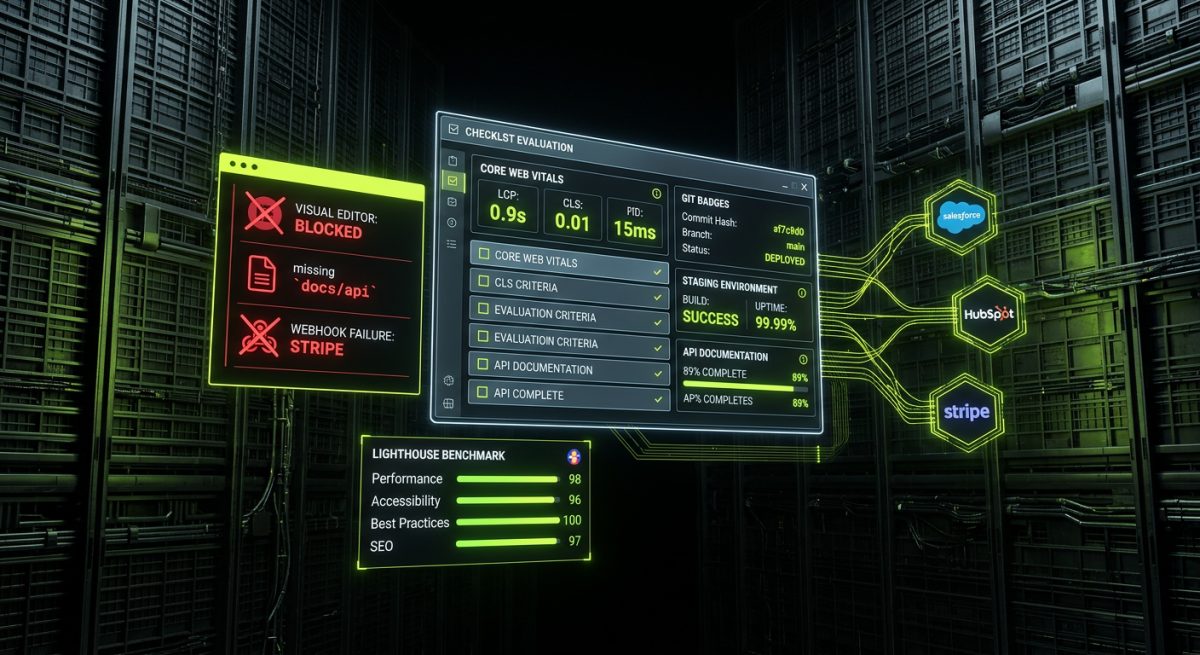
Before signing a contract with any web development company — including werun.dev — you should run a structured evaluation. The questions below will separate technical partners from production vendors quickly.
Questions About Technical Process
Start with how they build, not what they've built:
- How do you handle WordPress plugin updates across client sites? A professional answer involves version control, staging environments, and a documented update process. werun.dev uses GitHub-powered auto-updates for every plugin it builds.
- How do you structure a Webflow CMS for a site with 500+ collection items? A professional answer involves collection architecture decisions, reference fields, and editorial workflow design — not just "we use Webflow CMS."
- How do you optimize a Shopify theme for Core Web Vitals? A professional answer involves lazy loading, critical CSS, third-party script deferral, and Liquid rendering optimization — not just image compression.
- What's your approach to WooCommerce checkout customization? A professional answer involves hooks, filters, and custom payment gateway integration — not a plugin from the repository.
If the answers are vague, the work will be too.
Questions About Long-Term Maintenance
The launch is the beginning, not the end. Ask:
- Do you offer monthly maintenance retainers? werun.dev maintains 200+ sites and offers structured retainers for WordPress, Webflow, and Shopify.
- How do you handle security incidents? Core updates? Plugin conflicts?
- What happens when the developer who built my site leaves your team?
A company without documented processes and a maintenance model is asking you to accept technical debt as a business condition.
Questions About Integration Experience
For B2B companies in Fort Lauderdale with complex tech stacks:
- Have you built custom REST API integrations with Salesforce or HubSpot?
- Can you build a bidirectional WooCommerce-to-ERP sync?
- How do you handle webhook failures and retry logic?
werun.dev's integration services cover all of these scenarios — custom WP REST API namespaces, JWT and OAuth 2.0 authentication, Action Scheduler-based background processing, and full API documentation on delivery.
Red Flags to Watch For
❌ No staging environment before deployment
❌ No version control (Git) for custom code
❌ Proposals that mention "Elementor" for complex B2B builds
❌ No mention of Core Web Vitals or performance benchmarks
❌ Maintenance described as "available on request"
❌ No documentation or handoff process mentioned
❌ Vague answers about how they handle plugin or theme updates
These aren't minor concerns. They're indicators of a production-line approach that will cost you more in remediation than the initial build saved.
The Fort Lauderdale Market Context
Fort Lauderdale businesses operate in a competitive regional market that includes Miami's tech corridor to the south and Boca Raton's professional services concentration to the north. The companies winning online in this market share a common characteristic: their websites are built as business infrastructure, not marketing collateral.
That means fast load times (90+ on Core Web Vitals), clean integrations with CRM and ERP systems, content architectures that scale with the business, and a development partner who answers the phone when something breaks at 2 AM before a trade show.
werun.dev works with B2B companies that have outgrown their current web setup — whether that's a WordPress site running 47 unvetted plugins, a Shopify store on a modified free theme, or a Webflow project that nobody on the team knows how to edit. The starting point is always an honest technical audit, not a sales pitch.
The right web development company for your Fort Lauderdale business isn't the one with the most awards on their homepage. It's the one that can explain exactly how they'll build your site, why those architectural decisions matter, and how they'll keep it running two years from now.