Fort Lauderdale's business landscape has shifted decisively online. From marine industry suppliers on the 17th Street Causeway to hospitality groups along Las Olas Boulevard, every B2B and B2C company in Broward County now competes on the strength of its digital presence. Finding a web development partner that understands enterprise-grade architecture — not just drag-and-drop templates — is the difference between a site that generates revenue and one that sits idle.
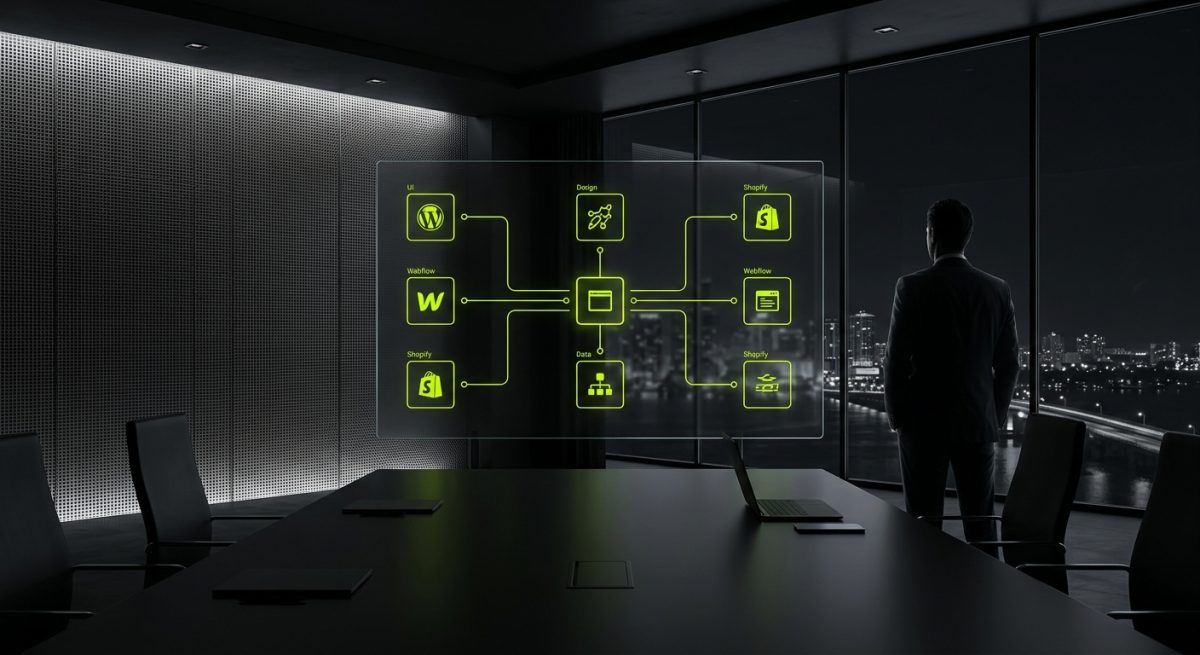
werun.dev operates as a specialized web development agency with deep technical expertise across WordPress, Webflow, and Shopify. With 12+ years of WordPress experience, 200+ sites actively maintained, and 80+ custom plugins built, the team brings a level of technical depth that generic digital agencies simply cannot match. This post breaks down what serious web development looks like in the Fort Lauderdale market, what to demand from any agency you evaluate, and why platform specialization produces better business outcomes than a one-size-fits-all approach.
What Fort Lauderdale Businesses Actually Need from a Web Development Partner
The Fort Lauderdale metro is one of the most commercially diverse markets in South Florida. You have international logistics companies, luxury real estate developers, healthcare networks, marine technology firms, and a growing SaaS sector all competing for digital attention. The web development requirements across these verticals vary significantly — and they expose a critical weakness in most agencies: generalism.
A logistics company integrating its WordPress site with an SAP ERP system needs a developer who understands REST API authentication, webhook processing, and background queue management — not someone who installs a plugin and hopes for the best. A luxury hospitality brand on Webflow needs pixel-perfect design execution with GSAP animations, scalable CMS architecture, and Memberstack-powered client portals. A marine equipment retailer on Shopify needs custom Liquid theme development, B2B wholesale functionality, and a store migration from WooCommerce with zero data loss.
These are not edge cases. They are the standard requirements of Fort Lauderdale's mid-market and enterprise businesses. Here is what separates a capable technical partner from a commodity web shop:
Platform Depth Over Platform Breadth
Agencies that claim to build on every platform — WordPress, Webflow, Shopify, Squarespace, Wix, custom frameworks — are optimizing for sales conversations, not technical outcomes. Genuine expertise on three platforms is worth more than surface-level familiarity with ten.
werun.dev's three-platform model means the team has solved the hard problems on WordPress, Webflow, and Shopify repeatedly. Custom WooCommerce checkout flows with payment gateway integrations. Webflow CMS architectures designed for content editors who are not developers. Shopify Plus enterprise builds with custom checkout extensibility and Shopify Flow automations. These capabilities come from years of focused work, not from watching tutorial videos before a client call.
Integration Capability as a Core Competency
Modern business websites do not operate in isolation. They connect to CRMs (Salesforce, HubSpot, Pipedrive), payment platforms (Stripe), ERP systems (SAP, Odoo), email marketing stacks (Klaviyo), and identity providers (Auth0, Okta). For Fort Lauderdale businesses with established operational systems, the ability to build reliable bidirectional integrations is non-negotiable.
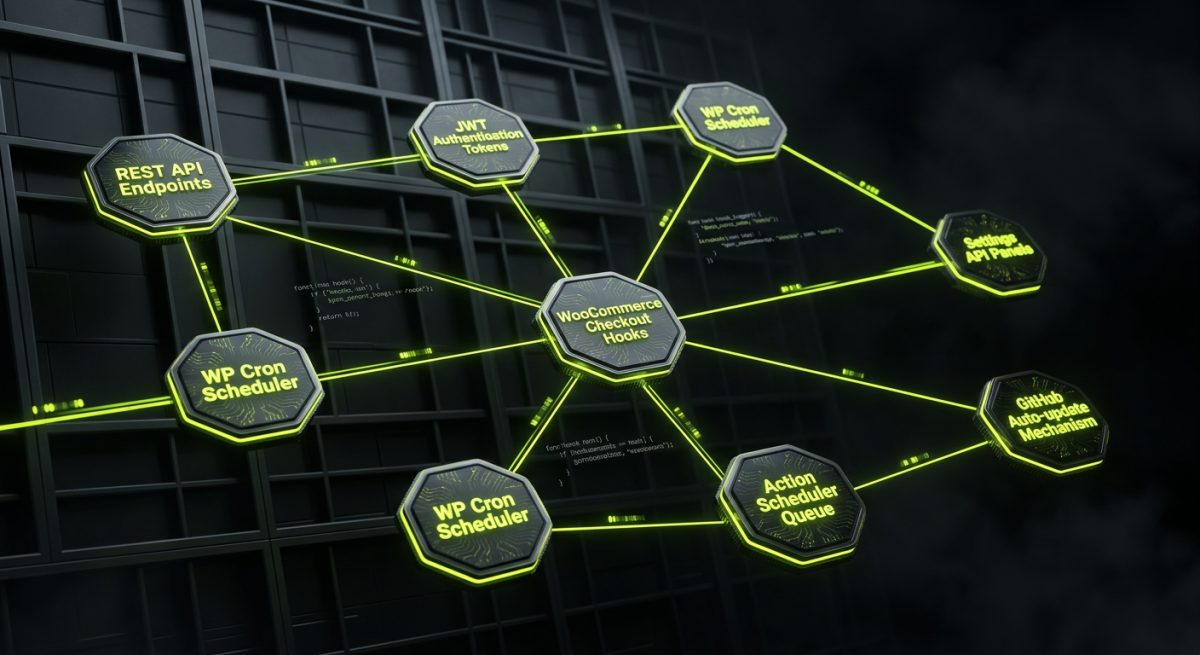
This means custom REST API endpoints with proper JWT and OAuth 2.0 authentication. It means webhook listeners with signature verification, retry logic, and error notifications — not fragile Zapier chains that break silently at 2 AM. It means background queue processing via WP Cron and Action Scheduler so that high-volume data syncs do not time out and corrupt records.
Long-Term Maintenance as a Business Requirement
A site launched without a maintenance plan is a liability, not an asset. Core updates, plugin updates, security hardening, uptime monitoring, and performance optimization are ongoing requirements — not optional add-ons. Any Fort Lauderdale business evaluating a web development partner should ask directly: do you offer monthly maintenance retainers, and what do they actually cover?
werun.dev's maintenance model covers core, plugin, and theme updates alongside security hardening and malware monitoring. For businesses that have invested in custom plugin architecture or complex WooCommerce ecosystems, having the original development team maintain the codebase is the only responsible approach.
WordPress Development: The Technical Standard Fort Lauderdale Businesses Should Demand
WordPress powers approximately 43% of the web, but the quality of WordPress implementations varies enormously. There is a meaningful technical gap between a site built by a developer who understands WordPress coding standards — hooks, filters, the Settings API, proper nonce handling, capability checks, sanitization, and escaping — and one assembled from purchased themes and stacked plugins.
For Fort Lauderdale businesses that need WordPress to carry real operational weight, the technical standard matters.
Custom Plugin Architecture
When your business process does not fit an off-the-shelf plugin, you need custom plugin development built to WordPress coding standards. This is not a minor distinction. A properly architected custom plugin:
- Uses WordPress hooks and filters rather than overriding core functions
- Implements proper REST API endpoints with authentication and rate limiting
- Includes an admin UI built on the Settings API with proper capability checks
- Handles background processing via WP Cron without blocking page loads
- Ships with documentation and a GitHub-powered auto-update mechanism so the site always runs the latest version
Werun.dev has built 80+ plugins to this standard. That volume represents a deep library of solved problems — authentication patterns, webhook processors, custom post type architectures, WooCommerce extensions — that accelerate development and reduce risk on new projects.
WooCommerce for B2B and High-Volume Commerce
Fort Lauderdale has a significant B2B commerce sector — wholesale distributors, marine equipment suppliers, industrial parts vendors — that needs WooCommerce to handle complexity that default configurations cannot support.
This means custom product types and variations, B2B wholesale functionality with role-based pricing, subscription and recurring billing systems, and custom checkout flows that enforce business rules at the cart level. It also means ERP and 3PL integrations so that inventory, fulfillment, and invoicing data moves reliably between WooCommerce and operational systems.
A WooCommerce build at this level is a software project, not a website project. It requires the same engineering discipline — code review, documentation, staging environments, deployment pipelines — as any other business-critical application.
Gutenberg Blocks and Full-Site Editing
The WordPress block editor has matured into a genuine content management tool, but realizing its potential requires custom Gutenberg block development. Generic page builders introduce performance overhead and lock-in. Custom blocks built with InnerBlocks support, proper attribute persistence, block patterns, and full-site editing compatibility give content editors a controlled, performant authoring experience without sacrificing developer control over markup and styling.
For Fort Lauderdale marketing teams that need to update content frequently without developer involvement, well-architected Gutenberg blocks are the right infrastructure investment.
Ready to build on a platform your business can grow into? Explore werun.dev's WordPress development services and see what professional-grade plugin architecture and WooCommerce development look like in practice.
Webflow and Shopify: When the Platform Choice Defines the Outcome
Not every Fort Lauderdale business should be on WordPress. Platform selection is a technical decision that should be driven by use case, content workflow, commerce requirements, and long-term maintenance capacity — not by what the agency knows best. This is why werun.dev's three-platform model exists: to match the right technical foundation to each business requirement.
Webflow for Marketing-Led Organizations
Webflow is the right choice for organizations where the marketing team needs design control without developer dependency, but where the site also needs to connect to a broader business stack. A professional services firm, a SaaS company, a luxury brand — these organizations benefit from Webflow's visual design capabilities combined with the technical depth that custom code extensions provide.
The difference between a competent Webflow build and a mediocre one comes down to three areas:
CMS Architecture: Webflow's CMS is powerful but requires deliberate design. Collection structures, reference fields, and dynamic content templates need to be architected around editorial workflows — how content editors actually work — not just around what looks good in the designer. A poorly structured CMS becomes a maintenance burden within six months.
Custom Code and Integrations: Webflow's native functionality has limits. Connecting a Webflow site to a CRM (HubSpot, Salesforce), a payment platform (Stripe), or a membership system (Memberstack, Outseta) requires custom JavaScript, Webflow API integration, and sometimes middleware solutions. This is where technical depth matters — knowing when to use a custom code embed, when to use the Webflow API, and when to introduce a Next.js or Astro front-end to overcome platform constraints.
GSAP Animations and Interaction Design: Fort Lauderdale's luxury and hospitality sectors have high design expectations. GSAP-powered animations, scroll-triggered interactions, and smooth page transitions are not decorative — they communicate brand quality. Implementing them correctly, without performance degradation or mobile breakage, requires both design sensibility and JavaScript proficiency.
Shopify for Commerce-First Businesses
For Fort Lauderdale retailers, wholesalers, and direct-to-consumer brands, Shopify — and particularly Shopify Plus — provides the commerce infrastructure that WordPress and WooCommerce cannot match at scale. But the quality of a Shopify implementation depends entirely on the technical approach.
Custom Liquid theme development from scratch — not a modified Debut clone — is the baseline requirement for any serious Shopify store. Online Store 2.0 with JSON templates, Sections Everywhere, app blocks, and metafield integration provides the flexibility that modern commerce experiences require. Core Web Vitals optimization is not optional; Google's page experience signals directly affect organic traffic, and a slow Shopify store is a revenue problem.
For enterprise-level requirements, Shopify Plus unlocks custom checkout extensibility, B2B wholesale portals, Shopify Flow automations, and multi-currency multi-region configurations. Fort Lauderdale businesses serving international markets — the city's port and logistics infrastructure makes this common — need a development partner who has built these architectures before.
Store Migrations Without Data Loss
Many Fort Lauderdale businesses are running legacy commerce setups on WooCommerce, Magento, or BigCommerce that have accumulated years of order history, customer data, and product catalog complexity. Migrating to Shopify without losing that data — and without a prolonged downtime event — requires a structured migration methodology.
This means product catalog migration with all variants, metafields, and media. Customer records with purchase history. Order data for reporting continuity. URL redirect mapping to preserve SEO equity. A migration done correctly is invisible to customers and search engines. A migration done poorly costs months of recovery work.
AI Automation and the Fort Lauderdale Competitive Advantage
Beyond the three core platforms, Fort Lauderdale businesses are increasingly looking at intelligent automation to reduce operational overhead and create competitive differentiation. The businesses that move first on AI-powered workflows will have structural cost advantages that compound over time.
werun.dev's AI and automation services are built around practical, production-ready systems — not experimental prototypes. The work falls into three categories:
n8n Workflow Automation
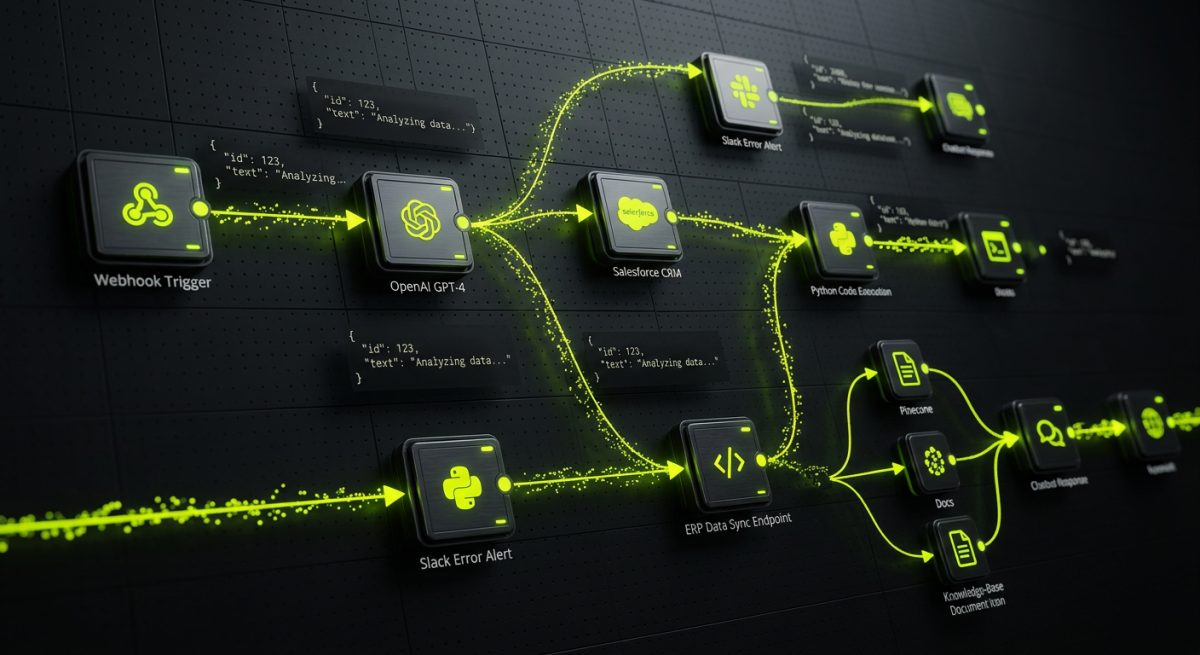
n8n is an open-source workflow automation platform that provides the flexibility of custom code with the visual clarity of a node-based interface. For Fort Lauderdale businesses with complex operational workflows — lead routing, order processing, inventory sync, customer onboarding — n8n enables automation that Zapier cannot handle and that custom-coded scripts cannot maintain.
A properly deployed n8n instance includes:
- Self-hosted infrastructure on your own servers (keeping sensitive business data off third-party platforms)
- Multi-trigger workflows responding to webhooks, cron schedules, and form events
- Custom JavaScript and Python code nodes for business logic that does not fit standard nodes
- AI node integrations connecting to OpenAI GPT-4 or Anthropic Claude for intelligent processing steps
- Full error handling with retry logic and Slack or email alerts so failures surface immediately
For a Fort Lauderdale logistics company, this might mean automating the entire inbound inquiry workflow: form submission triggers CRM record creation, AI node qualifies the lead and routes it to the right sales rep, ERP system gets updated with prospect data, and a personalized follow-up email goes out — all without human intervention.
AI Chatbots and Knowledge-Base Agents
Customer-facing AI chatbots built on GPT-4 or Claude, trained on your product documentation, service catalog, and FAQ content, can handle pre-sales qualification, customer support escalation, and onboarding guidance at a scale that human teams cannot match. For Fort Lauderdale businesses with high inquiry volume — hospitality, real estate, professional services — this is a direct revenue and efficiency impact.
Retrieval-Augmented Generation (RAG) architecture ensures that chatbot responses are grounded in your actual content rather than hallucinated. Vector search over a curated knowledge base, combined with live context injection, produces responses that are accurate, on-brand, and useful.
Web Scraping and Data Extraction Pipelines
For Fort Lauderdale businesses that need competitive intelligence, market data, or external data enrichment at scale, automated scraping pipelines provide a reliable data supply chain. These are not fragile browser scripts — they are production-grade extraction systems with proxy rotation, rate limiting, structured output schemas, and downstream delivery to databases, CRMs, or business intelligence platforms.
The combination of platform development expertise and automation capability is what makes werun.dev a genuine technical partner rather than a vendor. Fort Lauderdale businesses that need their WordPress site to integrate with Salesforce, their Shopify store to trigger n8n workflows, or their Webflow site to power an AI chatbot — these are not separate projects. They are one connected web ecosystem, and they require a team that can architect and maintain all of it.
Explore werun.dev's full solutions and platform capabilities to see how WordPress, Webflow, Shopify, and AI automation work together as an integrated web ecosystem.