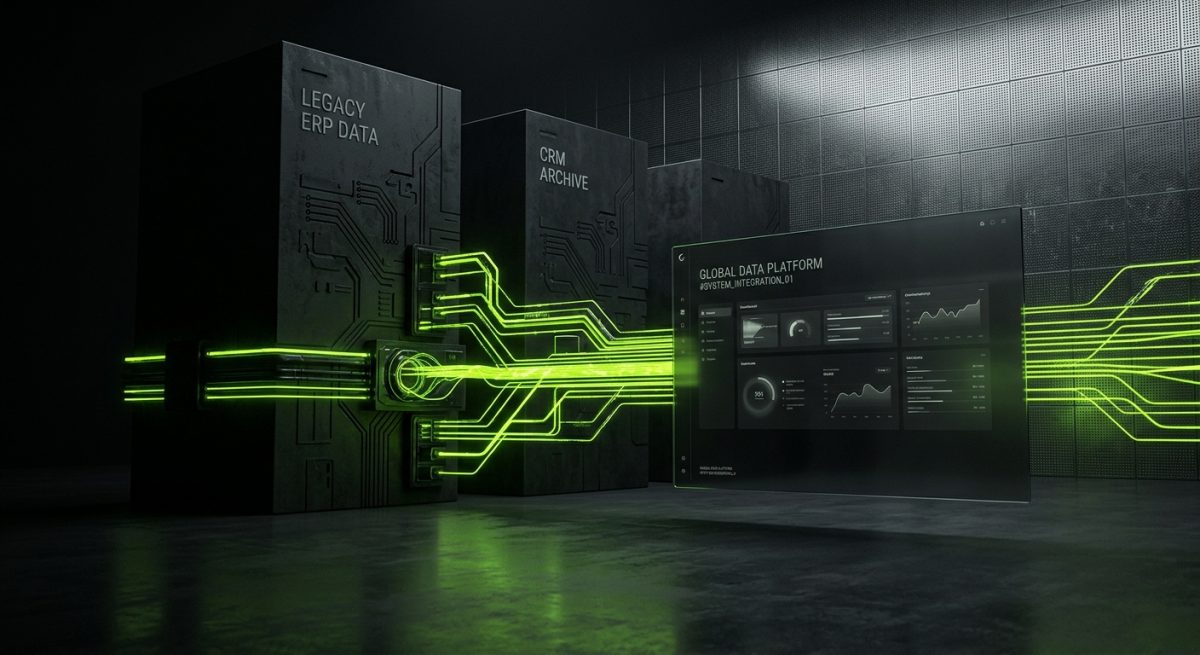
Fort Lauderdale's business landscape has shifted decisively online. From marine industry suppliers along the New River corridor to hospitality brands on Las Olas Boulevard, companies across Broward County are competing for digital attention — and the quality of their web presence determines whether they win or lose that competition. Choosing the right web development partner is not a vendor decision; it is a strategic one.
This post breaks down what separates genuinely capable web development agencies from the commodity shops, what questions to ask before signing a contract, and how a company like werun.dev approaches the kind of complex, long-term web builds that Fort Lauderdale businesses actually need.
What a Top Web Development Company in Fort Lauderdale Actually Delivers
The word "top" gets thrown around freely in agency marketing. In practice, it means a specific set of capabilities that most generalist shops cannot match. Here is what to look for when evaluating a web development partner in the Fort Lauderdale area.
Platform Depth, Not Platform Breadth
Many agencies claim to work across every platform — WordPress, Webflow, Shopify, Squarespace, Wix, Drupal, and whatever else a client mentions. That breadth is a warning sign, not a differentiator. Deep expertise on a focused set of platforms produces better outcomes than shallow familiarity with everything.
At werun.dev, the entire technical practice is built around three platforms: WordPress, Webflow, and Shopify. That focus is intentional. After 12+ years building on WordPress alone — with 80+ custom plugins developed and 200+ sites under active maintenance — the team has encountered edge cases, performance ceilings, and architectural failure modes that a generalist agency will only discover mid-project.
Custom Development vs. Template Assembly
A legitimate technical agency builds things that do not exist yet. For WordPress, that means custom plugin architecture — proper hooks, filters, REST API endpoints, Settings API admin UIs, WP Cron background jobs, and GitHub-powered auto-update mechanisms. It means WooCommerce builds with custom product types, subscription billing logic, and ERP integrations — not a theme from ThemeForest with a payment gateway bolted on.
For Shopify, it means bespoke Liquid theme development from scratch using Online Store 2.0, JSON templates, and metafield integration — not a modified Debut clone. For Webflow, it means pixel-perfect builds from Figma with scalable BEM-style class architecture, GSAP animations, and CMS structures designed for real editorial workflows.
The distinction matters because template assembly has a ceiling. When your business requirements outgrow the template — and they will — a development partner who only assembles templates has nothing left to offer you.
Integration Capability
Modern web platforms do not operate in isolation. A WordPress site needs to sync with Salesforce. A WooCommerce store needs to push orders to an ERP. A Shopify Plus storefront needs a B2B wholesale portal connected to a 3PL. These integrations require backend engineering: custom REST API endpoints with JWT or OAuth 2.0 authentication, webhook listeners with signature verification, background queue processing via WP Cron and Action Scheduler, and proper error handling with retry logic.
This is where many Fort Lauderdale agencies fall short. They can build the front-end. They cannot build the data layer that connects it to your business stack. A company with real WordPress integration capability — connecting to Salesforce, HubSpot, Stripe, SAP, Odoo, Klaviyo, Auth0, and custom REST APIs — is a fundamentally different partner than one that installs a HubSpot embed code.
Long-Term Maintenance Posture
The best web development companies in Fort Lauderdale do not disappear after launch. They operate on monthly maintenance retainers: core, plugin, and theme updates; security hardening; performance monitoring; and proactive incident response. A site without active maintenance is a liability that compounds over time — outdated dependencies, unpatched vulnerabilities, and accumulating technical debt that makes future development exponentially more expensive.
The Three Platforms That Power Fort Lauderdale Businesses
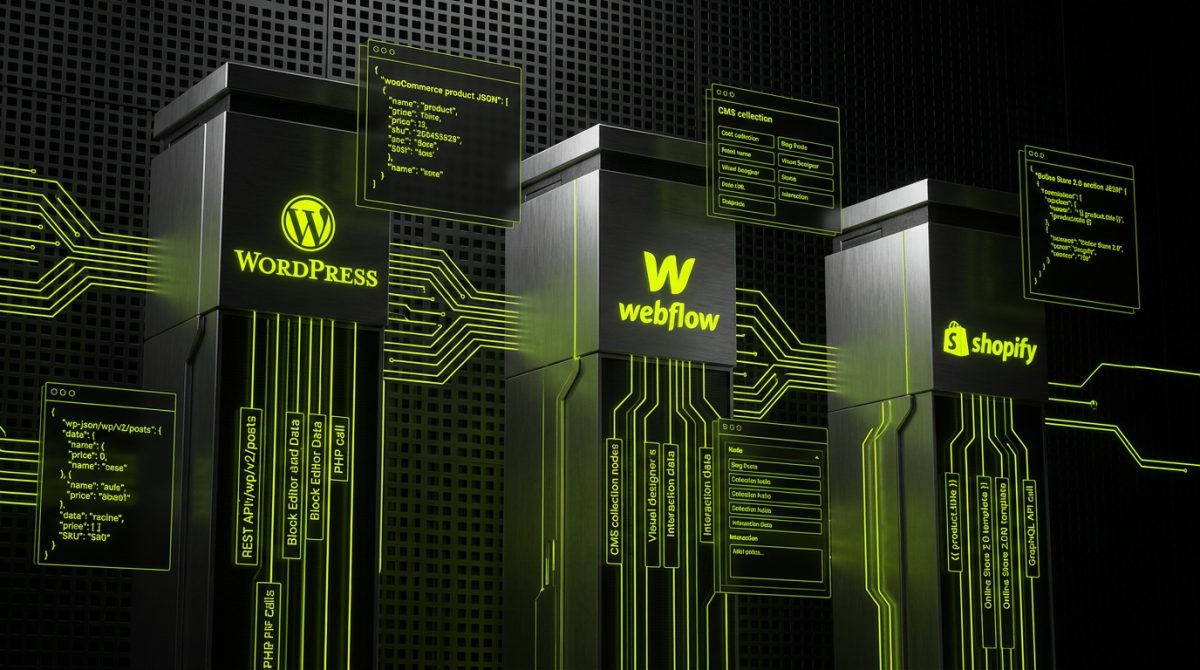
Different business models require different platforms. Understanding which platform fits your requirements — and finding a partner with genuine depth on that platform — is the most consequential technical decision in any web project.
WordPress: The Enterprise Content and E-Commerce Engine
WordPress powers roughly 43% of the web, but the gap between a standard WordPress install and a professionally engineered WordPress ecosystem is enormous. For Fort Lauderdale businesses with complex content requirements, membership systems, or WooCommerce stores processing real transaction volume, the platform needs to be built correctly from the ground up.
Professional WordPress development at this level includes:
- Custom plugin development using WordPress coding standards — proper nonces, capability checks, sanitization, and escaping. Every plugin ships with documentation and GitHub-powered auto-updates.
- WooCommerce ecosystems with custom product types, pricing rules, subscription billing, B2B wholesale functionality, and ERP/CRM integrations.
- Gutenberg blocks with InnerBlocks support, block patterns, and full-site editing compatibility — not the generic core blocks, but purpose-built components for your content model.
- WordPress Multisite for agencies, SaaS products, or franchise networks that need one codebase across dozens of sites.
- REST API custom endpoints for headless architectures, mobile apps, or third-party system integrations.
For a Fort Lauderdale marine equipment supplier building a wholesale ordering portal on WooCommerce, or a hospitality group managing content across twelve property sites on WordPress Multisite, this depth of capability is not optional — it is the baseline requirement.
Webflow: Pixel-Perfect Marketing Sites with Real CMS Architecture
Webflow has matured into a serious platform for marketing sites, editorial publications, and client portals. But "built in Webflow" covers a wide range of quality. A Webflow site built by a designer who learned the tool last year looks very different from one built by a team with deep Webflow development expertise.
The difference shows up in:
- Class architecture — scalable BEM-style naming that does not collapse into chaos when a content editor adds a new page six months after launch.
- CMS collection architecture — structured for real editorial workflows, not just demo content. Reference fields, multi-image fields, conditional visibility, and dynamic list nesting all require deliberate planning.
- Custom JavaScript and API integrations — connecting Webflow to Memberstack, Outseta, Airtable, Stripe, HubSpot, or internal tools via custom code embeds and middleware.
- GSAP animations — scroll-triggered, timeline-based interactions that perform at 60fps across devices, not janky CSS transitions.
- Webflow to Next.js or Astro — when Webflow's limitations become a ceiling, a capable partner can migrate the front-end to a custom framework while preserving the design investment.
For Fort Lauderdale professional services firms, real estate brands, and SaaS companies that need a high-performance marketing site with a content team that can actually use it, Webflow is often the right choice — when it is built correctly.
Shopify: High-Performance E-Commerce for Growing Brands
Fort Lauderdale's retail and product brands — from lifestyle apparel to marine accessories to specialty food — need e-commerce infrastructure that converts. Shopify development done right means:
- Custom Liquid themes from scratch using Online Store 2.0, JSON templates, Sections Everywhere, and metafield/metaobject integration. Core Web Vitals optimization baked in from the start.
- Shopify Plus enterprise builds — custom checkout extensibility, B2B wholesale portals, Shopify Flow automations, and multi-currency/multi-region architecture for brands scaling internationally.
- Private Shopify apps built with the Admin API and Storefront API, connecting the store to ERP, 3PL, CRM, and fulfillment platforms.
- Store migrations from WooCommerce, Magento, or BigCommerce — zero data loss, full redirect mapping, and a launch plan that protects SEO equity.
Ready to Build Something That Lasts?
werun.dev works with Fort Lauderdale businesses that need more than a template. Whether you're running a WooCommerce store that needs custom product logic, a Webflow site that needs CMS architecture built for your editorial team, or a Shopify Plus store ready to scale into B2B — the team has built it before and maintains it long-term.
Start a project with werun.dev →
How to Evaluate a Web Development Agency in Fort Lauderdale
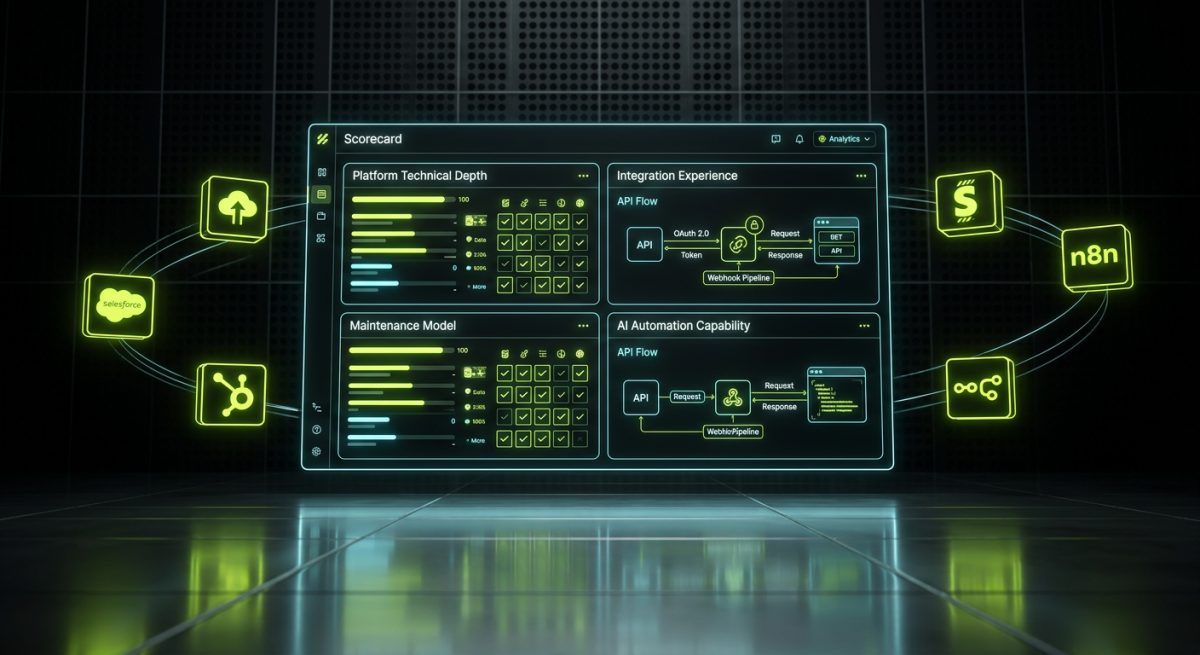
The agency selection process is where most projects go wrong before a single line of code is written. Here is a structured approach to evaluating candidates.
Ask for Platform-Specific Technical Evidence
General portfolios are not enough. Ask specifically:
- For WordPress: Can you show a custom plugin you built from scratch? What is your approach to security — nonces, capability checks, input sanitization? How do you handle plugin updates after launch?
- For Webflow: How do you structure CMS collections for a site with 500+ items? How do you handle custom JavaScript that needs to interact with Webflow's API?
- For Shopify: Have you built a custom Liquid theme from scratch — not modified a purchased theme? Can you show a Shopify Plus checkout extensibility build?
An agency that cannot answer these questions with specific technical detail is telling you something important about the depth of their actual capability.
Evaluate Their Integration Experience
Ask which third-party systems they have integrated in the last twelve months. A capable technical agency should be able to name specific CRM, ERP, payment, and marketing platforms they have connected — and describe the technical approach: REST API, webhooks, OAuth flows, background processing queues.
If the answer is "we install plugins for that," you have your answer.
Understand Their Maintenance Model
A web project does not end at launch. Ask:
- Do you offer monthly maintenance retainers?
- What does a retainer cover — updates, security monitoring, performance, bug fixes?
- What is your response time for critical issues?
- How do you handle WordPress core updates that break custom functionality?
An agency without a clear, structured maintenance offering is not built for long-term partnerships. They are built for project fees.
Look for AI and Automation Capability
The most forward-thinking web development companies in 2025 are not just building websites — they are building intelligent systems around them. AI automation capabilities like n8n workflow automation, AI chatbots powered by GPT-4 or Claude, web scraping pipelines, and knowledge-base agents (RAG systems) are increasingly part of what a web development partner needs to offer.
For Fort Lauderdale businesses looking to automate lead qualification, customer support, data enrichment, or internal process workflows, a development partner who can build these systems on top of the web platform — rather than requiring a separate vendor — is a significant operational advantage.
Assess Communication and Project Management
Technical capability means nothing if communication breaks down mid-project. Look for:
- A defined project management process — discovery, architecture, development sprints, QA, launch.
- Clear ownership of deliverables and timelines.
- A single point of contact who understands both the business requirements and the technical implementation.
- Transparent pricing — fixed-scope projects quoted clearly, retainer services priced per scope.
Fort Lauderdale's business community is relationship-driven. The best web development partners in the market reflect that — they show up as long-term collaborators, not one-time contractors.