01
Item-number catalog
Buyers search by item number, size, material or use and open the exact item.
- —Variants of an item grouped on one page
- —Superseded numbers pointing to the new item
- —Product descriptions worded as you approve them
“The client portal, the feedback extension and the WordPress security alerts have been very intuitive, pretty turnkey. Just this past week getting comfortable with it, it’s been really helpful. We’re rolling it out to our core team. Nice job.”
 Eric MillerNorth American Director of Sales & Marketing, General Filters & GeneralAire®
A purchasing lead searches the item number, a nurse searches the use. Each page shows the documents you provide and a way to order.
The problem: Purchasing teams search by item number and find product families.
What changes: They search by item number, size, material or use.
The problem: Instructions for use and safety sheets get requested by email.
What changes: The documents you provide open from each product page.
The problem: Each clinic has an agreed price that reps check by hand.
What changes: Approved accounts sign in and see their agreed price.
The problem: Standing orders are repeated by phone, month after month.
What changes: Standing orders repeat on their own, until the clinic changes them.
The problem: Returns and product feedback arrive as scattered emails.
What changes: One form sends each report to the team that handles it.
The problem: Hospital and facility buyers ask for bulk quotes by email.
What changes: A quote form reaches the right rep with the items listed.
The documents and the prices are already on the page.
They search the item number and open the document from its page. Nobody on your team has to email it.
A reminder lists the standing order. They confirm it and the order reaches your system at their agreed price.
The buyer fills one form with the item and lot numbers and a photo. Your team gets a reference number and the details.
Four directions to start from. Pick the one that feels like you and we shape it around what you make.













Concept designs with sample names and figures. Yours is built around your brand, photos and words.
Start with the request your customer service takes most. Add the rest when you're ready.
Buyers search by item number, size, material or use and open the exact item.
Instructions for use, safety data sheets and spec sheets you provide, on each item’s page.
Approved accounts sign in to see agreed prices, order history and open orders.
Clinics set up a repeat order and get a reminder before each shipment.
Returns and product reports go to the right team, with the item and lot details.
Hospitals and groups list the items they need and the request reaches the right rep.
The same process for every client. You know what you get and what it costs before anything is built.
What your business does and what is not working. We reply within 2 hours on business days.
We look at what you already have. You get a written plan, a timeline and an estimate.
Everything is built and tested on a private copy before it goes live. What we build is yours.
After launch, one person you know by name looks after it: updates, backups, checks and fixes.
You explain your business once. The people who plan your site build it and look after it.
Updated, monitored, backed up
Websites and web apps
We answer on business days
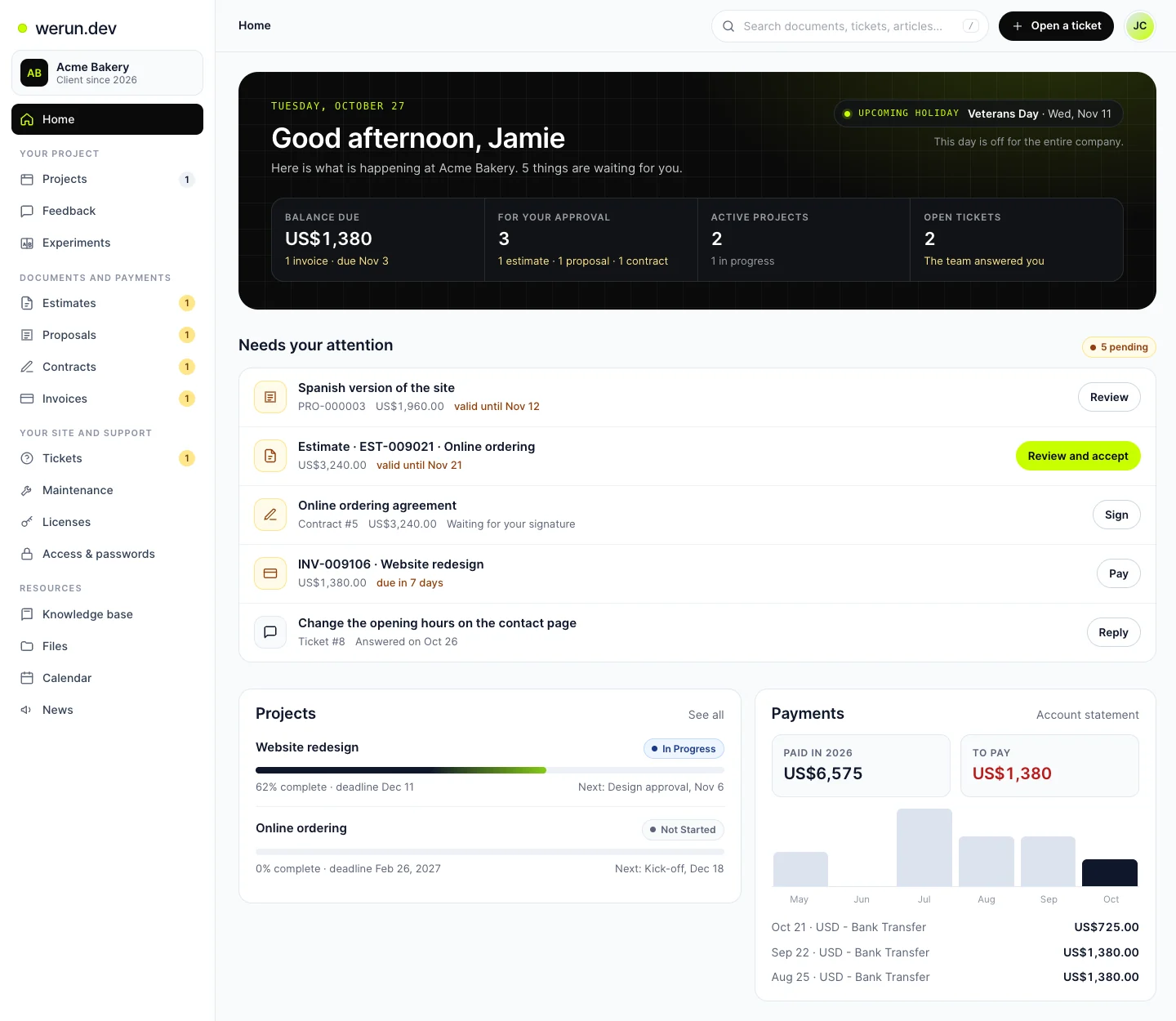
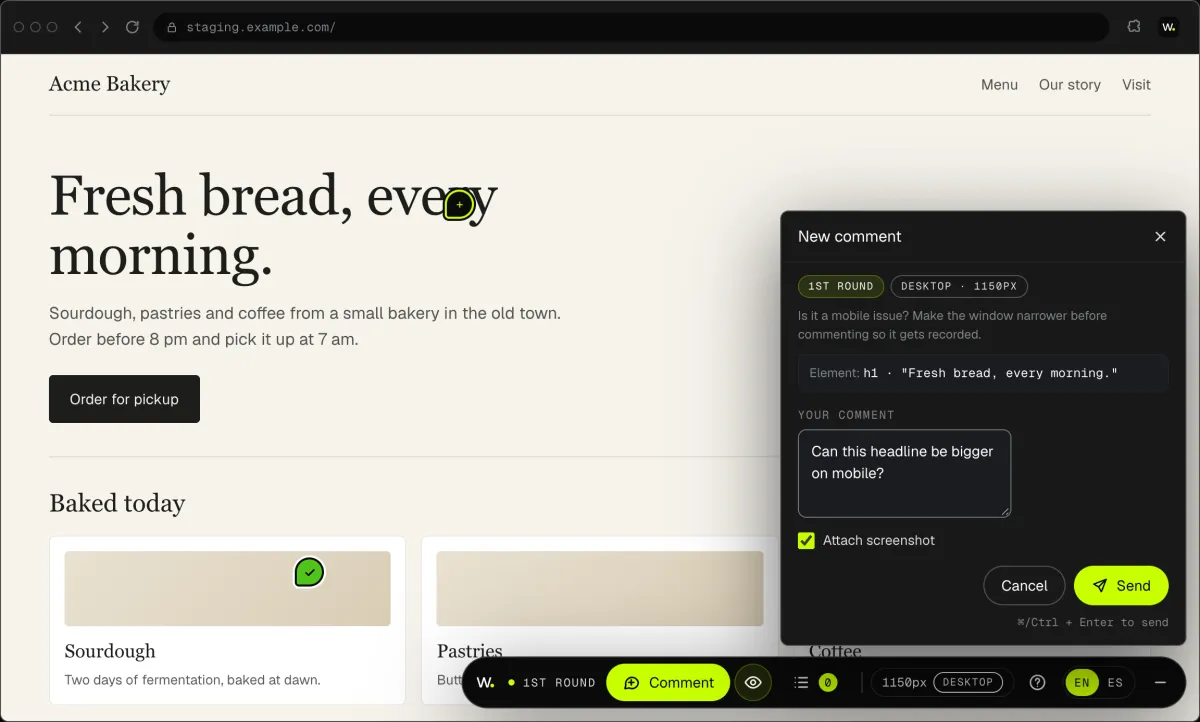
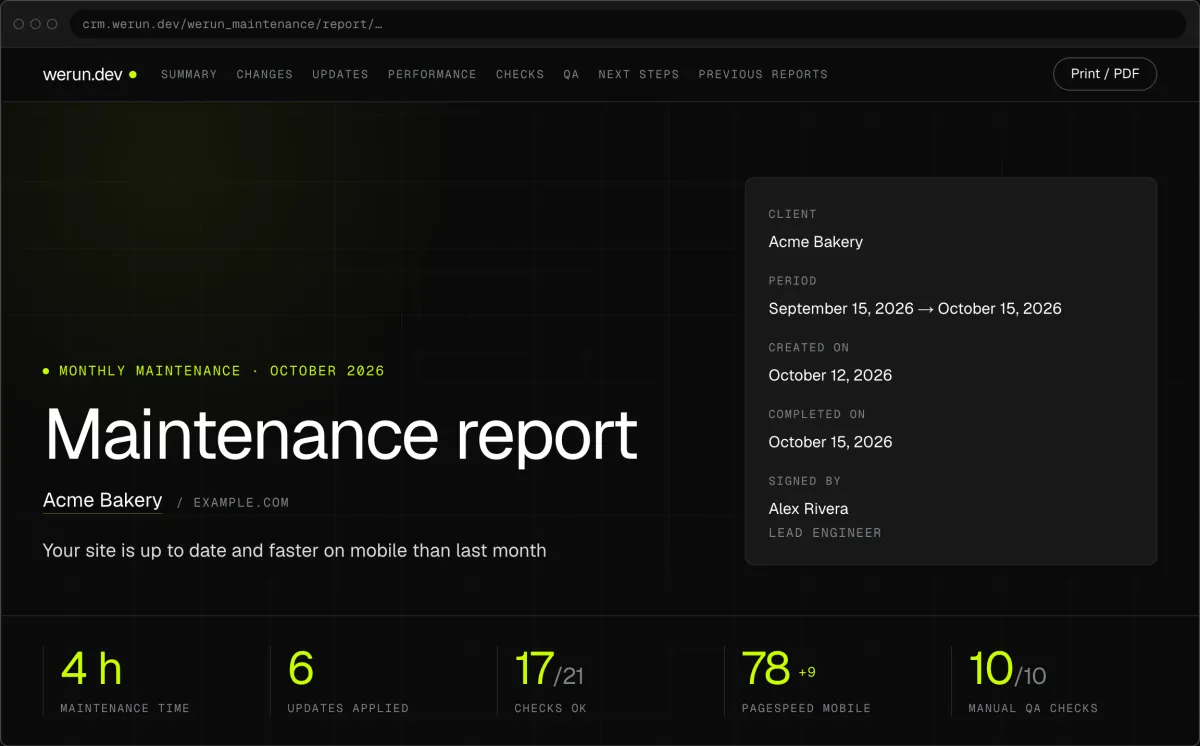
Your project, approvals and invoices live in the Client Portal. You ask for a change by clicking on your own site. With Care, a written report arrives every month.
Projects, requests, invoices, proposals and contracts in one place. Ask it a question and it answers from your own records.
Click anything on your own site and say what you want. That's it: the team gets it as a task with a screenshot, and you watch it get solved.
Every month, in writing: what we changed on your site, what we watched over and what comes next.
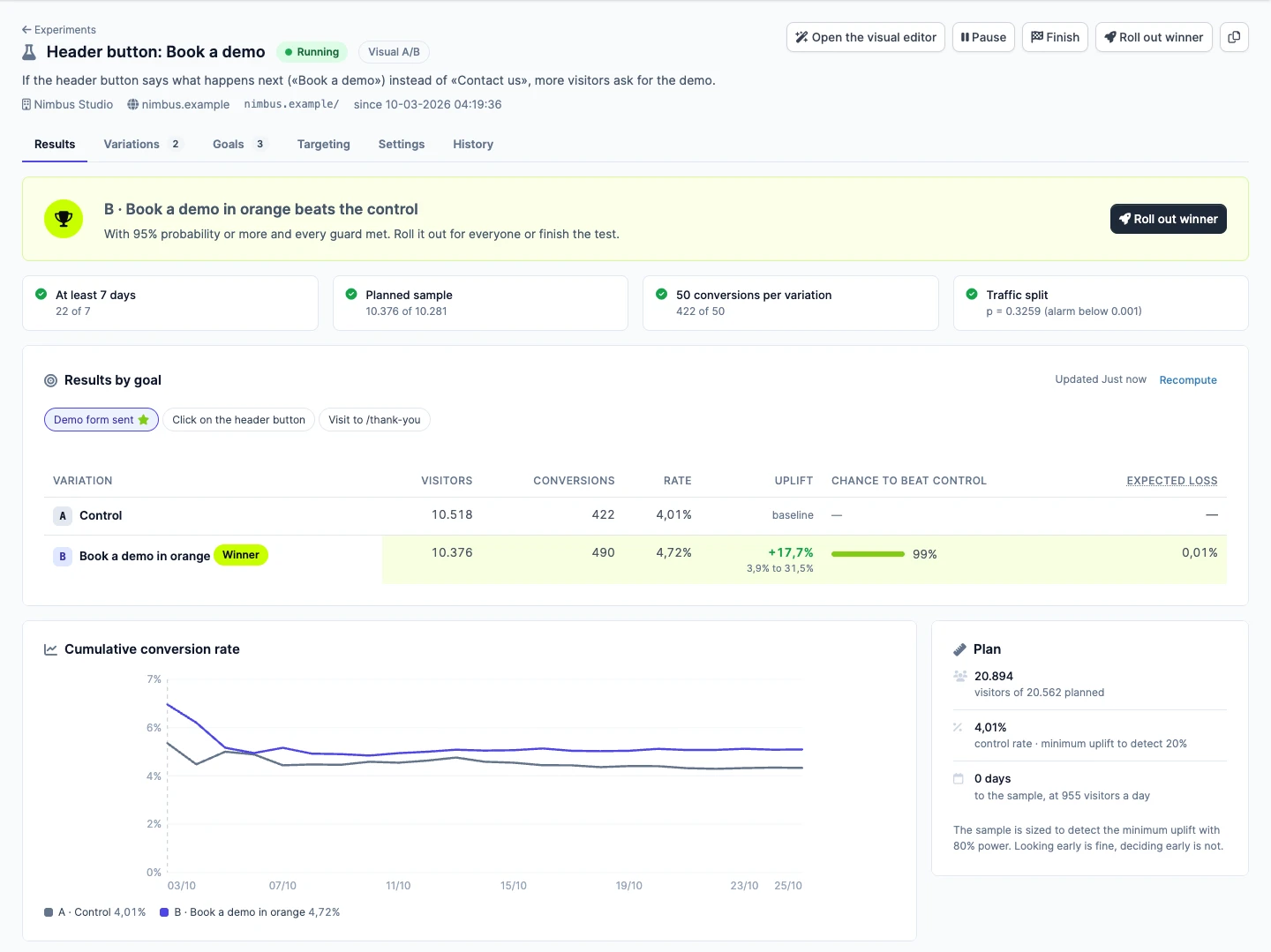
Not sure which version sells more? Try both with real visitors. Tell us the idea in plain words, we set up the test, and you watch the winner from your Client Portal.
You do. Product claims and regulatory wording are yours to approve, and the site shows exactly what you provide. We promise no certification on your behalf.