Website development
A fast site your team edits on its own.
We build your site for your team to run: your editors add pages, change texts and publish without a developer. You try everything on a copy before launch. The code stays in your repository, and a person you know stays for the next change.


























































Visual references
Pages like these, built and handed over to you.
Pages from the industries we work with, on a desktop and a phone. They show what your site can have when you work with us.
References, not templates
We design your site for your business and build it from scratch, with your brand, your photos and your words.
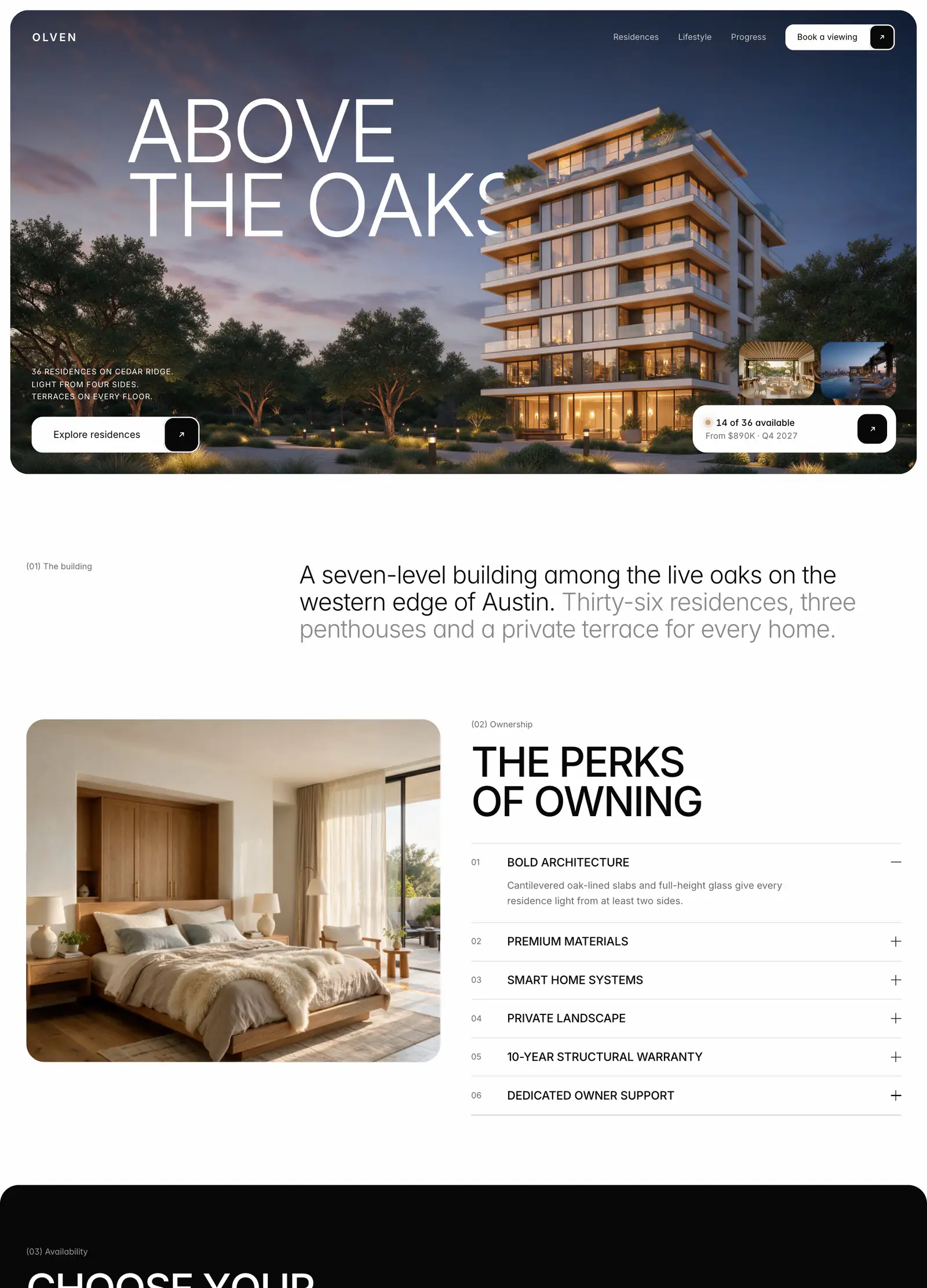
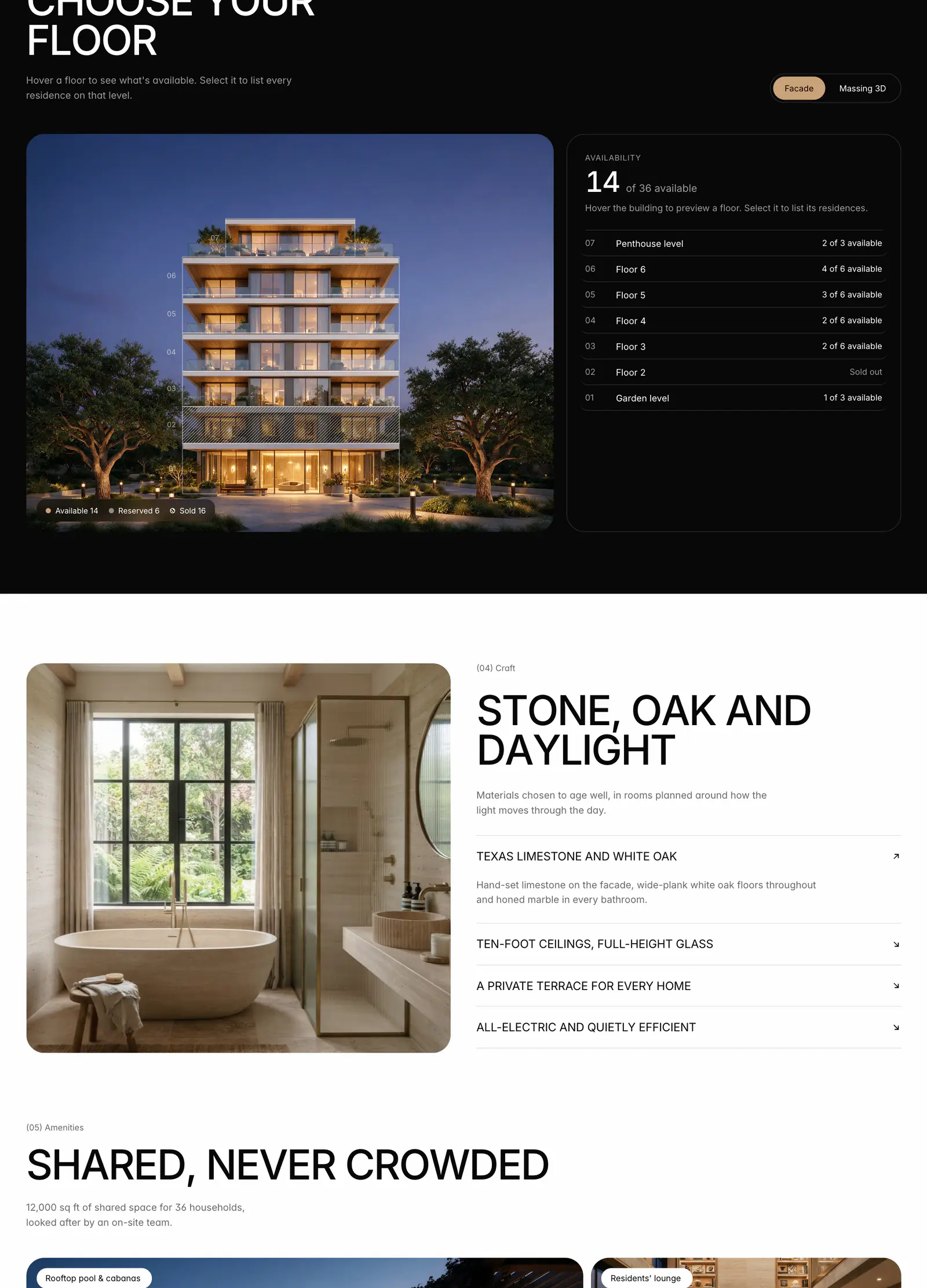
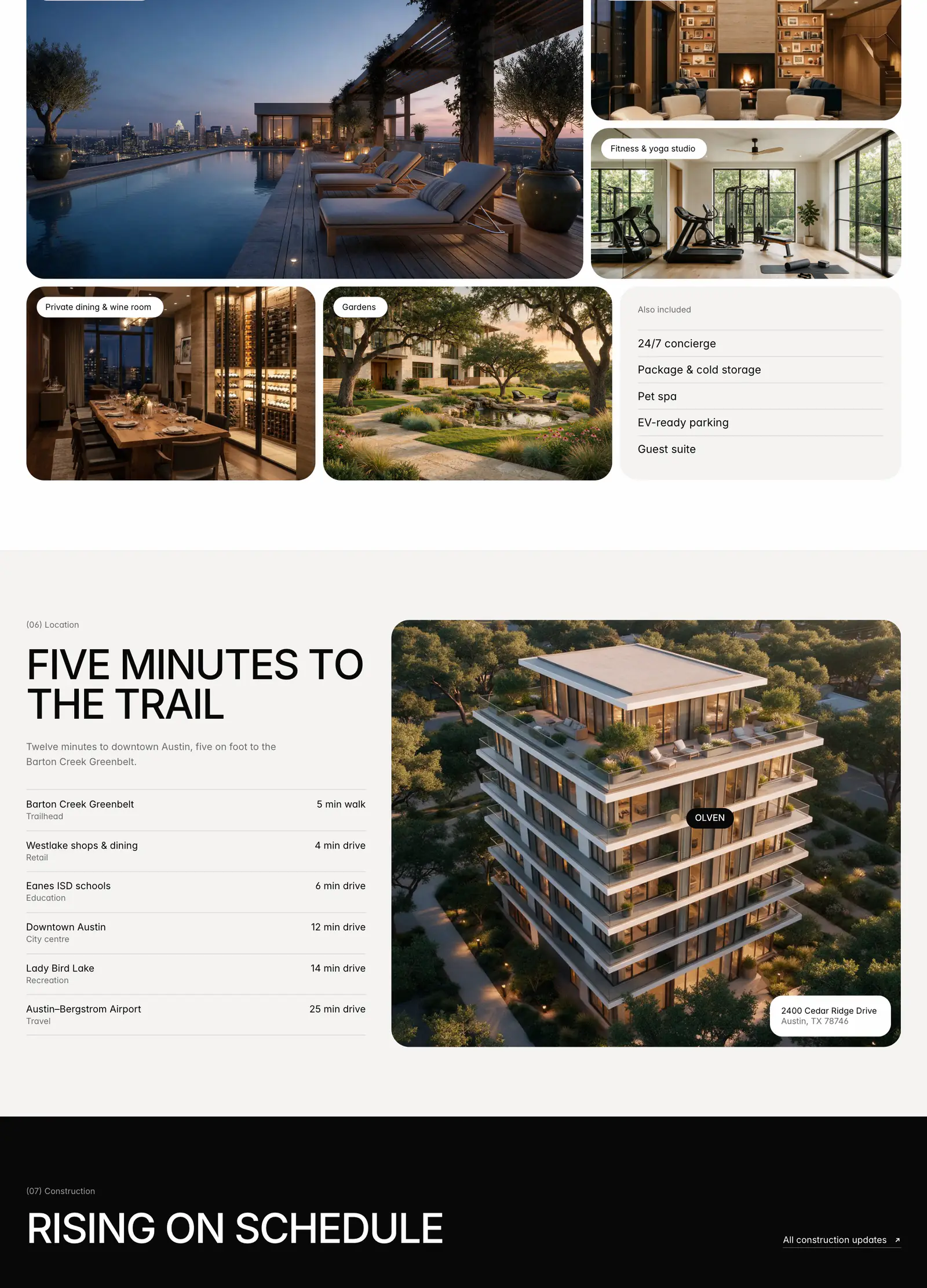
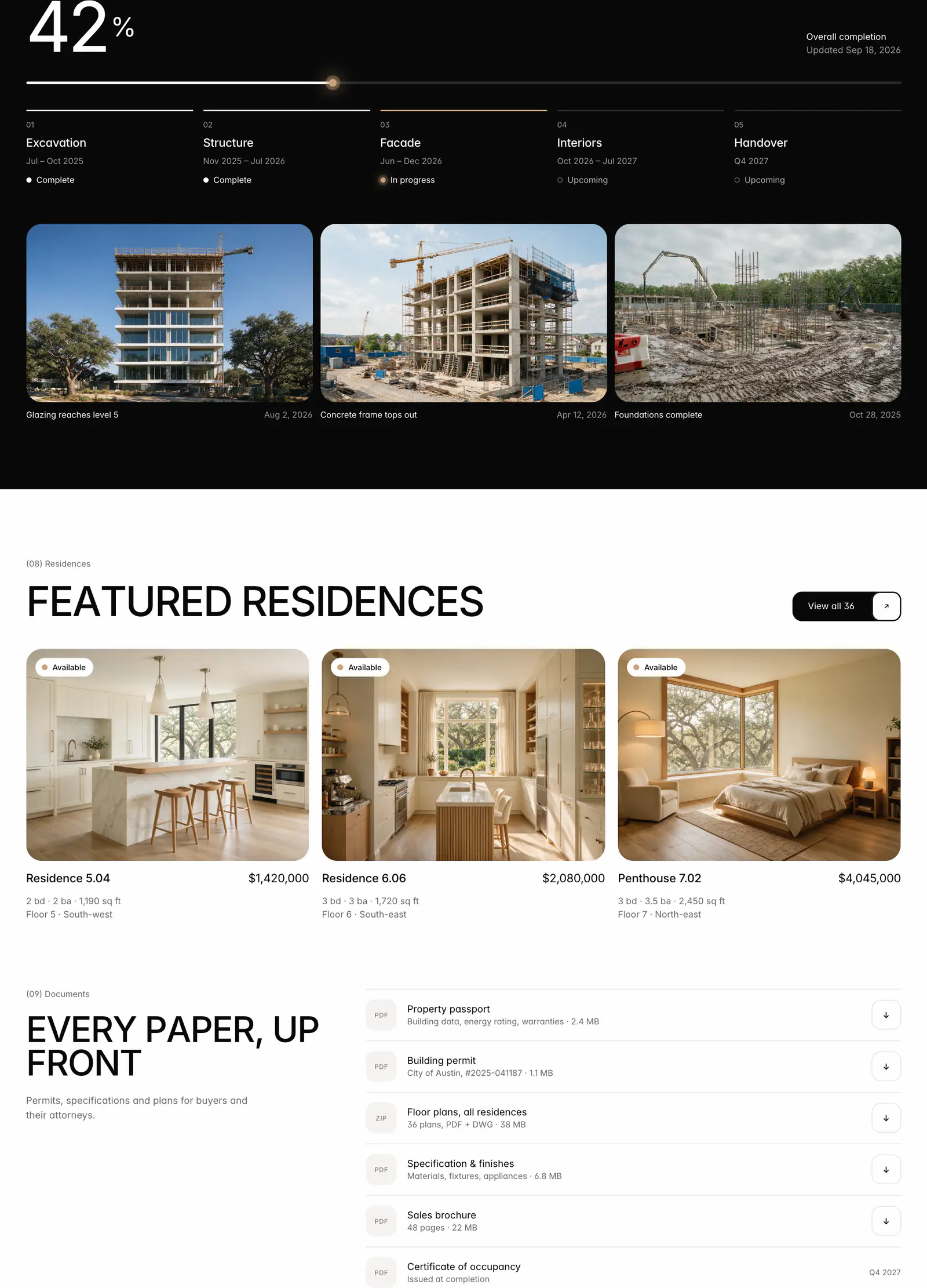






Visual references with sample names and figures.
What clients say
Teams like yours, in their own words.

“The client portal, the feedback extension and the WordPress security alerts have been very intuitive, pretty turnkey. Just this past week getting comfortable with it, it’s been really helpful. We’re rolling it out to our core team. Nice job.”
What changes for you
Your pages load fast, your editors publish, your launch holds.
Start with what matters most today. The rest can come later.
01Pages that load fast on a phone
You agree a speed figure with us before the build starts, and the site meets it at handover. Each page carries only what it uses, so a visitor on a phone is not kept waiting.
- A speed figure agreed before the build, met at handover
- Images sized for the screen that asks for them
- Checked on a real phone before launch
- The figure checked again after each change
02Your team publishes without a developer
Your editors add a page, change a text or swap an image on their own. The layout holds, because each section accepts only what it was designed for.
- Pages made from sections, in your brand
- An editor your content team finds easy
- Fields for what you publish, and none you do not
- Training for your editors, and a written note to go back to
03Found by search engines and AI assistants
Each page tells search engines and AI assistants what it is about. Your old addresses point to the new ones, so your place in search moves with you.
- Titles, descriptions and headings in order on every page
- Structured data that says who you are and what you sell
- Old addresses redirected, mapped before launch
- Each language a real page search engines pair
04Every change tried on a copy first
You try the site on a staging copy before it goes live, and so does every later change. After launch, a named person looks after it with you.
- A staging copy you can open and click through
- A written test passed before anything goes live
- Going back to the previous version takes minutes
- The code in your repository from the first day
How it works
What you see at each step.
- 01
You tell us what to build
Send the design, or say what the site has to do. We reply within 2 hours on business days with the platform that fits and what it takes.
You getThe platform, the scope and the price in writing, before anything starts
- 02
You try it on a copy before launch
The site grows on a staging copy you can open at any time. You click through it and ask for changes before your visitors see anything.
You getA staging copy you tried and approved before going live
- 03
You keep the code, and we stay
The code lives in your repository, with a written note on how it works. A handover call walks your team through it, and a named person stays for the next change.
You getThe code in your repository, a written note and a handover call
What you get
Your code. Your platform. Our responsibility.
In writing
Built, explained and handed over
Every project ends with the code in your repository and a written note on how it works. Then a handover call walks your team through it.
- 01
The code lives in your repository
Everything we write sits in your repository, under your licence. If you ever leave, all of it stays with you.
- 02
The platform fits your team
You hear which platform suits the people who will edit the site, and why. If a simpler one does the job, we say so first.
- 03
Someone you know stays after launch
A named person keeps the site updated and watched once it is live. Your next change goes to someone who already knows the code.
Works better together
What your site is built on.
The platform follows the job. These are the four we build on, and what each one is right for.
- —WordPressFor sites with a lot to publish, a store, or features shaped to how you work.
- —WebflowFor marketing teams that launch campaign pages on their own.
- —ShopifyFor stores that need a fast theme and a checkout that follows their rules.
- —Custom web appsFor a portal, a tool or a product that a platform cannot carry.
What should your new site do for your team?
Send the design, or tell us what the site has to do. We reply within 2 hours on business days with the platform that fits and what it takes.
Website development questions
Which platform should my website be built on?
It depends on who edits it and what it has to do. WordPress suits sites with a lot to publish or features of their own. Webflow suits marketing teams that launch pages often. Shopify suits stores. When none of them can carry the job, we build a custom web app. You hear which one fits, and why, before anything starts.
How long does it take to build a website?
One piece on its own, say a landing page or a new section, takes 2 to 3 weeks. A full site or store takes 6 to 14 weeks. You get a written scope and timeline before anything starts. Plans and prices are on the engagements page. The exact figure reaches you in writing after the first call.
Who owns the code when the project ends?
You do. The code lives in your repository from the first day, under your licence. Every project ends with a written note on how it works and a handover call with your team. If you ever move to another team, everything stays where it is and they can pick it up.
Can you build from a design we already have?
Yes. Send the file and we build from it, on the platform that fits your team. If a page is missing its phone version or a state, you see a proposal before it is built. Your designer can stay in the same file for revisions, so nobody guesses.
Do we need a new site, or can you fix the one we have?
Often the one you have can be fixed. We read its code first, so you hear what we found before any quote. If a slow page or a hard editor is the whole problem, that is the job. A rebuild is for when fixing would cost more than starting again, and we say which it is.