A faster Shopify store
A fast Shopify store, with only the apps it needs.
You see which apps and sections slow your store, and you decide what stays. Each change is tried on a copy of your theme. Your team keeps editing pages on its own.
Short answer
Why is my Shopify store slow, and who can fix it?
werun.dev makes slow Shopify stores fast again by auditing the apps and rewriting heavy theme sections. Stores usually slow down as apps and leftover theme code pile up. You get a written list of what each app loads, and you decide what stays. Each change runs on a copy of your theme and meets a speed budget agreed with you. Fixes are $120 per hour, and a new theme is a project from $5.5k. Send your store’s address and the apps you run to start.
- Fixes
- $120 per hour
- New theme
- From $5.5k
- Speed budget
- Agreed first, met at handover
- Reply
- Under 2 hours on business days


























































In your words
Why a store gets slower, and what an audit turns up.
What happens: We installed an app for every problem, and now the store crawls.
What changes: Each app is audited, and you choose which ones stay.
What happens: Three agencies edited the theme and nobody knows what is in it.
What changes: Every change to your theme goes on record in your repository, with a note on what it depends on.
What happens: Product pages take too long to show on a phone.
What changes: A speed budget is agreed first, and the theme meets it at handover.
What happens: Every page change needs a developer.
What changes: Your team rebuilds pages from sections, on its own.
How it works
Five steps to a faster store, each one on a copy of your theme.
Each step lights up in order. Under it, what you receive while your store keeps selling.
Your store is measured
PageSpeed on phones and computers, for the home page, a collection and a product.
You getYour starting scores on the pages shoppers see most
You see what each app costs you
What each app loads, on which pages, and what it charges each month. You decide which ones stay.
You getA written list of your apps: what each loads and what it charges
Heavy sections are rewritten on a copy
On a copy of your theme, heavy sections are rewritten in Liquid, Shopify’s theme language. Your live store keeps selling.
You getA preview of the faster theme, to try before your customers do
Your store meets the speed budget
The store is measured against the budget agreed with you. Each change passes a written test before it goes live.
You getBefore and after scores, and the theme saved in your repository
Your store stays fast every month
With a Retainer, apps and theme versions stay managed, and the store is ready before peak season.
You getOne engineer on your store, and an app review before peak season
What changes for you
What a lighter store gives you back.
Speed is the visible part. These are the other things you notice.
Only the apps you chose
Each one earns its place, and you know what it loads and what it costs.
Your team edits on its own
Pages come from sections and blocks, so a new landing page needs no developer.
Ideas tested on real shoppers
werun.Experiments counts every Shopify purchase, so a test is decided on sales, not on clicks.
What it costs
What a faster Shopify store costs, priced before work starts.
Start with an audit and the fixes it finds, or go straight to a new theme. Prices come from our price list.
Ad hoc
$120 per hour
An app audit and the fixes it turns up, one by one.
- Minimum task length: 30 minutes
- Each change on a copy of your theme
- Every hour logged against its task
- No monthly commitment
Project
From $5.5k one project
A new theme, built so your team can edit every page from its sections.
- Speed budget agreed before the build
- Sections and blocks for every page
- Every change on record in your repository
- Migration from WooCommerce available
Retainer
$4,800 a month
Your store looked after every month by one engineer.
- 40 development hours a month
- App audits and theme versions managed
- Uptime and speed watched
- Ready before peak season
On Shopify Plus, the checkout can carry your own steps too. On standard plans, Shopify draws the checkout itself. See every engagement
Side by side
Another app, or an app audit, side by side.
A speed app adds to what the store already carries. An audit starts from what is there.
| Side by side | Adding a speed app | Auditing what is there |
|---|---|---|
| Where it starts | One more app installed | Every app and section measured |
| Who decides | The app’s settings | You, with a written list |
| The theme | Left as it is | Heavy sections rewritten on a copy |
| Monthly bill | One more subscription | Only the apps you keep for a reason |
| Proof | A score from the app | A speed budget met at handover |
Your next step
Tell us your goal, we reply within 2 hours.
Write it the way you would tell a colleague. A person reads it and answers on business days.
- A written answer with what it takes and what it costs
- You decide before anything starts
- We sign an NDA if you need one
Free first look
Tell us what you need.
Proof
What you can try on your own store today.
Each one is ours. The audit is free and changes nothing on your store.
The free SEO and AI audit
See your store on Google PageSpeed, for phones and computers, with the biggest savings to make. Nothing to install.
See itwerun.
Try two versions of a page with real shoppers. On Shopify, every purchase counts toward the winner.
See itClient Feedback
Point at anything on your store and write the change. It reaches the team as a task with a screenshot.
See itWorking with us
You stay on the job, we keep you in the loop.
Your project, approvals and invoices live in the Client Portal. You ask for a change by clicking on your own site. With Care, a written report arrives every month.
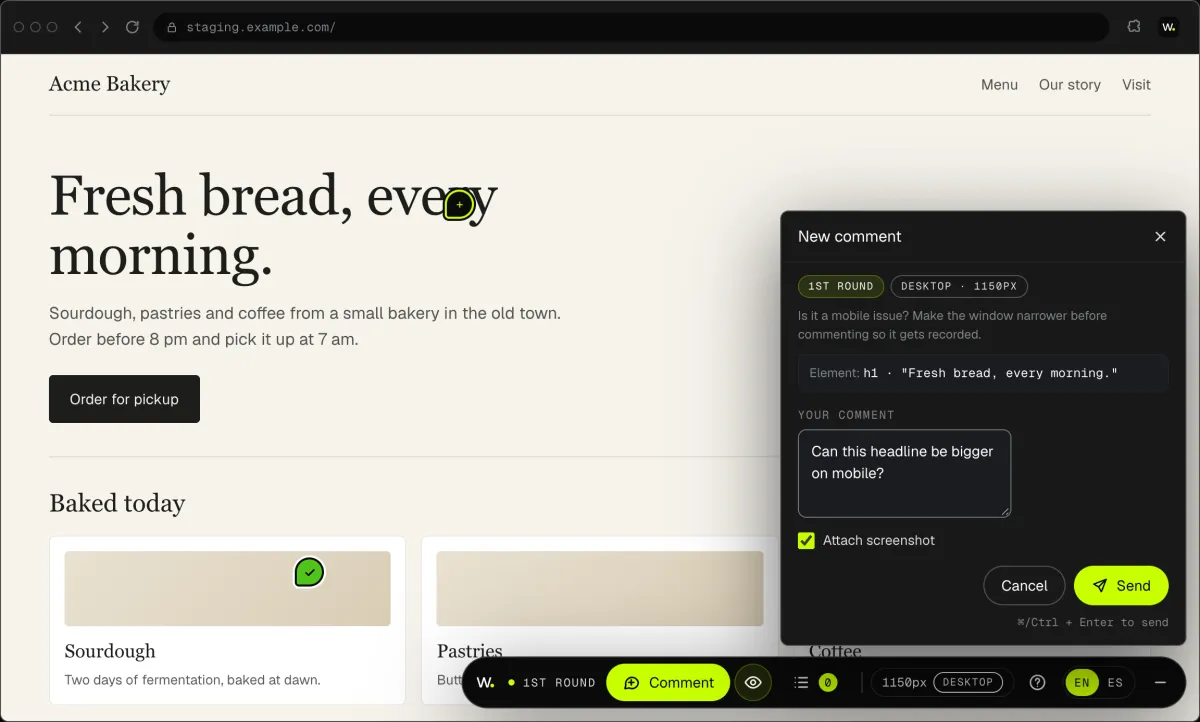
01Client Feedback
Click anything on your own site and say what you want. That's it: the team gets it as a task with a screenshot, and you watch it get solved.
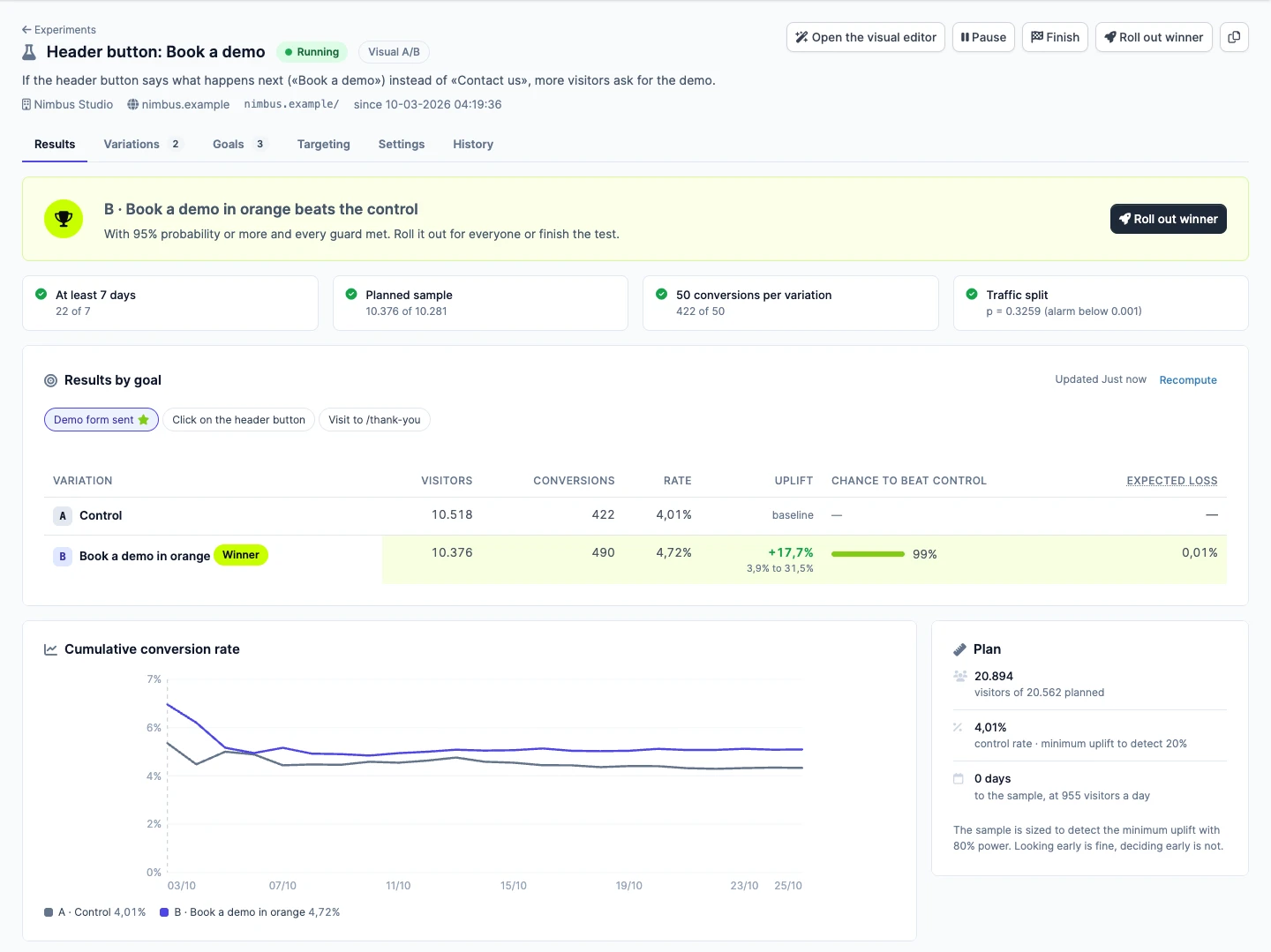
02werun.Experiments
Not sure which version sells more? Try both with real visitors. Tell us the idea in plain words and we set up the test. You watch the winner from your Client Portal.
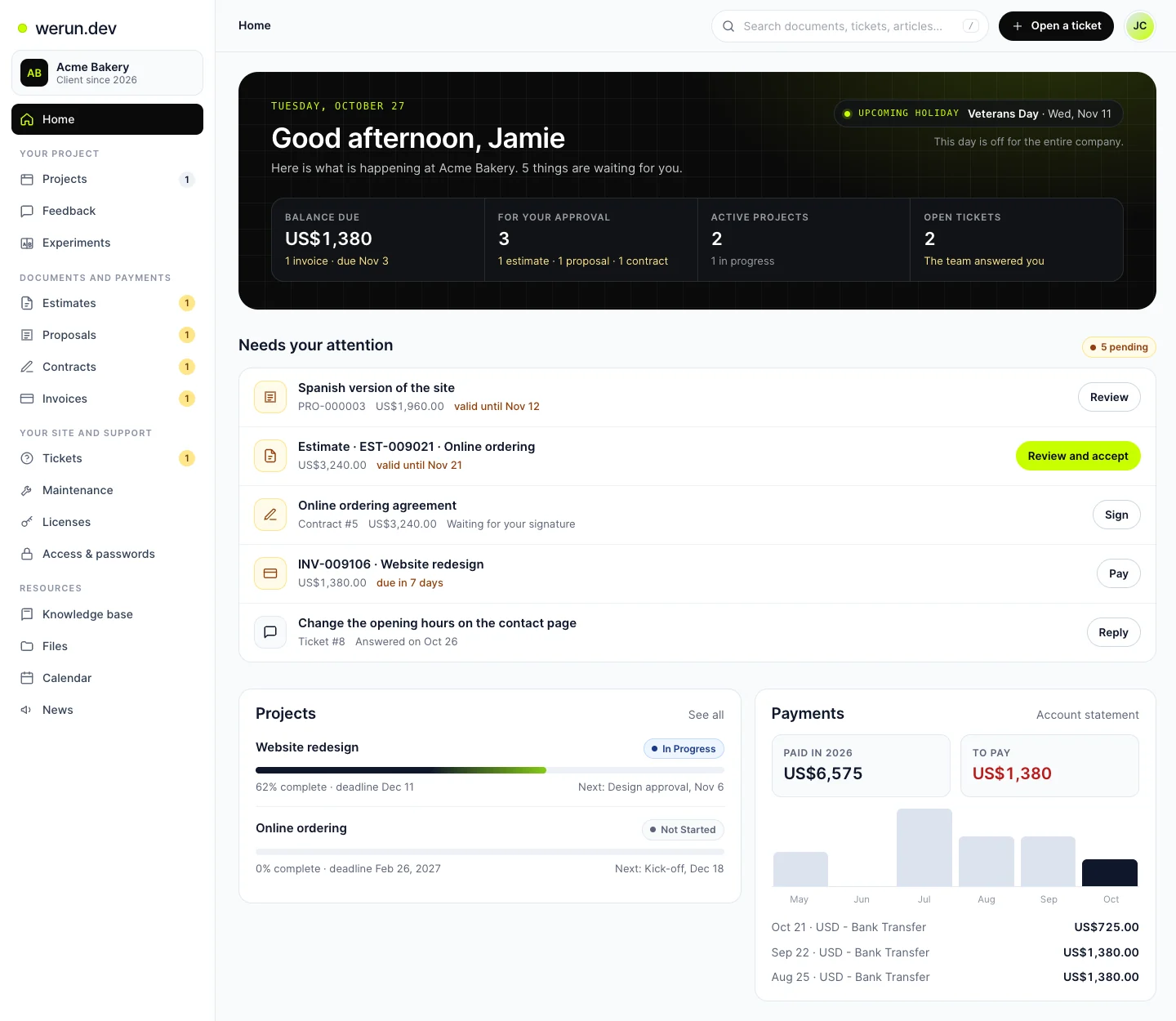
03Client Portal
Projects, requests, invoices, proposals and contracts in one place. Ask it a question and it answers from your own records.
What clients say
Teams like yours, in their own words.

“The client portal, the feedback extension and the WordPress security alerts have been very intuitive, pretty turnkey. Just this past week getting comfortable with it, it’s been really helpful. We’re rolling it out to our core team. Nice job.”
Website speed questions
Do Shopify apps slow down my store?
Often, yes. An app can load its scripts on every page, even where it does nothing. Apps you removed can leave code behind in the theme, and it keeps loading. An audit shows what each app loads, on which pages, and what it charges each month. You keep the ones that earn their place, and the rest go, with their leftovers.
How does a Shopify speed audit work?
It starts with PageSpeed on phones and computers, for the home page, a collection and a product. Then every app and theme section is measured: what it loads, where, and what it costs you. You get the findings as a written list, worst first, with the hours each fix takes. Your live store stays as it is during the audit. Fixes you approve are made on a copy of your theme.
Will removing apps break features my store uses?
No, because each app is checked for what it does before anything goes. When a feature still matters, it can live in the theme instead, written in Liquid on a copy. You save a subscription, and the store loads one script fewer. Each change passes a written test before your customers see it. You decide which apps go, from the written list.
How much does it cost to fix a slow Shopify store?
An app audit and its fixes are $120 per hour, with a 30-minute minimum per task. Your written list gives each fix its hours, and you approve it in the Client Portal before work starts. A new theme is a project from $5.5k, with a speed budget agreed before the build. The Retainer, $4,800 a month, keeps one engineer on the store with 40 hours.
Should I fix my Shopify theme or switch to a faster one?
Fix it when a few apps and sections cause the weight, and rebuild when the theme itself does. Fixes are hours at $120, made on a copy of your theme. A new theme is written in Liquid from the section schema up. Your team then builds pages from its sections and blocks. It meets a speed budget agreed with you, at handover. Swapping to another ready-made theme keeps the apps, and their scripts, as they were.
What speed score should my Shopify store aim for?
The one agreed with you as a speed budget, measured with Core Web Vitals. Google PageSpeed calls a score of 90 or more fast, and phones usually score lower than computers. PageSpeed varies from run to run, so the store is measured again and the run that counts is noted. The budget covers the home page, a collection and a product. The store meets it at handover.
Can you make the Shopify checkout faster?
On Shopify Plus, yes: the checkout can carry your own steps through checkout UI extensions and Shopify Functions. On standard plans Shopify runs the checkout, so the work goes into the cart and the pages before it. Those are where apps and sections slow a shopper down. Each change there is tested on a copy, on a phone and a computer.
Who owns the theme once the work is done?
You do. The theme lives in your repository, versioned, under your licence. A written note lists the sections and metafields it depends on, so any developer can pick it up. Apps you keep stay on your own Shopify account and bill you directly. If you ever leave, the theme and everything written for it stay with you.
Want to see what slows your store?
Send us your store’s address and the apps you run. We reply within 2 hours on business days with what we see and what it costs.